
Sorry. We did not find anything.
Choosing the right Mining Truck in 2026 requires more than comparing payload figures or purchase prices. Global buyers face different haul-road conditions, climate risks, labor skills, and service networks. A rigid haul truck may deliver strong productivity in large open-pit operations. An articulated truck can perform better on uneven roads, soft ground, and steep access routes. Underground mines may require compact, low-profile designs with reliable ventilation performance.
Conditions change. Fit matters.
This guide examines major Mining Truck types through practical buying criteria, including payload, fuel or energy use, braking control, tire life, operator visibility, and maintenance access. A truck carrying 220 tonnes on a smooth, well-maintained road faces different demands from one moving 40 tonnes through wet switchbacks. Small details matter, such as cold-start reliability, dust protection around electrical systems, and the time needed to replace a hydraulic hose.
No shortlist is flawless. A lower purchase price can hide higher downtime, while advanced electric systems may require charging infrastructure and technician training. Buyers should verify manufacturer specifications through site trials, service records, warranty terms, and local parts availability. Independent technical assessments can also reveal gaps between brochure claims and daily performance.
The best choice depends on the complete operating system, not the truck alone. This 2026 overview helps mine owners, contractors, and equipment distributors compare suitable Mining Truck solutions with greater confidence. Safety, total cost of ownership, and dependable support should remain central to every final decision.
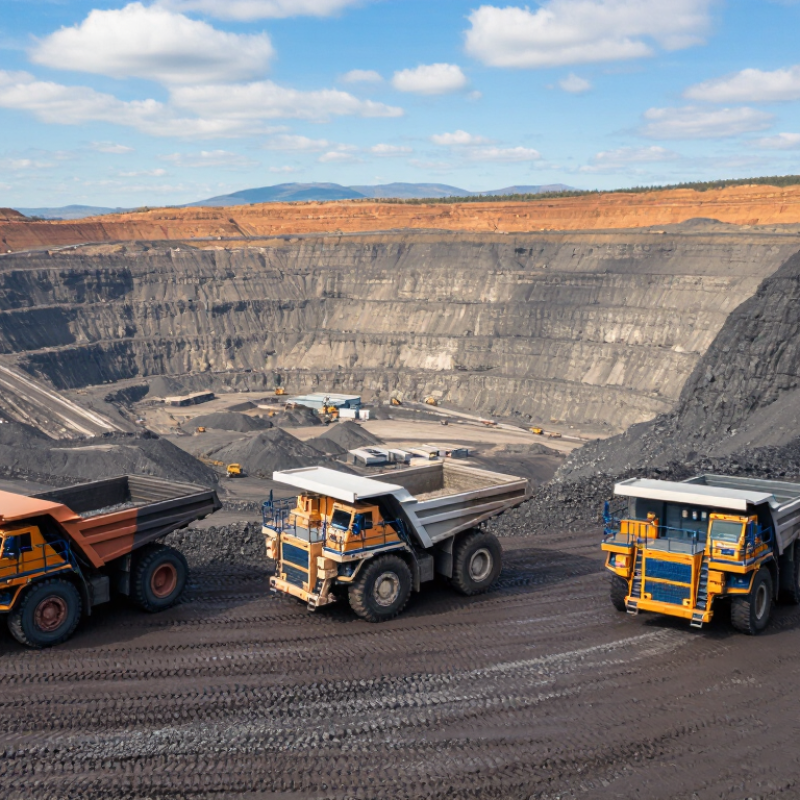
Mining Truck Types and Their Core Functions in 2026
Mining trucks serve different production needs, ground conditions, and haul distances. Rigid dump trucks carry high payloads on stable open-pit roads. Their strong frames support repeated loading cycles and steep haul routes. Articulated trucks work better on muddy, uneven, or narrow terrain. Their jointed chassis improves traction when roads change quickly. Underground low-profile trucks fit restricted headings and move broken rock from deep workings. Each type balances payload, turning radius, maintenance access, and operating cost.
In 2026, electric and hybrid haulage options are gaining attention. Battery trucks can reduce local exhaust emissions and noise, but charging time remains a practical concern. Cold weather may also reduce battery performance. Digital payload systems help prevent overloading, while fleet monitoring tracks idle time, tire stress, and brake temperature. Field experience shows that data improves decisions, but poor sensor calibration can mislead managers. The largest truck is not always the most productive choice.
Tips: Match the truck to the complete haul cycle, not only its rated payload. Measure road width, gradient, ground strength, loading-tool size, and daily travel distance. Check service access before purchase. A truck that performs well in a demonstration may struggle beside a dusty, poorly drained haul road. Test visibility, braking response, operator comfort, and recovery procedures with real site conditions. Leave room for mistakes. уурхайн performance rarely follows a brochure perfectly.
Mining Truck Types and Their Core Functions in 2026
2026 Best Mining Truck Types for Global Buyers
Key specifications matter more than a truck’s advertised size. USGS Mineral Commodity Summaries 2025 estimated global iron ore production at about 2.5 billion metric tons in 2024. That scale makes payload selection critical. Compare rated payload, empty weight, body volume, and payload accuracy together. A 100-tonne truck may lose productivity if the body is poorly matched to low-density material. Check the actual payload distribution across a full shift, not one ideal loading cycle.
Cycle time reveals field performance. Measure loading, hauling, dumping, queuing, and returning on the real haul road. Gradeability, retarder capacity, ground clearance, turning radius, and tire durability also deserve attention. The IEA reports that mining and metals contribute roughly 4–7% of global greenhouse-gas emissions, so fuel consumption per tonne hauled should be recorded carefully. Electric and hybrid systems may reduce fuel use, but charging time, battery mass, cold-weather range, and local grid reliability can change the result. The best option is not always the newest one.
Availability is often underestimated. Compare planned maintenance hours, mean time between failures, spare-part access, and technician training. Safety specifications should include visibility, braking redundancy, collision detection, and operator ergonomics. ISO 17757 provides a useful reference for autonomous and semi-autonomous mining systems. However, compliance does not guarantee productivity. A small gap in road design or dispatch discipline can erase impressive laboratory figures. Real site trials remain necessary.
| Mining Truck Type | Typical Payload | Typical Engine or Motor Output | Typical Operating Weight | Typical Maximum Speed | Drive and Power System | Typical Body or Bed Volume | Operating Environment | Main Advantages | Key Buying Considerations | Best For |
|---|---|---|---|---|---|---|---|---|---|---|
| Medium Rigid-Frame Haul Truck | 60–100 metric tonnes | 550–900 kW | 95–165 metric tonnes | 50–65 km/h | Diesel-mechanical or diesel-electric drive; two-axle or three-axle configuration | 35–65 m³, depending on material density and body design | Open-pit mines, quarries, and large construction projects with prepared haul roads | Strong balance between payload, operating flexibility, fuel efficiency, and infrastructure requirements | Check brake capacity, tire availability, frame life, payload monitoring, and compatibility with loading equipment | Medium-scale open-pit mining and quarry operations |
| Large Rigid-Frame Haul Truck | 100–180 metric tonnes | 900–1,500 kW | 160–290 metric tonnes | 50–65 km/h | Predominantly diesel-electric drive with traction motors and retarding systems | 55–115 m³ | Large open-pit copper, iron ore, gold, coal, and oil-sands operations | High productivity, long haul-road efficiency, and good integration with large hydraulic shovels and loaders | Evaluate haul-road width, ramp grade, turning radius, tire size, service support, and electrical system maintenance | High-volume surface mines requiring lower cost per tonne |
| Ultra-Class Rigid Haul Truck | 220–400 metric tonnes | 1,800–2,800 kW | 350–630 metric tonnes | 45–64 km/h | High-power diesel-electric drive with dynamic retarding and heavy-duty traction systems | 120–250 m³ | Very large open-pit mines with long-term, high-throughput production plans | Exceptional per-cycle production and efficient matching with ultra-large loading units | Requires substantial capital, wide haul roads, specialized workshops, large tires, and high-capacity maintenance infrastructure | Large-scale mines with stable reserves and very high annual material movement |
| Articulated Dump Truck | 25–60 metric tonnes | 350–750 kW | 45–105 metric tonnes | 45–55 km/h | Diesel-mechanical or diesel-hydraulic drive; articulated center joint and all-wheel drive | 15–38 m³ | Uneven, muddy, wet, or temporary haul roads; mines, quarries, infrastructure, and earthmoving sites | Excellent mobility, traction, gradeability, and ground-following performance in difficult terrain | Compare articulation angle, oscillation joint durability, ground clearance, retarder performance, and tire protection | Variable terrain, steep gradients, soft ground, and changing project conditions |
| Underground Low-Profile Haul Truck | 15–40 metric tonnes | 180–550 kW | 35–80 metric tonnes | 20–35 km/h | Diesel-hydraulic or diesel-mechanical drive; low-height chassis and articulated steering | 7–25 m³ | Underground hard-rock mines with restricted roof height, narrow drifts, and limited turning space | Low overall height, compact turning envelope, robust traction, and suitability for confined headings | Assess machine height, ventilation demand, exhaust treatment, emergency systems, service access, and drift dimensions | Underground mines with low clearances and narrow haulage routes |
| Underground Articulated Haul Truck | 30–65 metric tonnes | 350–750 kW | 55–115 metric tonnes | 25–40 km/h | Diesel-hydraulic or diesel-mechanical drive; articulated frame with heavy-duty axles | 15–35 m³ | Large underground mines with higher production rates and comparatively spacious declines | Higher underground payload than compact units while retaining articulation and maneuverability | Check decline grade capability, ventilation capacity, braking redundancy, turning radius, and payload-to-drift-size ratio | High-production underground operations with larger access drifts |
| Battery-Electric Underground Haul Truck | 20–60 metric tonnes | 300–900 kW peak motor output | 45–115 metric tonnes, including battery system | 20–40 km/h | Battery-electric drive with traction motors, regenerative braking, and exchangeable or fast-charge battery packs | 10–35 m³ | Underground mines seeking lower diesel emissions, reduced heat load, and improved working conditions | Lower direct exhaust emissions, reduced engine noise, and potential ventilation and energy savings | Evaluate battery cycle life, charging or swapping time, thermal management, fire protection, electrical infrastructure, and duty-cycle compatibility | Underground sites with sufficient electrical capacity and short-to-medium haul cycles |
| Trolley-Assist Electric Haul Truck | 100–360 metric tonnes | 1,200–2,800 kW installed traction output | 170–570 metric tonnes | 45–65 km/h, depending on road section and operating mode | Diesel-electric truck with overhead trolley power on selected uphill haul-road sections | 60–220 m³ | Large open-pit mines with repeated uphill haulage and suitable fixed-route infrastructure | Can reduce diesel consumption and improve uphill speed on electrified sections | Requires overhead lines, substations, route planning, pantograph maintenance, and reliable transition between trolley and diesel modes | High-volume open-pit mines with long, repetitive ramps |
| Autonomous-Ready Rigid Haul Truck | 90–360 metric tonnes | 800–2,800 kW | 150–570 metric tonnes | Up to approximately 60–65 km/h, subject to site rules | Diesel-electric or diesel-mechanical platform equipped for fleet management, perception, and remote supervision systems | 55–220 m³ | Large, structured open-pit mines with defined haul routes and centralized operations control | Potential for improved consistency, utilization, safety-zone management, and data-driven fleet optimization | Confirm site communications, high-precision positioning, traffic management, operator transition plans, cybersecurity, and regulatory requirements | Mines pursuing gradual automation while retaining conventional truck capability |
Note: Specifications are representative industry ranges for comparison purposes. Actual values vary with truck configuration, payload-body selection, material density, altitude, ambient temperature, haul-road conditions, and local safety regulations.
Choosing a mining truck begins with the site, not the brochure. Measure road width, maximum grade, bend radius, ground strength, and average haul distance. These factors determine whether a rigid truck or articulated truck will perform reliably. Rigid trucks suit wide, stable roads and high-volume cycles. Articulated units handle softer ground, tighter turns, and changing surfaces better. However, that flexibility may reduce payload and increase operating costs.
Short routes need quick loading and strong braking control. Longer cycles require payload balance, cooling capacity, and durable suspension. At high altitude, thinner air can reduce engine output and cooling performance. Hot, dusty pits demand effective filtration, sealed electrical systems, and accessible service points. Cold regions require suitable fluids, battery protection, and dependable starting systems. Site conditions change. So should the evaluation.
Do not select equipment from payload alone. Compare loading-tool compatibility, tire life, cycle time, fuel use, and workshop capability. A truck carrying more may still cost more per tonne if it waits for repairs. Site trials matter. Record actual cycle times during wet and dry shifts. Review visibility, brake response, noise, and operator fatigue. A first estimate may be wrong. Recheck the selection after the first operating season, when real maintenance patterns become visible.
New technologies are changing how mining trucks perform on steep roads, deep pits, and rough haul routes. Battery-electric trucks now reduce engine noise and local exhaust emissions. Their performance depends on charging access, battery temperature, and route length. Fast charging helps, but it can increase grid pressure during shift changes.
Hybrid systems remain practical where full electrification is difficult. They combine combustion power with electric assistance during acceleration and regenerative braking on descents. Trolley-assisted trucks can receive external electricity on fixed uphill sections. This reduces fuel use and limits engine strain. However, infrastructure costs may challenge smaller operations.
Data systems are becoming equally important. Payload sensors can prevent repeated overloading and reduce tire stress. Thermal monitoring can identify battery or brake problems before failure. Predictive maintenance also uses vibration, oil, and temperature readings. Useful data must be clean and consistent. Otherwise, dashboards may create confidence without improving decisions.
Automation supports safer movement in controlled zones. Collision alerts, camera systems, and route controls can reduce human error. Still, automation is not a complete safety solution. Dust, poor visibility, and changing ground conditions remain difficult. Operators need training, and supervisors must review system limits regularly.
Some technology will underperform at first. That is normal. Careful testing matters more than impressive specifications.
Mining buyers in 2026 should select trucks by site conditions, not brochure payload. A 100-ton truck may lose productivity on steep, narrow haul roads. The right choice balances payload, braking performance, tire life, fuel use, and maintenance access.
Regional demand also matters. The IEA’s Global Critical Minerals Outlook 2024 reported nearly 30% lithium-demand growth in 2023. The USGS Mineral Commodity Summaries 2025 estimated global copper mine production at about 22 million metric tons in 2024. These trends increase pressure on mines to move material reliably. In hot, arid markets, buyers should prioritize cooling capacity, dust protection, and water-efficient maintenance. In cold regions, battery performance, hydraulic warm-up, and operator visibility deserve closer testing. Tropical mines need corrosion control and dependable traction on wet roads.
Infrastructure can change the decision. Buyers in remote markets should assess local parts stock, technician training, road access, and fuel or charging availability. Buyers in mature markets may place greater weight on emissions reporting, automation readiness, noise limits, and energy efficiency. Field trials beat spreadsheets. A cheaper truck can become expensive when downtime lasts several days. I would not assume electric power fits every site yet; grid reliability, duty cycles, and replacement planning remain uneven. That assumption can fail. A practical evaluation should record cycle time, payload consistency, brake temperature, fuel or energy use, and unscheduled repairs across real shifts.
| Cookie | Duration | Description |
|---|---|---|
| cookielawinfo-checbox-analytics | 11 months | This cookie is set by GDPR Cookie Consent plugin. The cookie is used to store the user consent for the cookies in the category "Analytics". |
| cookielawinfo-checbox-analytics | 11 months | This cookie is set by GDPR Cookie Consent plugin. The cookie is used to store the user consent for the cookies in the category "Analytics". |
| cookielawinfo-checbox-analytics | 11 months | This cookie is set by GDPR Cookie Consent plugin. The cookie is used to store the user consent for the cookies in the category "Analytics". |
| cookielawinfo-checbox-functional | 11 months | The cookie is set by GDPR cookie consent to record the user consent for the cookies in the category "Functional". |
| cookielawinfo-checbox-functional | 11 months | The cookie is set by GDPR cookie consent to record the user consent for the cookies in the category "Functional". |
| cookielawinfo-checbox-functional | 11 months | The cookie is set by GDPR cookie consent to record the user consent for the cookies in the category "Functional". |
| cookielawinfo-checbox-others | 11 months | This cookie is set by GDPR Cookie Consent plugin. The cookie is used to store the user consent for the cookies in the category "Other. |
| cookielawinfo-checbox-others | 11 months | This cookie is set by GDPR Cookie Consent plugin. The cookie is used to store the user consent for the cookies in the category "Other. |
| cookielawinfo-checbox-others | 11 months | This cookie is set by GDPR Cookie Consent plugin. The cookie is used to store the user consent for the cookies in the category "Other. |
| cookielawinfo-checkbox-necessary | 11 months | This cookie is set by GDPR Cookie Consent plugin. The cookies is used to store the user consent for the cookies in the category "Necessary". |
| cookielawinfo-checkbox-necessary | 11 months | This cookie is set by GDPR Cookie Consent plugin. The cookies is used to store the user consent for the cookies in the category "Necessary". |
| cookielawinfo-checkbox-necessary | 11 months | This cookie is set by GDPR Cookie Consent plugin. The cookies is used to store the user consent for the cookies in the category "Necessary". |
| cookielawinfo-checkbox-performance | 11 months | This cookie is set by GDPR Cookie Consent plugin. The cookie is used to store the user consent for the cookies in the category "Performance". |
| cookielawinfo-checkbox-performance | 11 months | This cookie is set by GDPR Cookie Consent plugin. The cookie is used to store the user consent for the cookies in the category "Performance". |
| cookielawinfo-checkbox-performance | 11 months | This cookie is set by GDPR Cookie Consent plugin. The cookie is used to store the user consent for the cookies in the category "Performance". |
| viewed_cookie_policy | 11 months | The cookie is set by the GDPR Cookie Consent plugin and is used to store whether or not user has consented to the use of cookies. It does not store any personal data. |
| viewed_cookie_policy | 11 months | The cookie is set by the GDPR Cookie Consent plugin and is used to store whether or not user has consented to the use of cookies. It does not store any personal data. |