
Sorry. We did not find anything.
2026 Best Dangerous Shipment Safety Guide for Global Buyers?
Moving dangerous goods across borders requires more than a strong carton and a completed booking form. A safe Dangerous Shipment begins with accurate classification, current Safety Data Sheets, approved packaging, and clear communication between every handover point. One wrong label can delay a truck, confuse a warehouse team, or create serious exposure risks.
Brendan Sullivan, former Senior Vice President for Cargo at IATA, has emphasized a principle that guides responsible transport: “Accurate information is the foundation of safe cargo movement.” That principle matters when a package leaves a factory, enters a consolidation center, or waits beside other freight at an airport. The details must remain visible and correct.
This guide focuses on practical controls for global buyers. It covers supplier verification, documentation checks, packaging standards, markings, carrier acceptance, temperature awareness, and emergency contact readiness. Buyers should confirm requirements with qualified dangerous-goods professionals and approved carriers before shipment. Regulations and carrier rules can change.
Small details matter.
A missing handling mark may seem minor. It is not. A damaged outer box, unclear product description, or incomplete declaration can stop the shipment before departure. Experienced teams inspect the package condition, compare documents against the physical goods, and record each decision.
There is no perfect process. Human error remains possible, especially during rushed purchasing cycles. That weakness deserves attention, not denial. Careful review, staff training, and honest incident reporting help build safer supply chains. For global buyers, the goal is simple: move compliant cargo safely, transparently, and with fewer surprises.
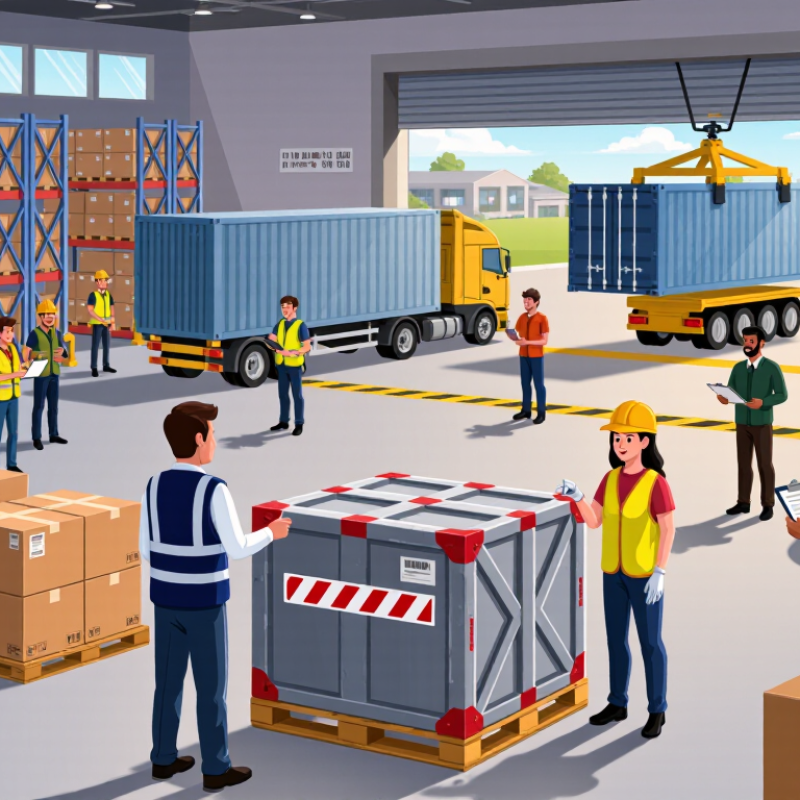
What Makes a Shipment Dangerous in Global Trade?
A shipment becomes dangerous when its contents can harm people, property, or the environment during transport. Common examples include flammable liquids, compressed gases, corrosive chemicals, and damaged batteries. Risk also depends on quantity, concentration, packaging, and transport conditions. A small container can still create serious danger if it leaks inside an aircraft or truck.
In my shipment reviews, missing information often causes more trouble than the material itself. Buyers should request an accurate product description, safety data sheet, and transport classification. The package needs suitable inner containers, strong outer packaging, clear markings, and complete documents. Weather matters too. Heat can increase pressure, while cold can damage seals.
Tips: Check the latest carrier and destination rules before booking. Confirm the package can withstand drops and vibration. Photograph the sealed package before pickup. Never rely on an old classification without verification.
A trained shipping specialist should review unusual materials and mixed consignments. Different transport modes may require different labels or limits. Local rules can also change. That is easy to overlook. A checklist helps, but it is not perfect. Recheck names, quantities, emergency contacts, and destination details before release. If the product information is incomplete, pause the shipment instead of guessing.
| UN Hazard Class | Representative Regulated Articles | Primary Danger | What Makes the Shipment Dangerous? | Core Safety and Compliance Controls | Important Global Trade Considerations |
|---|---|---|---|---|---|
| 1 Explosives | Fireworks, ammunition, detonators, certain industrial explosive articles | Explosion, projection of fragments, fire, and mass-detonation risk | The goods may react violently to heat, impact, friction, static electricity, or incompatible materials. | Use an authorized classification, approved packaging, compatibility controls, hazard labels, marks, and a documented emergency response plan. | Transport is highly restricted and may require route approval, security controls, specialized carriers, and prior acceptance by the transport operator. |
| 2 Gases | Compressed gases, liquefied gases, refrigerated liquefied gases, aerosols, and gas cartridges | Fire, explosion, pressure release, toxicity, asphyxiation, or cryogenic injury | Pressurized containers can rupture when heated or damaged; some gases are flammable, toxic, oxidizing, or oxygen-displacing. | Use tested cylinders or receptacles, protect valves, prevent movement, control temperature, verify filling limits, and apply the correct gas hazard labels. | Pressure equipment may need approval in the country of manufacture, transit, and destination. Air transport often imposes stricter quantity and packing limits. |
| 3 Flammable Liquids | Fuel, solvents, paints, adhesives, alcohol-based liquids, and certain cleaning products | Fire or explosion caused by flammable vapors | Vapors can ignite from sparks, hot surfaces, open flames, or static discharge, even when the liquid itself is not directly exposed. | Confirm the flash point and transport classification, use compatible leakproof packaging, control ignition sources, and apply required labels and documentation. | Different modes may use different quantity limits, packing instructions, and segregation requirements. Safety data should be reviewed before purchase and shipment booking. |
| 4.1 Flammable Solids | Some matches, solid substances that ignite readily, and self-reactive substances | Rapid burning, heat generation, or explosive decomposition | The material may ignite through friction, heat, sparks, or self-reaction and can burn intensely once ignited. | Control temperature and contamination, use approved packaging, prevent friction and damage, and follow any required stabilization or temperature-control instructions. | Self-reactive substances can have strict temperature and quantity limits. Classification must be based on the applicable transport regulations and test results. |
| 4.2 Spontaneously Combustible | Some oily materials, pyrophoric substances, and self-heating chemicals | Ignition in contact with air or through self-heating | The shipment may ignite without an external flame when exposed to oxygen, moisture, or accumulated heat. | Use packaging that limits air or moisture exposure where required, prevent heat accumulation, segregate incompatible goods, and inspect for leakage or damaged containers. | Humidity, ventilation, container stowage, and transit duration can affect risk. A carrier may require additional handling instructions or acceptance checks. |
| 4.3 Dangerous When Wet | Water-reactive metals and other substances that release flammable gas on contact with water | Flammable gas generation, fire, or explosive reaction | Water, humidity, or condensation can trigger a reaction that releases heat and flammable gas. | Keep the package dry, use moisture-resistant approved packaging, protect against rain and seawater exposure, and segregate from water-containing goods. | Weather exposure during loading, port storage, and inland transport is a major control point. Containers should be checked for water ingress before use. |
| 5.1 Oxidizing Substances | Oxidizing chemicals, pool-treatment chemicals, and certain concentrated peroxides | Intensified fire or violent reaction with combustible materials | The substance may release oxygen or otherwise support combustion, making ordinary fires harder to control. | Keep away from fuels, oils, organic materials, and reducing agents; use compatible packaging; control contamination; and follow segregation rules. | Mixed loading with flammable or combustible cargo can create a serious escalation risk. The exact compatibility requirements depend on the assigned UN entry. |
| 5.2 Organic Peroxides | Temperature-sensitive organic peroxide formulations used in industrial processes | Self-accelerating decomposition, fire, or explosion | Heat, contamination, impact, or incorrect storage can cause uncontrolled decomposition and rapid pressure or heat release. | Maintain the specified control and emergency temperatures, use approved packaging, prevent contamination, and follow quantity, handling, and monitoring requirements. | Some products require refrigerated or temperature-controlled transport. The shipper must confirm the correct formulation, concentration, and transport entry. |
| 6.1 Toxic Substances | Pesticides, toxic industrial chemicals, and substances harmful by ingestion, inhalation, or skin contact | Acute poisoning or serious health effects | Exposure can occur through leaks, damaged packaging, vapor, dust, ingestion, or skin absorption. | Use leakproof and compatible packaging, prevent package damage, provide handling instructions, use appropriate personal protective equipment, and maintain emergency information. | Import permits, chemical registration, worker-protection rules, and waste requirements may apply separately from transport regulations. |
| 6.2 Infectious Substances | Diagnostic specimens, cultures, and materials known or reasonably expected to contain pathogens | Infection, exposure, or public-health risk | Leakage, breakage, or incorrect packaging can expose people, animals, or the environment to infectious agents. | Use the required triple-packaging system where applicable, leakproof primary and secondary receptacles, absorbent material, correct markings, and trained personnel. | Classification depends on the infectious risk category. Some shipments require permits, specialized packaging, and advance coordination with the carrier and destination authorities. |
| 7 Radioactive Material | Radioactive sources, certain medical or industrial materials, and radioactive instruments | Radiation exposure, contamination, or criticality risk for certain materials | Improper shielding, damaged packaging, or incorrect handling may expose workers and the public to ionizing radiation. | Use approved package designs, radiation and contamination controls, required labels and transport documents, security measures, and trained personnel. | Regulatory approval, special permits, security plans, and carrier acceptance may be required. National nuclear authorities can impose additional controls. |
| 8 Corrosive Substances | Strong acids, strong alkalis, battery acid, and corrosive cleaning or processing chemicals | Severe burns, eye damage, metal corrosion, or dangerous reactions | The material can destroy living tissue, damage packaging or transport equipment, and react dangerously with water or incompatible chemicals. | Use corrosion-resistant, compatible packaging; secure closures; protect against tipping; segregate incompatibles; and provide spill-response information. | Battery shipments may have additional requirements based on battery chemistry, electrolyte condition, and whether the battery is installed, packed with equipment, or shipped separately. |
| 9 Miscellaneous Dangerous Substances and Articles | Lithium batteries, dry ice, environmentally hazardous substances, and magnetized material | Fire, pressure release, environmental harm, or transport-system interference | Risk may arise from thermal runaway, gas release, low temperature, magnetic effects, or environmental toxicity rather than a single common hazard. | Prevent short circuits and movement, protect against damage, control temperature where required, use the correct marks and labels, and follow mode-specific limits. | Lithium battery requirements vary by battery type, watt-hour rating, state of charge, packaging arrangement, and transport mode. Current carrier rules must be checked before booking. |
| Buyer Safety Checklist: Before purchasing or booking any potentially dangerous shipment, obtain the correct UN number and proper shipping name, review the Safety Data Sheet, confirm the hazard class and packing group where applicable, verify packaging and labeling, check mode-specific restrictions, confirm import and export permits, select trained logistics providers, and ensure that emergency contact and documentation requirements are complete. | |||||