
Sorry. We did not find anything.
Choosing the Best Cold Brew Coffee Makers in 2026 starts with a simple question: what do you want in your glass? A smooth concentrate for weekday mornings? A ready-to-pour batch that fits neatly beside the milk? The right Cold Brew Coffee Maker should suit your routine, counter space, and patience—not just look good in product photos. Coffee educator James Hoffmann’s practical approach to brewing suggests a useful principle, paraphrased here for cold brew: “Get the fundamentals right before paying for extras.” That means checking the filter, capacity, ease of cleaning, and how comfortably the brewer pours.
Small details matter. A tight-fitting lid can help keep fridge odors away. A fine, removable mesh basket makes grounds easier to lift out without chasing them through the sink. Glass shows you the steeping color, but it can feel heavy when full. Plastic may be lighter, though some buyers dislike how it looks on the table. There is no perfect pick. Even a highly rated brewer can frustrate you if its opening is too narrow for your hand.
This guide compares options for different budgets and habits, from compact jars to larger batch brewers. We’ll look at construction, filter design, capacity, cleanup, and everyday value. We’ll also flag trade-offs instead of pretending one model suits everyone. Cold brew takes time, and the results can vary with grind size and steeping preferences. A little trial and error is normal. The goal is a maker that makes that process easier—and earns its place on your shelf.
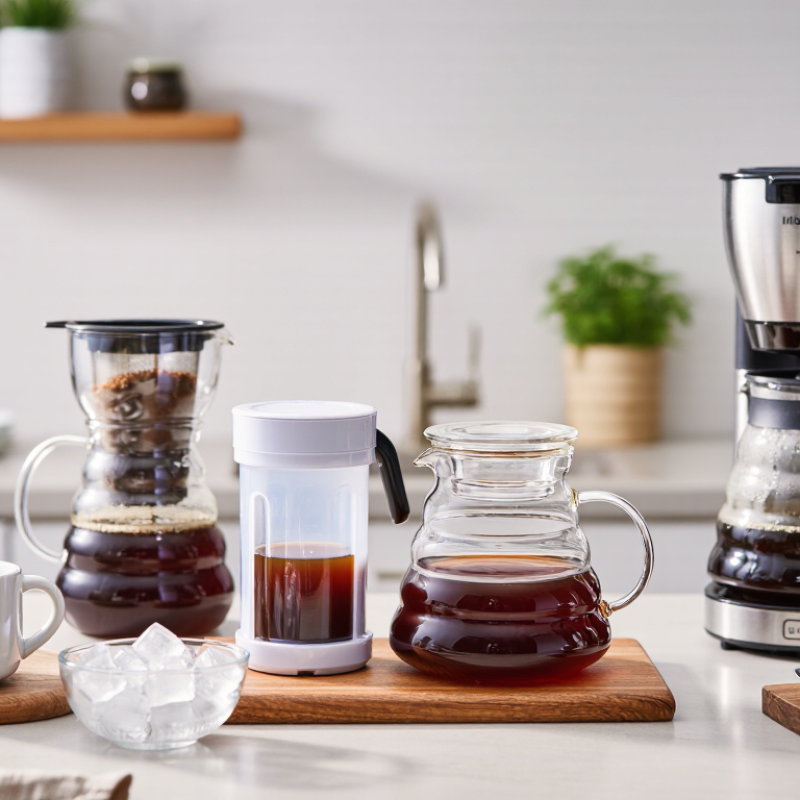
A cold brew coffee maker steeps ground coffee in cool or room-temperature water instead of pushing hot water through it. Grounds sit in a chamber or filter basket, surrounded by water for many hours. The slow extraction produces a smooth, concentrated coffee that can taste less sharp than a hot-brewed cup. It is not automatically less caffeinated; strength depends on the beans, water ratio, and serving size.
Most makers use a pitcher, a fine-mesh filter, and a lid. Add coarse grounds, pour in water, and let the mixture steep for roughly 12 to 24 hours. Then lift out the filter or strain the coffee. A cloudy first batch is possible, especially with very fine grounds. That can be annoying. Refrigerate the finished brew, and clean the filter promptly so oils and sediment do not cling to the mesh.
Tips: Start with a measured ratio, such as one part coffee to eight parts water, then adjust to taste. Keep the grounds evenly wet; dry pockets can leave the brew uneven. Mark the steeping time on a note beside the pitcher. Small adjustments help, though finding your preferred strength may take a few imperfect batches.
Cold brew makers generally fall into three designs: immersion pitchers, steep-and-drain brewers, and slow-drip towers. Each uses cool water, but the process and results differ. Simple, but not identical.
An immersion pitcher holds grounds underwater for 12 to 24 hours, then separates them with a mesh basket or filter. It suits people who want a low-fuss routine and have room in the refrigerator. A finer filter can reduce sediment, though very fine grounds may clog it.
Steep-and-drain models keep coffee and water in a removable basket or chamber. When brewing ends, the liquid drains into a serving container, making cleanup more controlled than scooping wet grounds from a jar. Check that the basket lifts out easily; awkward parts can turn a convenient brewer into a daily nuisance. Drainage may also leave a little coffee behind.
Slow-drip towers release water gradually over the grounds, often producing a lighter, less immersed brew. They can be attractive on a counter, but take longer to set up and need careful adjustment. Room temperature, grind size, and coffee-to-water ratio all affect flavor, so follow the maker’s guidance and taste small batches. I would not assume a complex design tastes better. A plain pitcher can be the better fit.
Before choosing a cold brew maker, consider how much coffee you actually drink. A compact pitcher may suit one or two people, while a larger vessel can reduce refills for a busy household. Check its height against your refrigerator shelf, too. That detail is easy to miss.
Pay close attention to the filter. Fine mesh can help keep grounds out of the finished drink, while a removable filter is usually easier to rinse. Look for a wide opening and few narrow corners where coffee residue can collect. Small details matter. A tight lid helps limit spills and fridge odors, but it does not make the coffee shelf-stable; follow sensible storage guidance and keep it chilled.
Material and brewing control also deserve a comparison. Glass lets you see the color and remaining volume, but it can break if knocked against a sink. Stainless steel is more durable, though you cannot inspect the brew as easily. Consider whether the maker allows adjustable steeping time or dilution. A stronger concentrate can be useful for iced drinks, but it may taste harsh if steeped too long. Capacity numbers can be misleading, since ice and added water change the final yield. I would not choose by advertised volume alone; measure the amount your usual serving needs.
Choosing a cold brew maker starts with your routine, not its looks. The National Coffee Association’s 2024 National Coffee Data Trends report found that 67% of U.S. adults drank coffee the previous day. That signals a daily habit for many people, but it does not mean everyone needs a large brewer. Make one glass at a time? Choose a compact vessel with a fine, removable filter. Preparing several servings for busy mornings? Look for clear capacity markings and a lid that seals securely. Check whether the finished coffee is ready to drink or concentrated; that changes how much water you add later.
Think about the small details. A wide opening is easier to clean, while a slim shape may fit better beside milk cartons in a crowded refrigerator. Mesh filters can leave some sediment, so consider whether you mind a slightly gritty last sip. Steeping time also varies by recipe and grind size. A maker cannot fix stale beans or an uneven grind. Honestly, finding your preferred strength may take a few attempts.
Tips: Before buying, measure your refrigerator shelf and estimate how many cups you drink in a week. Start with a small batch, note the steeping time, and adjust one variable at a time. Keep the process simple.
Top cold brew coffee makers for buyers in 2026 should make steeping simple, filtering clean, and storage practical. A wide-mouth glass pitcher is easy to fill and wash, while a fine-mesh basket keeps grounds contained. Check the lid fit and handle comfort, too. Small details matter on a sleepy morning. Not glamorous, but useful.
Choose capacity around how much you actually drink. A compact maker suits one or two glasses; larger models help households prepare several servings at once. Look for clear volume markings and a filter that lifts out without spilling wet grounds. Some makers include reusable filters, which reduce paper waste but need careful rinsing. I sometimes find that step less convenient than expected.
Steep time and grind size affect flavor, so adjustable filters or straightforward instructions can help new users get consistent results. A reliable maker should also fit on a refrigerator shelf and have parts that clean without awkward scrubbing. Glass shows residue easily, while durable food-safe plastic is lighter and less fragile. Compare replacement-filter availability and warranty terms before buying. A perfect cup still takes a little trial and error.
Typical brewing time varies by method. Immersion generally takes longer, while slow-drip methods can finish sooner.
Ranges show common recipe guidance, not a guarantee; grind size, coffee-to-water ratio, and personal taste can affect brewing time.
| Cookie | Duration | Description |
|---|---|---|
| cookielawinfo-checbox-analytics | 11 months | This cookie is set by GDPR Cookie Consent plugin. The cookie is used to store the user consent for the cookies in the category "Analytics". |
| cookielawinfo-checbox-analytics | 11 months | This cookie is set by GDPR Cookie Consent plugin. The cookie is used to store the user consent for the cookies in the category "Analytics". |
| cookielawinfo-checbox-analytics | 11 months | This cookie is set by GDPR Cookie Consent plugin. The cookie is used to store the user consent for the cookies in the category "Analytics". |
| cookielawinfo-checbox-functional | 11 months | The cookie is set by GDPR cookie consent to record the user consent for the cookies in the category "Functional". |
| cookielawinfo-checbox-functional | 11 months | The cookie is set by GDPR cookie consent to record the user consent for the cookies in the category "Functional". |
| cookielawinfo-checbox-functional | 11 months | The cookie is set by GDPR cookie consent to record the user consent for the cookies in the category "Functional". |
| cookielawinfo-checbox-others | 11 months | This cookie is set by GDPR Cookie Consent plugin. The cookie is used to store the user consent for the cookies in the category "Other. |
| cookielawinfo-checbox-others | 11 months | This cookie is set by GDPR Cookie Consent plugin. The cookie is used to store the user consent for the cookies in the category "Other. |
| cookielawinfo-checbox-others | 11 months | This cookie is set by GDPR Cookie Consent plugin. The cookie is used to store the user consent for the cookies in the category "Other. |
| cookielawinfo-checkbox-necessary | 11 months | This cookie is set by GDPR Cookie Consent plugin. The cookies is used to store the user consent for the cookies in the category "Necessary". |
| cookielawinfo-checkbox-necessary | 11 months | This cookie is set by GDPR Cookie Consent plugin. The cookies is used to store the user consent for the cookies in the category "Necessary". |
| cookielawinfo-checkbox-necessary | 11 months | This cookie is set by GDPR Cookie Consent plugin. The cookies is used to store the user consent for the cookies in the category "Necessary". |
| cookielawinfo-checkbox-performance | 11 months | This cookie is set by GDPR Cookie Consent plugin. The cookie is used to store the user consent for the cookies in the category "Performance". |
| cookielawinfo-checkbox-performance | 11 months | This cookie is set by GDPR Cookie Consent plugin. The cookie is used to store the user consent for the cookies in the category "Performance". |
| cookielawinfo-checkbox-performance | 11 months | This cookie is set by GDPR Cookie Consent plugin. The cookie is used to store the user consent for the cookies in the category "Performance". |
| viewed_cookie_policy | 11 months | The cookie is set by the GDPR Cookie Consent plugin and is used to store whether or not user has consented to the use of cookies. It does not store any personal data. |
| viewed_cookie_policy | 11 months | The cookie is set by the GDPR Cookie Consent plugin and is used to store whether or not user has consented to the use of cookies. It does not store any personal data. |