
Sorry. We did not find anything.

What Is the Best Laser Cleaning Equipment in 2026?

Choosing the best Laser Cleaning Equipment in 2026 requires more than comparing wattage, price, or marketing claims. The right system must match the substrate, contaminant, production speed, surface tolerance, and operator workflow. Rust on a steel mold needs a different laser strategy than oxide removal from aluminum or paint stripping from aerospace components.

Industry forecasts show strong momentum, but their numbers differ. MarketsandMarkets estimates the laser cleaning market will grow substantially through 2028, driven by automation, manufacturing upgrades, and stricter environmental expectations. Grand View Research also identifies industrial maintenance, automotive production, and aerospace applications as major growth areas. However, forecast gaps deserve attention. Market reports often use different definitions of “laser cleaning,” which can make direct comparisons misleading.

Dr. Reinhart Poprawe, a respected laser-manufacturing expert and former Fraunhofer ILT director, has emphasized a practical principle: “The laser is a tool, not a process.” That idea should guide every purchase decision. A high-power source may remove contamination quickly, yet it can also increase heat input, reflectivity challenges, and surface risk. The best equipment is not always the fastest machine. It is the system that delivers repeatable results without damaging the material.

This guide evaluates wavelength, pulse duration, beam control, fume extraction, automation, safety features, service support, and total operating cost. Real workshop details matter. Consider a technician cleaning a narrow mold cavity at 7 a.m., with limited visibility and strict production deadlines. If setup is confusing, performance becomes inconsistent.

Some assumptions may prove wrong.

Testing remains essential. Reliable buyers request sample trials, measured cleaning results, and documented safety compliance before approving any Laser Cleaning Equipment investment.
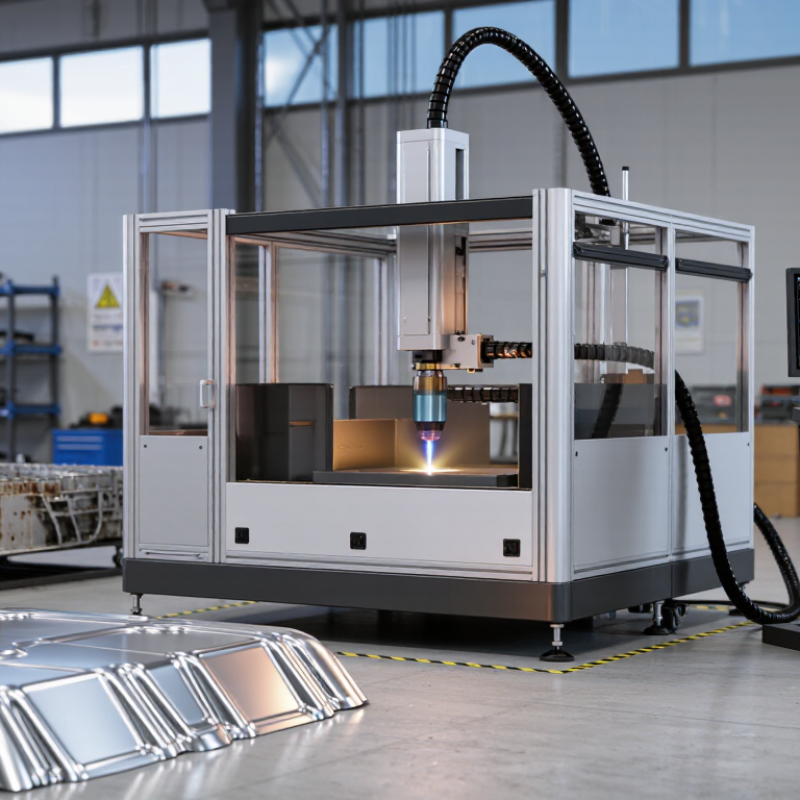
What Is the Best Laser Cleaning Equipment in 2026?

Define Laser Cleaning: Ablation Physics, 1064 nm Wavelengths, and Key Terms

Laser cleaning removes rust, paint, oxide, or residue with focused light instead of abrasive contact. At 1064 nm, solid-state sources emit near-infrared pulses absorbed by many metals and coatings. Absorption raises the contaminant’s temperature rapidly. The layer expands, fractures, and ejects as vapor or particles. This process is called laser ablation. The base material should remain below its damage threshold. That boundary matters.

A pulse is not just a flash. Pulse duration, energy density, repetition rate, spot size, and scanning speed control the result. Energy density is called fluence, measured in J/cm². Too little fluence leaves residue. Too much can discolor steel or texture a surface. Operators sometimes blame wavelength when poor focusing caused the defect. That mistake is common.

For equipment selection in 2026, test the actual substrate and contaminant, not a showroom sample. A stable scanner, adjustable pulse control, extraction, shielding, and interlocked operation deserve equal attention. 1064 nm works broadly, but it is not automatically ideal for every polymer, glass, or delicate coating. Reflectivity, thermal conductivity, and layer thickness change the process window. Ask for measured cleaning rate, surface roughness, and remaining residue. Visual brightness is weak evidence. A slower pass may be safer than reworking damaged parts.

The uncomfortable truth: the best system depends on the surface, not its headline power.

Compare 100–3,000 W Pulsed and Continuous-Wave Laser Systems

What Is the Best Laser Cleaning Equipment in 2026?

Compare 100–3,000 W Pulsed and Continuous-Wave Laser Systems

Choosing laser cleaning equipment depends on the surface, contamination, and production speed. A 100–300 W pulsed system removes rust, paint, and oxide layers with limited heat transfer. Its short bursts protect thin metal, polished tooling, and detailed parts. However, cleaning large steel frames can take longer than expected.

Continuous-wave systems from 500–3,000 W deliver steady energy for heavy rust, thick coatings, and large-area preparation. A 1,500 W unit may clean a broad steel plate quickly, but it can raise surface temperature. Operators should monitor discoloration, distortion, and changes near welds. More power is not always better. That assumption deserves testing.

Tips: Request a sample test using your actual material and contamination. Measure cleaning speed, surface temperature, residue, and electricity use. Check beam controls, extraction compatibility, emergency functions, and operator training. Keep a small untreated area for comparison. This simple step can reveal over-cleaning.

In practical evaluations, pulsed systems often provide better control on delicate components. Continuous-wave equipment can be more productive in workshops processing thick steel every day. Results also depend on scanning width, focal distance, airflow, and operator technique. A reliable supplier should explain these limits clearly and provide measurable test data.

What Is the Best Laser Cleaning Equipment in 2026? - Compare 100–3,000 W Pulsed and Continuous-Wave Laser Systems
System Class Laser Mode Typical Wavelength Typical Pulse or Beam Parameters Typical Scan or Spot Width Indicative Cleaning Productivity* Thermal Impact on Substrate Best-Suited Materials and Contaminants Main Advantages Main Limitations Recommended Applications
100 W Compact System Pulsed fiber laser Typically 1,064 nm Approximately 2–200 ns pulse duration; about 0.5–2 mJ pulse energy; commonly 50–200 kHz Approximately 10–100 mm About 0.1–0.5 m²/h for light rust or paint removal Very low when correctly focused and scanned; suitable for delicate surfaces Thin rust, oxide films, oil, soot, light paint, molds, aluminum, stainless steel, tooling surfaces High selectivity; low heat transfer; compact and relatively easy to control Slow on thick coatings, heavy rust, and large surface areas Precision cleaning, restoration, maintenance, small parts, and laboratory work
200 W Compact Production System Pulsed fiber laser Typically 1,064 nm Approximately 2–200 ns pulse duration; about 1–4 mJ pulse energy; commonly 50–250 kHz Approximately 20–150 mm About 0.2–0.9 m²/h for moderate rust or coating removal Low; heat-affected zones are generally limited compared with continuous-wave systems Oxide layers, weld discoloration, grease, carbon deposits, paint, and delicate metal components Good balance between precision, portability, and cleaning speed Requires more passes than high-power systems on thick or strongly bonded coatings Automotive parts, maintenance workshops, weld preparation, and medium-sized components
300 W High-Performance Pulsed System Pulsed fiber laser Typically 1,064 nm Approximately 2–400 ns pulse duration; about 1–6 mJ pulse energy; commonly 50–300 kHz Approximately 30–200 mm About 0.3–1.5 m²/h for rust, paint, or oxide removal Low to moderate, depending on pulse energy, overlap, focus, and scan speed Heavy oxidation, industrial tooling, molds, weld seams, paint layers, and localized corrosion Strong cleaning performance with good substrate protection and fine process control Higher purchase cost and greater operator-safety requirements than lower-power units Industrial repair, mold maintenance, weld cleaning, and precision production work
500 W Medium-Power System Continuous-wave fiber laser Typically 1,070–1,080 nm Continuous output; adjustable power and scan speed; often used with a 1–5 mm focused spot Approximately 1–5 mm focused spot or a wider oscillating beam About 1–3 m²/h for common rust and coating removal Moderate; process control is important on thin or heat-sensitive materials Carbon steel, structural parts, thick rust, heavy grease, and robust industrial components Higher material-removal rate and lower cost per cleaned square meter Greater risk of discoloration, melting, distortion, or heat accumulation General industrial cleaning, steel components, fabrication, and maintenance work
1,000 W Production System Continuous-wave fiber laser Typically 1,070–1,080 nm Continuous output; commonly operated with a 2–8 mm spot and programmable beam oscillation Approximately 2–8 mm focused or oscillating spot About 2–6 m²/h for moderate rust, paint, or oxide layers Moderate to high; requires correct overlap, travel speed, and cooling conditions Large steel parts, heavy corrosion, thick coatings, weld preparation, and ship or construction components High throughput for large and robust workpieces Less suitable for thin sheet, polished surfaces, plastics, and heat-sensitive substrates Production lines, large fabrications, structural steel, and intensive maintenance
1,500 W Heavy-Duty System Continuous-wave fiber laser Typically 1,070–1,080 nm Continuous output; commonly used with a 3–10 mm spot and automated or semi-automated scanning Approximately 3–10 mm focused or oscillating spot About 3–8 m²/h for heavy rust and thick industrial coatings High; heat input must be managed with fast scanning and suitable process settings Large carbon-steel structures, thick scale, industrial paint, and strongly bonded contamination Very high removal rate and good suitability for large working areas Requires rigid handling, effective fume extraction, and careful thermal-process qualification Heavy manufacturing, large machinery, steel fabrication, and high-volume cleaning
2,000 W Heavy-Industrial System Continuous-wave fiber laser Typically 1,070–1,080 nm Continuous output; commonly used with a 4–12 mm spot and automated motion control Approximately 4–12 mm focused or oscillating spot About 4–10 m²/h for heavy corrosion or thick coatings High; localized overheating can occur if speed, focus, or beam overlap is incorrect Heavy steel structures, industrial equipment, ship components, and large fabricated assemblies Efficient for large surfaces and difficult, strongly bonded contamination High power consumption, increased safety perimeter requirements, and limited suitability for delicate parts Large-scale production, shipyards, construction equipment, and infrastructure maintenance
3,000 W Maximum-Throughput System Continuous-wave fiber laser Typically 1,070–1,080 nm Continuous output; commonly used with a 5–15 mm spot, wide oscillation, and automated scanning Approximately 5–15 mm focused or oscillating spot About 6–12 m²/h for large areas with heavy corrosion or thick coatings Very high; thermal qualification and process monitoring are strongly recommended Large carbon-steel structures, thick industrial coatings, scale, and severe corrosion Maximum throughput for large, robust workpieces and automated cleaning cells High capital cost, substantial fume generation, high energy demand, and poor fit for thin or delicate materials Automated industrial lines, shipbuilding, large infrastructure, heavy equipment, and high-volume production

*Productivity figures are indicative operating ranges for clean, accessible surfaces and depend on contaminant thickness, adhesion, substrate material, beam spot, scan speed, overlap, operator technique, and required surface finish. All systems require wavelength-appropriate laser guarding, interlocks, protective eyewear where applicable, fume extraction, and a documented risk assessment.

Evaluate Cleaning Speed, Energy Efficiency, Precision, and Surface Damage

What Is the Best Laser Cleaning Equipment in 2026?

The best laser cleaner is not simply the highest-powered model. It must balance speed, energy use, precision, and surface safety. Published studies in the Journal of Cleaner Production report that laser cleaning can reduce consumable waste and secondary waste compared with abrasive methods. However, results vary sharply with coating thickness, reflectivity, and contamination.

For speed, compare square metres per hour using the same test material. A 2024 market report from MarketsandMarkets forecasts strong growth in laser cleaning demand, driven by automated industrial maintenance. That growth does not prove every machine performs well. Request measured cycle data, not brochure claims. For energy efficiency, check wall-plug power, cooling demand, and standby consumption. Fiber laser sources commonly achieve electrical efficiencies above 25%, but the complete system may use more energy.

Precision matters on thin metal, moulds, and painted surfaces. Short-pulse systems can remove rust while limiting heat spread. Still, excessive pulse energy may discolor steel or soften a nearby polymer. In practical testing, inspect the surface under angled light and measure roughness before and after cleaning. One overlooked detail is operator consistency. A skilled technician may outperform a faster machine.

Tips: Test three areas: heavy rust, clean metal, and a delicate edge. Record cleaning speed, power draw, surface temperature, and roughness. If the supplier refuses a controlled trial, reconsider the purchase.

Rank Equipment by ISO 11553 Safety, Class 4 Controls, and Automation Needs

What Is the Best Laser Cleaning Equipment in 2026?

The best laser cleaning equipment should be ranked by safety architecture, not cleaning speed alone. ISO 11553 provides a useful framework for evaluating laser processing machine risks, protective measures, and operator exposure. A serious system needs a fully enclosed work zone, verified interlocks, beam stops, warning indicators, and a controlled emergency stop circuit. Class 4 laser controls demand more than a warning label. They require disciplined access management.

Start with equipment designed for frequent manual cleaning. It should offer a keyed enable control, guarded viewing areas, extraction for fumes, and clear status signals. Operators should not reach into an active zone. They also need practical training and documented procedures. Small details matter. A poorly placed emergency button can slow a response.

For higher production, rank automated systems above manual units when repeatability matters. Look for programmable scan paths, door monitoring, fixture detection, and automatic power reduction during faults. Robotic integration can reduce exposure, but it also adds moving-part hazards and maintenance risks. A risk assessment must cover the complete cell, not only the laser source.

The most capable system is not always the best fit. An over-automated machine may create unnecessary complexity for occasional work. Conversely, a basic handheld setup may struggle with production records and consistent results. ISO alignment supports credibility, but it does not replace site-specific evaluation or applicable local requirements. Some equipment specifications appear impressive, yet their safety functions are difficult to verify. That deserves careful questioning.

Select the Best 2026 Laser Cleaner for Steel, Aluminum, Stone, and Heritage Surfaces

What Is the Best Laser Cleaning Equipment in 2026?

The answer depends on the surface, contamination, and acceptable heat exposure. Grand View Research estimated the laser cleaning market at about USD 587.7 million in 2023. Its report also projects strong growth through 2030. This indicates wider industrial adoption, but market growth does not guarantee suitable equipment.

For steel, pulsed fiber lasers usually remove rust, oil, and paint with limited substrate heating. A 100–300 W system can suit many maintenance tasks, while thicker coatings may require higher power. Aluminum needs careful pulse control because its reflective surface can scatter energy. Test a hidden area first.

Stone requires lower fluence and controlled scanning, especially on limestone or marble. A darkened patch can appear quickly. Heritage surfaces demand the greatest restraint. Conservation studies from ICOM-CC emphasize testing, documentation, and reversible intervention before treatment.

The best 2026 laser cleaner should offer adjustable pulse width, scan speed, frequency, and beam size. Extraction matters too, because removed coatings can create hazardous dust or fumes. Reports from the International Organization for Standardization support risk-based equipment selection and documented process controls. In practice, operators should record surface temperature, cleaning distance, and before-and-after images. Small details matter. One limitation remains: published performance data often uses laboratory panels, not weathered monuments or mixed industrial corrosion. Independent trials on the actual material are therefore more reliable than impressive power ratings.