What is a Chinese Electric Truck and How Does it Work?
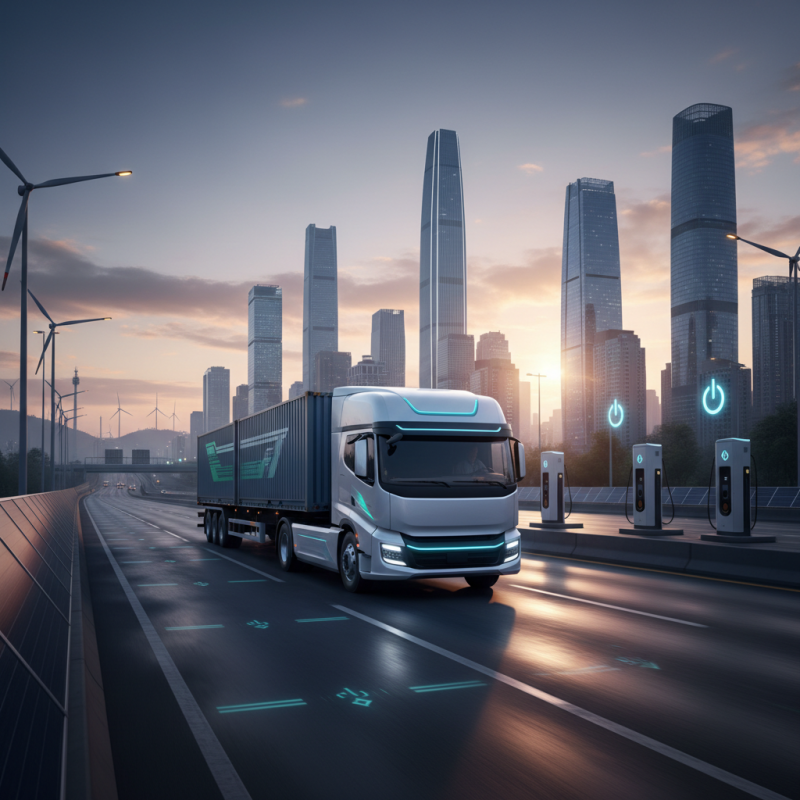
The Chinese Electric Truck is a remarkable innovation in the automotive industry. It embodies China’s push towards sustainable transportation. These trucks aim to reduce carbon emissions while providing efficient logistics solutions. With advancements in battery technology, they promise impressive range and performance.
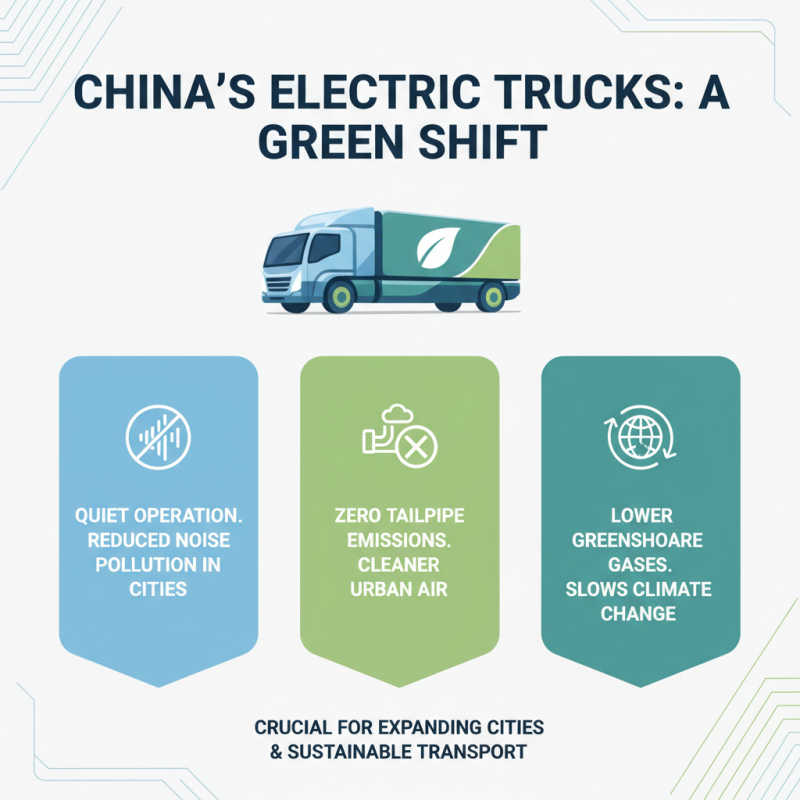
Chinese Electric Trucks operate using electric motors powered by large battery packs. This technology not only lowers operational costs but also minimizes noise pollution. Urban areas particularly benefit from these silent machines. However, challenges remain, such as charging infrastructure and battery disposal concerns.
Moreover, consumers often question the long-term reliability of these vehicles. Manufacturers must address these issues to build trust and expand the market. As the world pivots toward greener alternatives, the Chinese Electric Truck stands as a pivotal figure in shaping the future of transport.
Overview of Chinese Electric Trucks and Their Evolution
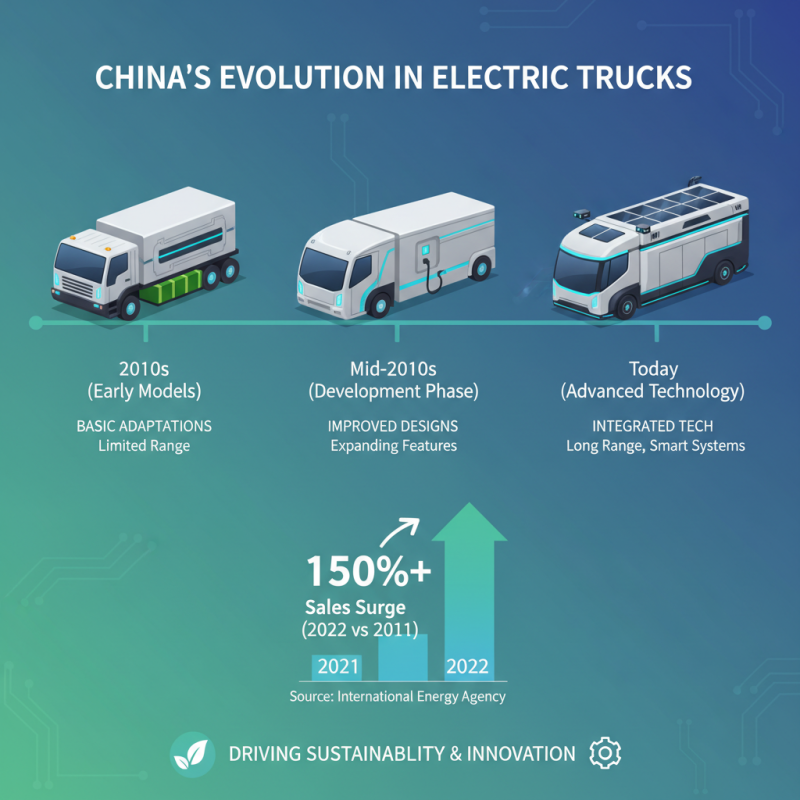
Chinese electric trucks have undergone significant evolution over recent years. Initially, these trucks were basic adaptations of traditional models. Today, they integrate advanced technologies. A report from the International Energy Agency highlighted that electric truck sales in China surged by over 150% in 2022. This increase reflects a growing commitment to sustainability.
The development of battery technology has played a crucial role. Modern electric trucks now have longer ranges and faster charging capabilities. The average range can exceed 300 kilometers before needing a recharge. However, not all regions in China have sufficient charging infrastructure. This can hinder the potential benefits of electric trucks. Companies must adapt to this reality.
**Tip:** When considering an electric truck, research local charging options.
Additionally, the manufacturing process has become more efficient. However, production still faces challenges like sourcing materials. Some manufacturers report delays due to supply chain issues. These factors must be addressed to ensure continued growth in the electric truck sector.
**Tip:** Keep track of market trends and innovations.
Key Components of Chinese Electric Truck Technology
Chinese electric trucks are becoming increasingly popular and crucial for logistics. These trucks mainly rely on several key components to function effectively. The battery system is one of the most essential elements. Modern electric trucks often utilize lithium-ion batteries. According to recent reports, these batteries can provide a range of up to 400 kilometers on a single charge. However, charging infrastructure remains a concern.
The electric motor is another vital component. It not only directly impacts the truck’s efficiency but also plays a role in overall performance. Many electric trucks leverage advanced motor control technologies to optimize energy use. Reports indicate that some models achieve energy efficiencies exceeding 90%. While these figures seem promising, real-world conditions often reveal challenges. Factors like cargo weight and terrain can significantly lower efficiency.
Another important aspect is the regenerative braking system. This technology recoups energy during braking, extending the truck’s range. However, the effectiveness can vary based on driving habits. Data shows that inconsistent braking often leads to suboptimal energy recovery. As this technology evolves, more research is needed to maximize its potential and improve overall reliability. All these components collectively define the capabilities of a Chinese electric truck today.
Working Principles of Electric Motors in Chinese Trucks
Electric trucks have gained traction in recent years, particularly in China. They are designed to reduce emissions and lower operating costs. Central to their operation are electric motors, which are different from traditional combustion engines. These motors convert electrical energy into mechanical energy to move the vehicle.
Electric motors in Chinese trucks typically use alternating current. This type of motor has fewer moving parts than traditional engines. Fewer moving parts mean lower maintenance needs. When electricity flows through the motor, it creates a magnetic field. This field causes a rotor to spin, propelling the vehicle forward. Regenerative braking is an interesting feature. It allows the truck to recover energy while slowing down.
However, there are challenges. Charging infrastructure needs improvement. Also, battery technology is still evolving. Some electric trucks can’t travel as far on a single charge compared to diesel counterparts. The weight of batteries also impacts payload capacity. These issues must be addressed for broader adoption. Electric trucks have potential, but refinement is necessary.
Chinese Electric Trucks: Power Consumption and Range
This bar chart illustrates the relationship between battery capacity and the average range of Chinese electric trucks. As observed, increasing the battery size significantly enhances the driving range, making these vehicles more efficient for long-distance transport.
Battery Technology and Charging Infrastructure for Electric Trucks
Battery technology is at the core of electric trucks. Advanced lithium-ion batteries are commonly used. Their energy density has improved significantly. Today, many trucks can travel over 300 miles on a single charge. However, the weight of these batteries can be a challenge. This impacts payload capacity and overall efficiency. As the industry pushes for lighter batteries, the need for new materials emerges.
Charging infrastructure is equally crucial. Growing networks of fast-charging stations are being developed. Reports estimate that by 2030, there will be about 30,000 fast chargers in key regions. Yet, the distribution is uneven. Some rural areas still lack access to reliable charging. This creates hurdles for electric truck adoption. Companies must address this discrepancy to facilitate growth.
In terms of sustainability, recycling battery components is essential. Current recycling rates are around 5% for lithium-ion batteries. This number needs improvement to minimize environmental impact. Stakeholders are exploring ways to enhance recycling processes. Investing in circular economies could be a game-changer. The future depends on balancing performance, accessibility, and sustainability.
What is a Chinese Electric Truck and How Does it Work? - Battery Technology and Charging Infrastructure for Electric Trucks
| Dimension |
Data |
| Battery Type |
Lithium-ion |
| Battery Capacity |
300 kWh |
| Range per Charge |
300 km |
| Charging Time (Fast Charger) |
70 minutes |
| Weight Capacity |
15 tons |
| Power Output |
400 HP |
| Charging Infrastructure |
Dedicated fast charging stations |
| Emission Reduction |
Zero emissions at point of use |
| Market Trend |
Growing demand for sustainable transport |