How to Choose the Best Pkcell 18650 Battery for Your Needs?
When you're in the market for a battery, the Pkcell 18650 Battery often comes up. It has gained popularity for its reliability and performance. However, choosing the right one can be tricky.
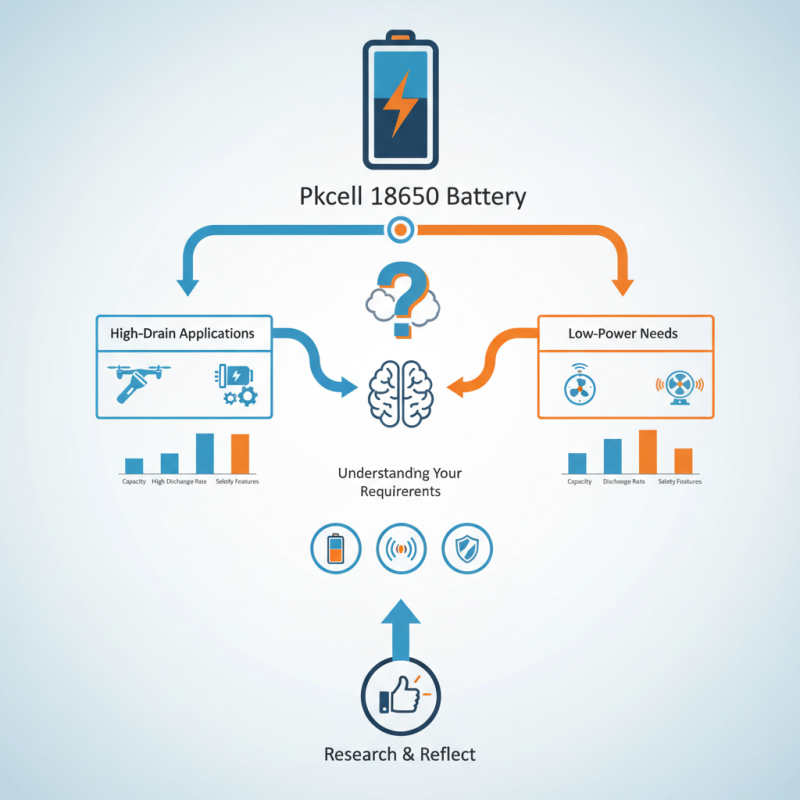
These batteries are used in various devices, from flashlights to electric vehicles. They come with different specifications and features. Not every Pkcell 18650 Battery is the same. Some are designed for high-drain applications, while others are better for lower power needs.
Understanding your requirements is crucial. Do you need a battery for heavy use, or will light usage suffice? Consider aspects like capacity, discharge rate, and safety features. A wrong choice may lead to poor performance or even safety hazards. Take time to research and reflect on your specific needs.
Understanding Battery Specifications for Pkcell 18650
When selecting a suitable 18650 battery, understanding specifications is crucial. Key factors include capacity, discharge rate, and voltage. Capacity, measured in milliamp hours (mAh), indicates how long a battery can power a device. Common capacities for this type range from 1500mAh to 3500mAh. A higher capacity often means longer usage time, but this also affects size and weight.
The discharge rate, indicated by the "C" rating, shows how quickly a battery can provide power. For example, a battery rated at 10A can supply a continuous current of 10 amps. This is vital for high-drain applications like flashlights and vape devices. According to industry reports, many users overlook this detail, leading to inadequate performance.
Voltage is another essential specification. Most 18650 batteries have a nominal voltage of 3.7V. However, this can vary during use and can influence compatibility with certain devices. It's common for users to misinterpret these numbers, resulting in suboptimal performance. A mismatch can lead to safety issues. Therefore, do your homework before making a choice.
Identifying Your Power Requirements for Specific Devices
When choosing the right 18650 battery, identifying your power requirements is crucial. Different devices use different amounts of power. A flashlight may require less energy than a high-performance drone. Understanding the specifics of your device will guide your choice.
For example, if your device operates on high wattage, look for batteries with a higher discharge rate. This ensures optimal performance without overheating. It’s easy to overlook this detail, but it can impact efficiency significantly. A quick check of device specifications can save you time and frustration later.
Tips: Always read reviews and specifications. Some batteries promise high performance but fail in real life. Watch out for misleading claims. Also, consider how often you will use your device. If you use it daily, investing in a more durable battery makes sense. Reflect on past experiences to avoid mistakes. Choosing the right battery is about balancing power needs with real-life usage.
Evaluating Battery Performance: Capacity, Voltage, and Discharge Rate
When selecting a suitable 18650 battery, evaluating performance metrics is crucial. Key factors include capacity, voltage, and discharge rate. Capacity, measured in milliamp hours (mAh), indicates how long the battery will last. For example, a 3000mAh battery holds more energy compared to a 2000mAh one. But higher capacity often means increased size.
Voltage plays a significant role as well. Most 18650 batteries have a standard voltage of 3.7V. However, variations do exist. Higher voltage can enhance performance in certain devices but may also lead to potential risks. It’s essential to match voltage with your device requirements.
Tips: Always check the discharge rate, expressed in amps (A). A battery with a lower discharge rate may not power high-drain devices effectively. For instance, a 10A battery may struggle in a device that requires 20A. Consider your usage habits and device demands. Remember, picking the right battery involves balancing performance and safety. A lack of understanding can lead to improper use and damage. Balancing these factors can enhance battery life and device efficiency.
Exploring Safety Features and Certifications of Pkcell 18650 Batteries
When selecting a high-quality 18650 battery, safety is paramount. Look for batteries that come with multiple safety features, such as overcharge protection and short-circuit prevention. Certification marks like UL, CE, or RoHS indicate that the battery has undergone rigorous safety testing. These certifications ensure that the product meets specific safety standards. Avoid batteries lacking clear labeling or certifications. They might not provide the protection you need.
Tips: Always check the packaging. Does it have safety warnings or information? A well-labeled battery is often a safer choice.
Battery performance can decline over time. Regularly inspect your batteries for signs of wear, such as swelling or leaking. Store unused batteries in a cool, dry place. This can help maintain their integrity. Familiarize yourself with the battery’s temperature range. Batteries can heat up under heavy use. Too much heat can cause failure, or worse, accidents.
Tips: Keep an eye on charging practices. Overcharging can degrade battery safety. Short charging cycles are often better.
Comparing Price and Value: Finding the Best Option for Your Budget
Choosing the right battery can be daunting. With numerous options available, it's crucial to compare price and value effectively. A recent industry report states that consumers often focus solely on price, missing vital factors such as battery lifespan and performance. For instance, a cheaper model may only last 300 recharge cycles, whereas a slightly more expensive option could provide over 1,000 cycles. This evidence suggests that investing a bit more can yield significant long-term savings.
Tips: Always check the capacity rating in milliamp-hours (mAh). Higher ratings generally mean a longer-lasting charge. Furthermore, consider the discharge rate, especially if you're using the battery for high-drain devices. A discharge rate of 10A or higher is often ideal.
It’s worth noting that not all batteries are created equal, even within the same price range. Some lower-priced batteries might not meet safety standards. A thorough review of consumer feedback can reveal reliability issues. Remember to look up certifications like UL or CE markings. These elements enhance safety, ensuring your choice is not just budget-friendly but also secure.