
Sorry. We did not find anything.

How to Choose a High Frequency Power Inverter at Canton Fair 2026?

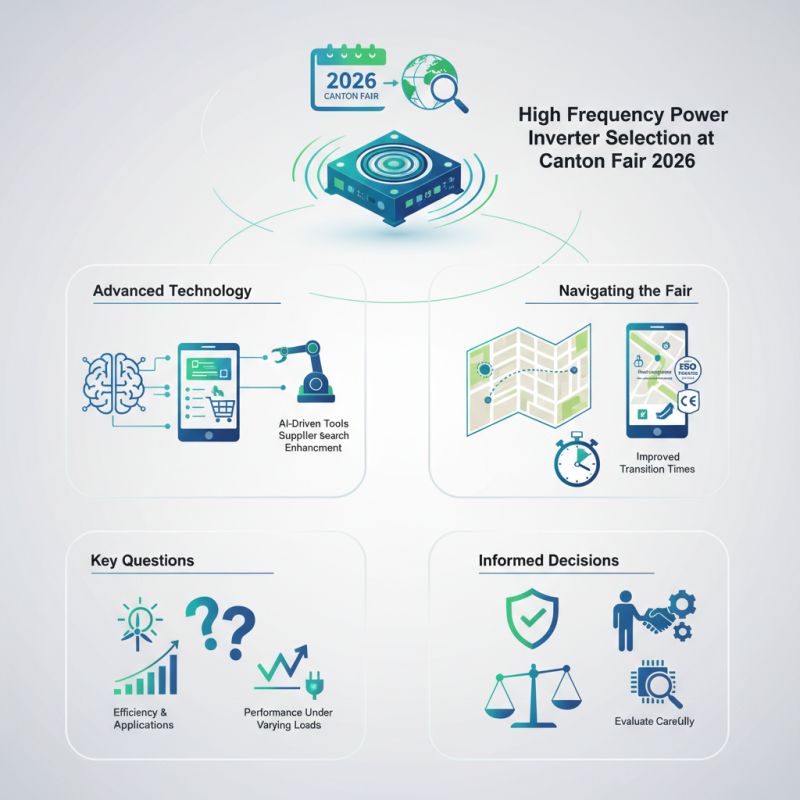
As we approach the 2026 Canton Fair, selecting the right high frequency power inverter becomes more crucial than ever. This fair will introduce advanced technologies, making it an ideal venue for procurement. Attendees can benefit from AI-driven tools, enhancing their search for suppliers. High frequency power inverters are vital for efficient energy conversion in renewable applications.

Navigating a vast area of 1.55 million square meters can be overwhelming. The smart navigation feature helps buyers locate suppliers with specific qualifications, such as ISO or CE certifications. It improves transition times significantly. This feature prompts buyers to rethink their strategies for evaluation. Choosing the right inverter should not be rushed, as the wrong choice can lead to inefficiencies.

The showcase will feature many brands, each with unique offerings. However, it’s important to ask critical questions. What are the inverter’s efficiencies? How does it perform under varying loads? Engaging with vendors can reveal valuable insights. Prepare to make informed decisions. Remember, not every inverter meets the highest standards, so evaluate carefully.
How to Choose a High Frequency Power Inverter at Canton Fair 2026?

Understanding High Frequency Power Inverters: Key Features and Benefits

High-frequency power inverters are essential for various applications. They convert DC power into AC power efficiently. Understanding their key features can aid in making informed choices. For instance, their size is often compact, which makes them suitable for various environments. Studies show that high-frequency inverters can achieve efficiency rates above 90%. This is significant in reducing energy waste.

Another vital aspect is the waveform output. High-frequency inverters typically provide a pure sine wave output. This ensures compatibility with sensitive electronics. In fact, reports suggest that devices running on pure sine wave inverters have a longer lifespan. While many focus on price, considering efficiency and output quality is equally important.

However, one must reflect on the reliability of these products. Some high-frequency units may experience performance issues under heavy loads. It’s crucial to assess the inverter’s rating. The wrong choice can lead to equipment failure or damage. Therefore, doing thorough research and examining user reviews can help navigate potential pitfalls.

How to Choose a High Frequency Power Inverter at Canton Fair 2026?

Feature Description Benefits Considerations
Power Output Measured in watts, indicating the maximum load the inverter can handle. Ensures the inverter can power your devices without overload. Choose output that exceeds your total load requirements.
Efficiency Rating Percentage that indicates how much DC power is converted to AC power. Higher efficiency reduces energy waste and operational costs. Look for an efficiency rating above 90%.
Input Voltage The voltage required at the input side of the inverter, commonly 12V, 24V, or 48V. Compatibility with your battery system is crucial for efficient operation. Ensure it matches your battery's output voltage.
Waveform Type Types include pure sine wave and modified sine wave, affecting the quality of power output. Pure sine wave is better for sensitive electronics. Evaluate what devices you’ll be powering.
Safety Features Includes overload, short circuit, and over temperature protection. Enhances the reliability and lifespan of the inverter. Always check for adequate safety certifications.
Form Factor Size and weight of the inverter, affecting portability and installation. Compact designs are easier to carry and install. Consider installation space and mobility needs.

Identifying Your Power Needs: Calculating Wattage and Usage Requirements

Choosing a high-frequency power inverter requires careful consideration. Calculating your wattage needs is essential. Start by listing devices you plan to power. Identify their wattage, typically mentioned on their labels. Add the wattage for all devices for a total.

Tips: Don't forget to consider peak wattage. Some devices, like refrigerators, may use more power temporarily. Include this in your calculations.

Reflect on how often you'll use these devices. Will they run continuously or sporadically? Understanding your usage can impact the inverter’s efficiency. If you overestimate your needs, you might end up with an inverter that’s unnecessarily large.

Another point to ponder is the inverter's compatibility with your setup. Not all inverters work the same way. Some may have limitations on types of devices they support. Pay attention to this detail. A mismatch could lead to frustrations later.

Evaluating Inverter Specifications: Waveform, Efficiency, and Load Capacity

When selecting a high-frequency power inverter at the Canton Fair, focus on the specifications. One critical aspect is the waveform. Inverters can produce pure sine wave, modified sine wave, or square wave outputs. Pure sine wave inverters are more compatible with sensitive electronics. They deliver smoother and cleaner power. Modified sine wave options are often cheaper, but they may lead to inefficiencies. This means potential issues with some devices. Understanding your applications can guide your choice.

Efficiency is another vital consideration. It indicates how well the inverter converts DC energy to AC energy. An inverter with high efficiency wastes less energy as heat. It's usually expressed as a percentage. Look for values above 90%. However, be aware that these ratings may vary under different load conditions. This is where real-world testing can differ from advertised claims. Consider asking others about their experiences.

Load capacity is the final piece of the puzzle. This determines how much power the inverter can handle. Ensure it meets your requirements, especially during peak use. Sometimes, people underestimate their needs. This can lead to equipment failure or inefficiencies. Take careful measurements of your appliances’ wattage. You might find discrepancies between expected and actual numbers. Balancing these factors can be challenging but essential for a practical purchase decision.

Comparing Brands and Models: Researching Industry Leaders at Canton Fair

Choosing a high-frequency power inverter can be overwhelming, especially at a bustling event like the Canton Fair. The key is to research brands and models before you arrive. Look for industry leaders in the inverter market. This research will save time and frustration at the fair.

Tips: Create a checklist of must-have features. This will keep you focused. Compare different models side by side. Identify strengths and weaknesses. Sometimes, a well-known brand may not suit your needs.

Visit manufacturers' booths to gather information. Ask questions about warranties and customer support. Don't hesitate to request product demonstrations. This could reveal potential issues. Trust your intuition; if something feels off, it might be worth reconsidering. Remember, not every model will meet your specific requirements, even from established brands.

Assessing Price and Warranty Options: Ensuring Value for Your Investment

When selecting a high-frequency power inverter at the Canton Fair 2026, price and warranty can significantly impact your investment's value. A recent report from the Energy Storage Association indicates that many consumers prioritize these factors. Inverters range from $150 to $1,500 depending on specifications. A good warranty can mean more than just peace of mind. It reflects the manufacturer’s confidence in their product.

Warranties tend to vary. Some top-tier options offer five years, while others provide only one year. A longer warranty might indicate higher quality. Still, consider the fine print. Many warranties do not cover specific damages. This can leave customers vulnerable after purchase.

Investing in a high-frequency power inverter requires careful consideration. Check customer reviews for real-world reliability. Explore options with clear warranty terms. Sometimes, the cheapest choices lead to unexpected costs later. It’s wise to question why some models are less expensive. The initial savings might not justify future repairs or replacements. Understanding these details can help navigate your choices at the fair.