
Sorry. We did not find anything.

How to Choose an Electric Trike for Commuting?

Choosing an Electric Trike For Commuting starts with your real route, not a glossy specification sheet. The U.S. Federal Highway Administration reports that 52% of daily trips are three miles or less. That distance suits electric-assist transport, especially when hills, groceries, or limited balance make a standard bicycle less practical. A trike can feel reassuring at a red light. It can also feel surprisingly wide in a narrow bike lane.

Industry evidence supports careful comparison. The 2023 PeopleForBikes e-bike impact research found that many riders use e-bikes to replace car journeys, rather than adding another recreational activity. However, broad e-bike data does not automatically predict trike performance. Cargo weight, motor torque, battery capacity, turning radius, and parking access matter more during daily commuting. The European Cyclists’ Federation also emphasizes that protected cycling infrastructure strongly influences safety and transport choices. Specifications cannot repair a dangerous route.

Richard Peace, an electric-bike author and industry analyst, advises, “Test ride before you buy.” That short advice deserves more attention. A ten-minute showroom ride may hide awkward hill starts, difficult reversing, or uncomfortable controls. Try the trike with your work bag, rain gear, and a realistic load. Check whether the battery can cover your round trip with reserve power. Compare the warranty, replacement battery price, service network, and frame stability. The lowest purchase price may become expensive later. This guide examines those practical details, while acknowledging one uncomfortable truth: no single Electric Trike For Commuting fits every rider, route, or climate.
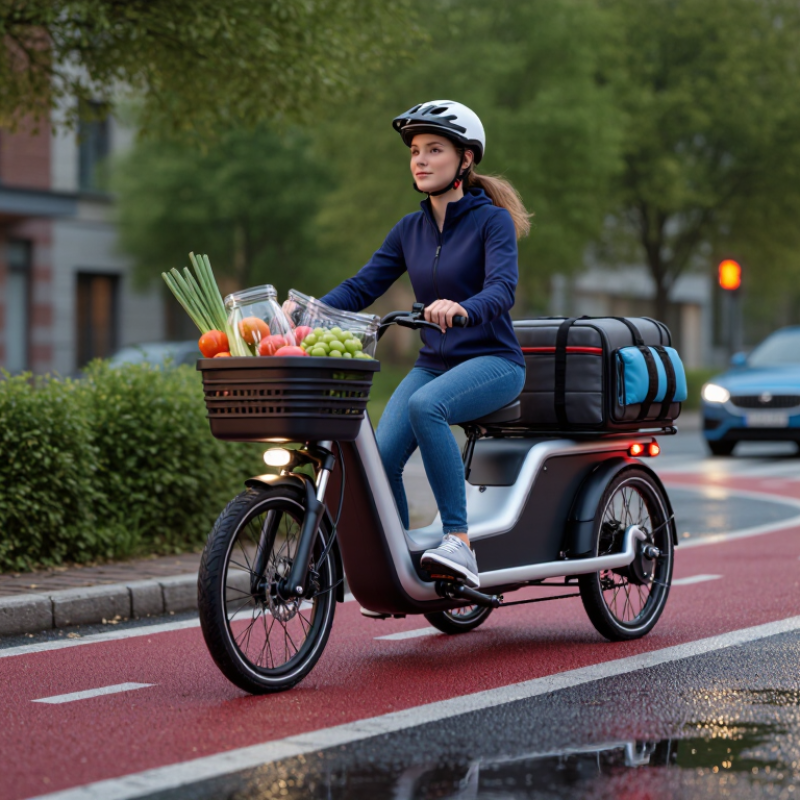
How to Choose an Electric Trike for Commuting?

Define Your Daily Commuting Needs and Riding Conditions

Choosing an electric trike for commuting starts with your actual routine, not a showroom specification. The U.S. Census Bureau’s 2023 American Community Survey reports an average commute of about 27 minutes. That can mean nearly an hour of daily riding. Measure your one-way distance, steepest hill, road surface, and parking space. A short, flat trip may need modest battery capacity. Longer routes, heavy loads, or repeated climbs require stronger hill performance and dependable charging access.

Riding conditions matter just as much. Record potholes, narrow lanes, rain exposure, and winter temperatures. The National Highway Traffic Safety Administration notes that vulnerable road users face greater risks in mixed traffic, so stable handling and effective lights deserve serious attention. Test the trike with your normal bag or work equipment. Check whether you can start, stop, and turn comfortably on a slope. A wider rear axle can improve stability, but it may make tight bike-lane positioning difficult. That trade-off is easy to underestimate.

Tips: Track five typical trips before buying. Note distance, elevation, traffic, and cargo weight. Choose a battery with practical reserve, not just the advertised maximum range. The U.S. Department of Energy warns that cold weather can reduce battery performance, so leave extra capacity during winter. Also, confirm charging time, removable-battery weight, brake feel, and local storage conditions. My own assumption would be simple: more power is always better. It is not. Excess weight can make daily handling tiring.

Compare Electric Trike Types, Motors, Batteries, and Range

Choosing an electric trike for commuting starts with its layout. Delta trikes feel stable at low speeds and suit short urban trips. Tadpole trikes usually steer more precisely, especially on wet corners. Cargo models carry groceries, but their frames and wider tires add weight. The International Energy Agency’s Global EV Outlook 2024 reports that electric two- and three-wheelers remain a major electrification segment worldwide. That matters because parts and charging support may improve faster in busy markets.

Motor position changes the ride. A front motor can pull the trike over loose surfaces, yet it may feel less natural while turning. A rear motor often gives steadier acceleration. Mid-drive systems can climb hills efficiently, but they cost more and add drivetrain stress. For daily commuting, 500–750 watts is often adequate, depending on local rules and hills. Battery capacity deserves more attention than advertised range. A 500 Wh battery may provide 20–30 miles in mixed conditions, not in a perfect showroom test. Real range is untidy.

Track your route before buying. Ten miles each way, strong headwinds, and two heavy panniers can demand a larger battery. The American Automobile Association found that cold weather reduced tested EV range by up to 41% at 20°F. Smaller trike batteries may suffer similarly, though results vary. Choose removable batteries when charging indoors matters. I would also leave 20% capacity unused; this feels wasteful, but it reduces daily range anxiety and protects against unexpected hills. Check the brakes, tire width, lighting, and frame fit during a real test ride, not only in a parking lot.

Check Stability, Comfort, Safety, and Rider Accessibility

How to Choose an Electric Trike for Commuting?

Stability should come before speed. A wider rear track can reduce wobble during turns, but it may feel awkward on narrow paths. Test the trike at walking pace. Turn around a parked car. Check whether the frame leans naturally or resists your movement. The World Health Organization’s Global Status Report on Road Safety 2023 states that more than half of road deaths involve vulnerable road users. That makes predictable handling important, not optional.

Comfort affects daily use. Look for an adjustable seat, upright back support, easy-to-reach controls, and pedals that match your leg length. Step-through access helps riders with limited hip or knee movement. A low loading height also reduces the risk of losing balance while mounting. Try carrying a small work bag. Some cargo platforms look useful but sit too close to the rider’s heels. I once underestimated this detail. It can become irritating after several commutes.

Tips: Test the brakes with one hand and then both. Check lighting, reflectors, tire grip, and battery placement. NHTSA’s 2022 Traffic Safety Facts recorded 1,105 pedalcyclist deaths in the United States. Use a certified helmet, choose visible clothing, and practice emergency stops in an empty area. Ask for a professional fit if your shoulders feel tense. Small discomfort becomes a habit. That habit may need correction.

How to Choose an Electric Trike for Commuting? - Check Stability, Comfort, Safety, and Rider Accessibility
Evaluation Area Key Specification or Target Practical Commuting Standard Why It Matters Priority
Stability Track width: approximately 70–85 cm Wide enough to reduce side-to-side movement while still fitting through common gates and cycle paths. A wider track generally improves resistance to tipping during low-speed turns and stops. High
Stability Low center of gravity and evenly distributed load Battery mounted low on the frame; heavy cargo placed near the floor and centered between the wheels. Lower, centered weight can make the trike feel more predictable when carrying groceries or work equipment. High
Stability Turning radius: about 1.8–2.5 m Test a full turn in the intended storage area, driveway, and narrow intersections. A manageable turning circle reduces the need for repeated reversing or awkward three-point turns. Medium
Comfort Adjustable saddle height and handlebar position Knee remains slightly bent at the lowest pedal position, with relaxed shoulders and upright reach. Correct fit can reduce knee, wrist, shoulder, and lower-back strain on daily rides. High
Comfort Tire size: commonly 20–26 inches Choose tires suited to the route: wider pneumatic tires for uneven pavement and puncture-resistant tires for urban streets. Tire volume and pressure have a noticeable effect on vibration, grip, and rolling comfort. Medium
Comfort Suspension seat post or frame damping Useful for routes with potholes, brick paving, or frequent curb transitions; verify that suspension travel does not reduce stability. Vibration control can improve comfort without requiring a very soft saddle. Medium
Safety Hydraulic or well-adjusted mechanical disc brakes Both wheels on the braking axle should stop smoothly without pulling sharply to one side. Consistent braking is especially important for a heavier trike or a rider carrying cargo. High
Safety Front and rear lights, reflectors, and a horn or bell Use lights visible from the front and rear; add side reflectivity for intersections and low-light travel. Visibility equipment helps other road users recognize the trike’s width and position. High
Safety Motor assistance with predictable acceleration Prefer adjustable assist levels, smooth low-speed start-up, and a motor cutoff when braking. Gentle starting behavior helps maintain control in traffic, at crossings, and on inclines. High
Rider Accessibility Step-through height: ideally below 45 cm The rider should be able to step over the frame comfortably while wearing normal commuting clothing. A low step-through design makes mounting and dismounting easier for riders with limited hip or leg mobility. High
Rider Accessibility Stable parking support: dual-leg kickstand or parking brake The trike should remain stationary while the rider mounts, dismounts, or loads a bag. A secure parked position lowers the risk of the trike rolling or tipping during transfers. High
Carrying Capacity Rated payload: approximately 120–180 kg including rider and cargo Calculate rider, bags, accessories, and cargo together; never rely only on the basket rating. Staying within the total payload rating supports braking performance, handling, and frame durability. High
Range Battery capacity: commonly 400–700 Wh Select capacity based on round-trip distance, hills, rider weight, assist level, temperature, and charging access. Real-world range is usually lower than laboratory or low-assist estimates. Medium
Commuting Fit Overall width and storage clearance Measure doors, elevators, ramps, bike racks, and storage spaces before buying; allow extra clearance for mirrors. A trike that cannot pass through the route or storage area will be impractical regardless of its other features. High
Test Ride Minimum evaluation time: 20–30 minutes Ride on a flat road, tight corner, gentle slope, rough surface, and stop-and-start section with typical cargo. A structured test reveals steering behavior, comfort, braking response, and mounting difficulty better than a short showroom ride. High
Quick selection rule: Prioritize a stable track width, low step-through frame, effective brakes, predictable motor assistance, correct rider fit, and enough total payload capacity for both the rider and daily cargo.

Evaluate Size, Weight, Storage, Charging, and Maintenance

Choosing an electric trike for commuting starts with your daily route, not its advertised motor power. FHWA’s 2017 National Household Travel Survey placed the average U.S. commute near 11.5 miles one way. Measure your actual route, then select a battery with comfortable reserve. A 20–30% buffer helps during cold weather, hills, and battery aging. I would test the trike fully loaded. An empty test ride can be misleading.

Size and weight affect daily convenience. Measure doorways, elevator openings, and bicycle parking spaces before purchase. A wide rear axle may handle groceries well, but it can become awkward on narrow paths. Check the complete weight, including the battery and rack. Some commuters can lift 70 pounds briefly, but repeated lifting quickly becomes unpleasant. Storage also needs practical detail: confirm the basket’s usable depth, rain protection, and maximum load. Small wheels may simplify storage, yet they can feel harsher over broken pavement.

Charging should match your workplace routine. The International Energy Agency’s Global EV Outlook 2024 reported that electric two- and three-wheelers represent a major share of global electric-vehicle use, but charging access remains uneven. Confirm whether the battery is removable and whether workplace outlets are permitted. For maintenance, inspect brake pads, tires, chain tension, lights, and electrical connectors monthly. Use the manufacturer’s approved charger and keep the battery dry. I sometimes overvalue range estimates. Real traffic, cargo, and hills can change them sharply. A local repair shop’s experience matters more than a polished specification sheet.

Match Features, Budget, and Local Regulations Before Buying

How to Choose an Electric Trike for Commuting?

An electric trike should fit your route, not only your shopping list. Before buying, check your city’s transport authority for rules on motor power, speed, lighting, and road access. Local requirements can differ between streets, cycle paths, and shared paths. Save a screenshot of the official guidance. Sales descriptions are not legal advice.

Test the trike on a quiet slope, a tight corner, and uneven pavement. I would check whether the frame feels stable when turning slowly. A low step-through frame helps during frequent stops. Wide tires can improve comfort, but they may increase rolling resistance. Ask about battery capacity, charging time, replacement cost, and warranty coverage. A rear basket may carry groceries, while hydraulic brakes can add confidence in wet weather.

Set a complete budget, not just a purchase price. Include a lock, helmet, lights, maintenance, insurance, and possible battery replacement. I once underestimated storage space; a trike that fits the road may not fit through your doorway. Measure both before ordering. Leave room for error. Some advertised travel ranges assume light loads, warm weather, and flat roads. Your commute may include wind, hills, or winter clothing, so a modest reserve matters.

How to Choose an Electric Trike for Commuting?

Match features, budget, and local regulations before buying. The chart compares common maximum assisted-speed thresholds for electrically assisted cycles in selected markets. Always verify local rules for trike width, road access, equipment, power, and speed.

How to use this chart: Choose a trike whose assistance settings stay within the legal threshold where you ride. Speed limits are only one part of compliance; local requirements may also cover motor output, lighting, helmets, braking, registration, and whether the vehicle may use bicycle lanes or public roads.