How to Choose the Best Construction Truck for Your Needs?
Choosing the right Construction Truck can be a daunting task. According to industry expert John Smith, “A perfect construction truck meets both the demands of the job and the needs of the operator.” Understanding your specific requirements is crucial. The selection process involves various factors, such as load capacity, terrain, and fuel efficiency.
When exploring options, consider the type of projects you take on. A robust construction truck designed for heavy-duty use may be necessary for large-scale construction sites. Conversely, a lighter model could suffice for smaller jobs. Don't overlook the importance of comfort and ease of use for the operator. The right vehicle can boost productivity and safety on the job site.
Pay attention to maintenance costs as well. Some trucks may appear cheaper upfront but could lead to higher expenses down the line. Practicality often means prioritizing long-term value over initial price. Reflecting on personal needs and experiences can aid in making a more informed decision. The construction truck you choose should support your work efficiently while being reliable for years to come.
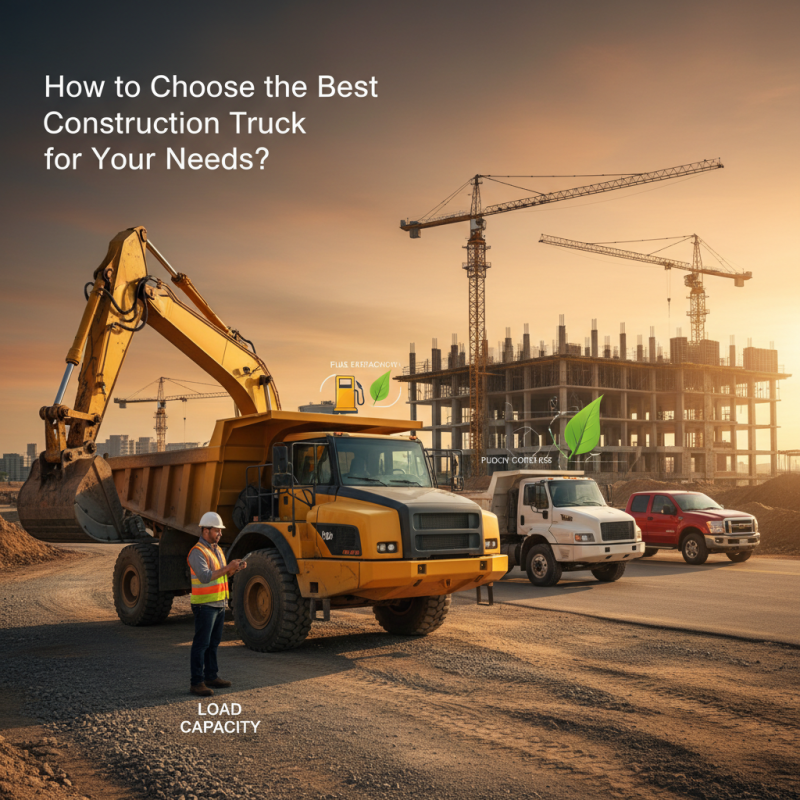
Factors to Consider When Choosing a Construction Truck
Choosing the right construction truck is essential for efficiency. Start by evaluating your needs. Consider load capacity and terrain type. Different projects require various truck designs. A larger capacity is vital for heavy materials. Meanwhile, if your work involves narrow spaces, opt for a more compact model.
Fuel efficiency should also be on your checklist. Trucks that consume less fuel save money in the long run. Look into maintenance costs too. Some vehicles may require frequent repairs. This factor can heavily impact your budget. Explore the features that enhance functionality, like towing capacity or dump capabilities.
Don't forget about the comfort and safety aspects. A comfortable cabin can improve productivity. Safety features like anti-lock brakes are crucial for workers on-site. Sometimes, these features can be overlooked, leading to regrettable outcomes. Seek expert advice or reviews for additional insights. Balancing all these factors ensures you make a well-informed choice.
How to Choose the Best Construction Truck for Your Needs?
| Feature | Description | Importance Level | Example |
| Payload Capacity | The maximum weight the truck can carry. | High | 2 Tons |
| Fuel Efficiency | Miles per gallon (MPG) the truck achieves. | Medium | 15 MPG |
| Size and Maneuverability | The dimensions of the truck for navigating job sites. | High | Compact Size |
| Towing Capacity | The weight the truck can safely tow. | High | 5 Tons |
| Terrain Capability | Ability to handle different types of terrain. | Medium | All-Terrain |
Types of Construction Trucks and Their Specific Uses
When selecting a construction truck, understanding the different types available is crucial. There are several classifications based on specific functionalities. Dump trucks are ideal for transporting loose materials like dirt or gravel. In contrast, concrete mixers are essential for jobs that require wet concrete delivery. According to industry data, approximately 25% of construction projects rely on dump trucks for effective waste management.
Tip: Evaluate the load capacity you need. Each truck type has a defined limit that can impact your project's efficiency. It’s important to match your truck to the job requirements. Flatbed trucks, for instance, work well for heavy equipment transport. Yet, their open design leaves materials exposed to the elements, posing a risk.
Another vital type is the crane truck, crucial for lifting heavy materials on site. A report indicated that crane trucks account for 30% of equipment-related injuries due to improper use. Therefore, operator training is essential to optimize safety and performance. Consider the terrain and features of your worksite when choosing your truck type. Not all trucks perform well in all environments.
Tip: Always inspect the vehicle before use. Look for any potential mechanical issues. This guarantees safe operations and reduces downtime during projects. Proper planning can prevent delays and enhance productivity.
Evaluating Payload Capacity and Towing Requirements
When selecting the best construction truck, understanding payload capacity and towing requirements is crucial. Payload capacity refers to the maximum weight a truck can carry. Knowing your typical load will direct your choice. For instance, if your work involves transporting heavy materials, opt for a truck with a higher payload. Always remember that exceeding this limit can lead to safety issues.
Towing capacity is just as vital. It indicates how much weight your truck can pull. If your projects require hauling trailers or equipment, calculate the weight you'll tow. A truck's towing capacity must exceed this weight for safety and efficiency. A truck should be compatible with your trailer specifications and materials.
Tips: Check the manufacturer’s specifications for payload and towing ratings. Always consider your project’s specific requirements. Over time, you may find that your needs change. Revisit these criteria as your business grows. A truck that fits today may not be suitable in the future. Evaluate both standard configurations and optional upgrades for versatility.
Assessing Fuel Efficiency and Operational Costs
When selecting a construction truck, assessing fuel efficiency and operational costs is vital. According to industry data, construction trucks can account for up to 30% of total operating expenses. Understanding fuel consumption helps businesses manage their budgets effectively. For instance, trucks with superior fuel efficiency can save companies thousands annually.
Regular maintenance can impact fuel efficiency dramatically. A report by the U.S. Department of Energy indicates that a well-maintained truck can improve fuel economy by as much as 10%. Neglecting this aspect may lead to unnecessary costs and reduced efficiency. Choosing a model that offers easy access for servicing can lead to better long-term savings.
Operational costs include more than just fuel. Insurance, tires, and depreciation are critical factors. The perfect truck should balance low fuel consumption with durable components. Investment in technology, like telematics, offers insights into driving habits. This can further assist in reducing fuel costs by optimizing routes. Choosing the best truck isn't solely about upfront costs. It's a reflection of a company's commitment to sustainability and long-term financial health.
Understanding Maintenance Needs and Lifespan of Trucks
When selecting a construction truck, understanding maintenance needs and lifespan is crucial. Trucks typically require regular maintenance for optimal performance. According to industry reports, over 30% of truck downtime is attributed to maintenance issues. This statistic underscores the importance of regular checks and timely repairs. Basic tasks include oil changes, brake inspections, and tire rotations. Skipping these can lead to costly repairs later.
The lifespan of construction trucks varies. Most heavy-duty models last between 10 to 15 years, depending on usage. Data from fleet management studies show that proper maintenance can extend a truck's life by 20%. This means investing in quality servicing pays off. Using durable parts increases reliability while reducing unexpected breakdowns. However, operators sometimes overlook the signs of wear and tear. This can result in accidents and financial losses.
Finally, understanding your specific workload is key. Trucks used in extreme conditions may wear down faster. A truck used for heavy lifting in rough terrains often requires more frequent maintenance checks. Regularly assessing the vehicle's condition is essential for fleet optimization. It’s important not to rely solely on scheduled maintenance. Keeping an eye on performance indicators can prevent future issues.
Truck Maintenance and Lifespan Comparison
