
Sorry. We did not find anything.
Choosing the right Fpga Chip is not simply a matter of comparing logic cells. It is a system-level decision involving performance, power, memory, interfaces, tools, cost, and product lifetime. A device that looks affordable on a distributor’s page may require expensive development boards, licenses, or thermal control later. That hidden cost matters.
Industry forecasts show why this decision deserves careful analysis. MarketsandMarkets estimates that the global FPGA market will grow strongly through 2028, driven by data centers, telecommunications, automotive electronics, aerospace, and industrial automation. The Semiconductor Industry Association also reports continued investment in advanced semiconductor manufacturing and supply-chain resilience. These trends create more choices, but they also increase technical pressure. Buyers must evaluate architecture, availability, and support instead of following market popularity.
A practical selection begins with the workload. Measure the required clock speed, parallel operations, latency, memory bandwidth, and I/O standards. For example, a machine-vision design may need rapid sensor processing, while a motor-control system may prioritize deterministic timing and low power. Security features, radiation tolerance, and functional-safety support can also change the shortlist. Reports from Gartner and embedded-systems research groups repeatedly emphasize lifecycle management, tool maturity, and vendor ecosystem strength in long-term hardware programs. Still, no report can fully predict your board temperature, firmware quality, or production volume. That is the uncomfortable part. A perfect specification sheet may fail in the laboratory. Testing representative workloads on evaluation hardware remains essential before committing to an Fpga Chip.
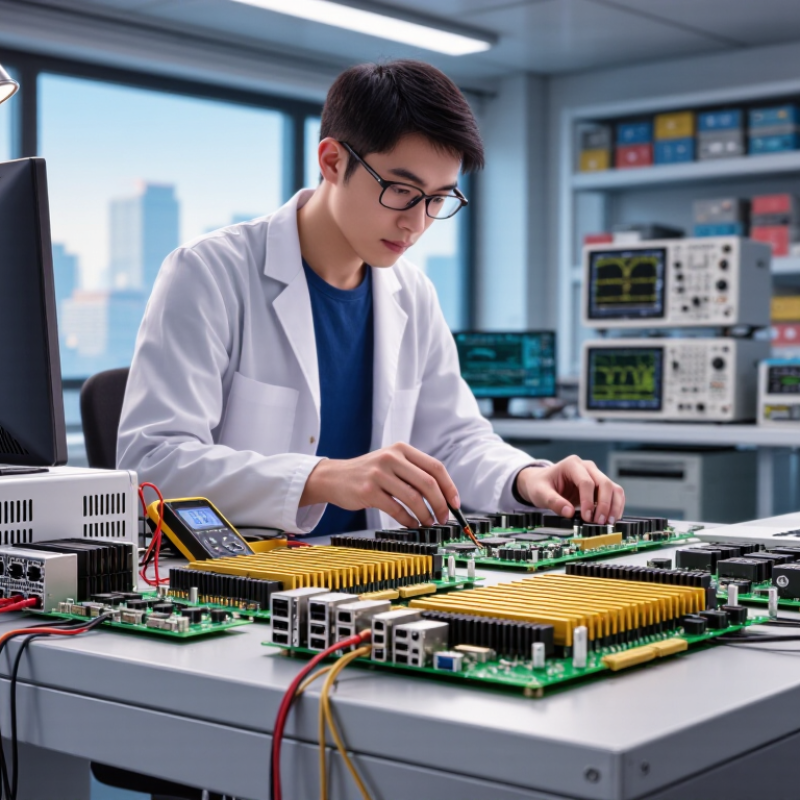
Choosing an FPGA begins with defining the workload, not comparing package sizes. Write down input rates, output rates, latency limits, operating temperature, power targets, and required interfaces. A camera pipeline may process 4K frames continuously, while a control system may handle only occasional sensor events. These workloads need different architectures.
Quantify the work in clock cycles. For each task, estimate arithmetic operations, memory transfers, parallel channels, and peak bursts. Leave practical headroom. A design that consumes 90% of lookup tables may pass simulation but become painful during timing closure. The 2024 MarketsandMarkets report estimated the FPGA market would grow from about 9.6 billion dollars in 2024 to 15.5 billion dollars by 2029. That growth reflects wider use in communications, industrial systems, and accelerated computing, where workload efficiency matters more than raw logic capacity.
Memory often changes the decision. Count external bandwidth, on-chip storage, buffer depth, and access patterns separately. A filter needing frequent random reads may fail with generous logic but limited memory ports. Also model real data, not ideal test vectors. Bursty traffic, packet loss, and temperature drift expose weak assumptions. The 2024 WSTS forecast projected global semiconductor sales growth of 16 percent, yet supply conditions can still shift during a project. I would verify availability early, then repeat the check before layout. My first estimate is rarely perfect. That is useful.
| Project Workload | Typical Processing Requirement | Recommended Logic Capacity | DSP Requirement | On-Chip Memory Requirement | High-Speed Interface Need | Typical I/O Need | Estimated FPGA Power Target | Key Selection Priorities |
|---|---|---|---|---|---|---|---|---|
| Low-Latency Control and Sensor Management | Deterministic state machines, sensor control, motor or power-control loops, and moderate data filtering | 5,000–30,000 logic elements | 0–40 DSP blocks | 0.5–4 Mbit | None or basic serial links such as SPI, I²C, UART, or low-speed Ethernet | 30–120 single-ended or differential I/O | 1–5 W | Low cost, small package, low static power, sufficient control-timing margin, and industrial temperature support where required |
| Embedded Vision and Image Preprocessing | Pixel pipelines, color conversion, image scaling, filtering, feature extraction, and frame buffering | 30,000–150,000 logic elements | 50–500 DSP blocks | 4–40 Mbit | Camera interfaces, parallel video, MIPI-class links, or 1–10 Gb/s data connections | 80–300 I/O | 3–15 W | DSP density, block-RAM bandwidth, external memory support, clocking resources, and efficient streaming architecture |
| Real-Time Audio and Communications | Multi-channel filtering, channel coding, modulation, packet processing, and deterministic protocol handling | 50,000–250,000 logic elements | 100–1,000 DSP blocks | 8–80 Mbit | 1–25 Gb/s transceiver links may be required for high-throughput systems | 80–250 I/O | 5–20 W | DSP performance, transceiver count, signal integrity, low-jitter clocking, deterministic latency, and memory bandwidth |
| Industrial Networking and Protocol Bridging | Frame parsing, packet classification, time synchronization, traffic shaping, and protocol conversion | 40,000–180,000 logic elements | 20–200 DSP blocks | 4–32 Mbit | Multiple 1 Gb/s to 25 Gb/s Ethernet-class or fieldbus interfaces | 100–300 I/O | 4–18 W | Transceiver availability, packet-buffer memory, timing accuracy, security features, and long-term device availability |
| High-Speed Data Acquisition | Parallel sampling, digital down-conversion, decimation, FFT processing, triggering, and continuous data movement | 100,000–400,000 logic elements | 300–2,000 DSP blocks | 16–160 Mbit | High-speed converter interfaces and multiple 10–32 Gb/s serial links | 120–500 I/O | 10–30 W | DSP throughput, memory bandwidth, converter compatibility, transceiver performance, clock quality, and thermal design |
| Hardware Acceleration with Embedded Processing | Custom algorithms combined with software control, DMA transfers, operating-system support, and external memory access | 100,000–500,000 logic elements | 200–2,000 DSP blocks | 32–256 Mbit | High-speed memory, PCIe-class connectivity, Ethernet, or other multi-gigabit interfaces | 150–500 I/O | 8–35 W | Processor integration, external DDR memory support, DMA efficiency, cache coherency, software tools, and thermal headroom |
| Large-Scale Compute and Multi-Channel Processing | Parallel numerical algorithms, packet or image processing at scale, multiple independent pipelines, and high-throughput data movement | 250,000–1,000,000+ logic elements | 1,000–5,000+ DSP blocks | 64–512 Mbit | Several 25–100 Gb/s-class links and high-bandwidth external memory may be required | 200–700 I/O | 20–75 W | Maximum logic and DSP density, memory bandwidth, transceiver capacity, power delivery, cooling, and timing closure |
Choosing an FPGA begins with architecture, because it shapes design flexibility and execution efficiency. Compare the balance between logic cells, lookup tables, registers, and routing resources. Memory blocks and dedicated arithmetic units also matter for buffering, filtering, and signal processing. A device with abundant logic may still perform poorly if its internal connections create congestion. In practical development, I have seen resource estimates change after timing constraints were applied. That estimate was wrong.
Capacity is only one part of the decision. Reserve space for debugging, future functions, and design revisions. Performance depends on clock speed, processing parallelism, memory bandwidth, and latency. Check whether the architecture supports your required data paths without excessive logic duplication. A wider data path can increase throughput, but it may also raise power consumption and routing pressure. Do not trust headline specifications alone. Test representative workloads, including burst traffic and irregular data patterns. Board layout and cooling can also limit real-world performance.
Tips: Build a small benchmark before selecting the chip. Use realistic input sizes and clock targets. Compare utilization, timing margin, power, and development effort. Record unexpected results. Leave practical headroom, not just theoretical capacity. Ask experienced engineers to review your assumptions, especially when performance targets seem unusually optimistic.
Power estimates should begin with the actual design, not the headline wattage. Count logic activity, memory access, clock networks, and high-speed interfaces. A device drawing 8 watts in a laboratory may consume more inside a sealed enclosure. I have seen early estimates miss cooling costs by ignoring startup current and uneven workloads. Measure realistic operating patterns with development hardware when possible.
Package selection affects far more than board size. A compact package may simplify routing, yet it can limit heat transfer and make inspection difficult. Check pin spacing, escape routing, power-delivery requirements, and assembly capabilities. Review the thermal path from die to package, board, heat spreader, and surrounding air. Small details matter. A crowded board can trap heat near voltage regulators.
Compare junction-temperature limits with the worst expected ambient temperature, not the room temperature during testing. Use the package’s thermal resistance data, then verify assumptions through simulation or physical measurements. Add margin for dust, aging fans, and manufacturing variation. That margin may reduce performance or increase cost, but removing it too early is risky. Revisit the choice after placement and timing analysis; the first estimate is rarely perfect.
How to Choose the Right FPGA Chip for Your Project?
A capable FPGA is not enough. Its development tools must match your team’s daily workflow. Check synthesis speed, timing analysis, debugging, simulation, and version-control support. In practice, a clean toolchain can save weeks during hardware validation. A spreadsheet can lie. Measure compile times with your own design, not a vendor demo.
IP support deserves equal attention. Review interface cores, memory controllers, security modules, and compliance documents. Confirm license terms, update frequency, verification evidence, and integration examples. The 2024 WSTS Autumn Forecast values global semiconductor sales at 611.2 billion dollars, showing a rapidly expanding and competitive design environment. Faster market cycles make reusable, well-supported IP increasingly valuable. Cheap IP may become expensive after integration problems appear.
Ecosystem compatibility is often underestimated. Check operating-system support, processor-tool integration, community activity, training resources, and third-party verification options. The 2025 Deloitte Global Semiconductor Industry Outlook identifies AI infrastructure and edge computing as major growth drivers, increasing pressure on development teams. Choose a device supported by familiar languages and established workflows. I have learned that “standard” support can still feel incomplete. Test the full path: install tools, compile a reference design, connect an evaluation board, and reproduce a timing report. If documentation feels vague, expect harder questions later.
How to Choose the Right FPGA Chip for Your Project?
Cost is more than the unit price. Check development tools, programming hardware, memory, cooling, and board changes. A low-cost device may require expensive redesign work. Request quotes for sample, pilot, and production quantities. Compare the price at your expected annual volume, not just one prototype.
Availability deserves practical testing. Ask distributors for current stock, lead times, minimum order quantities, and allocation rules. Then record those answers in a dated supply file. I also recommend buying a small sample batch before freezing the design. Test every device across temperature, voltage, and processing conditions. Samples can hide future shortages.
Long-term supply stability needs written evidence. Review the manufacturer’s product-lifecycle policy, change-notification process, and last-time-buy procedures. Check whether another package or compatible device can be qualified. Keep unused pins and board space where possible. That flexibility can reduce emergency redesigns. My first project forecast was too optimistic; demand increased, and delivery time doubled within months. I should have secured backup capacity earlier. Still, dual sourcing is not automatically safer. Different timing behavior, tools, or configuration methods can create new risks. Validate the alternative on a real board. Keep records. Recheck supply assumptions every quarter.
| Cookie | Duration | Description |
|---|---|---|
| cookielawinfo-checbox-analytics | 11 months | This cookie is set by GDPR Cookie Consent plugin. The cookie is used to store the user consent for the cookies in the category "Analytics". |
| cookielawinfo-checbox-analytics | 11 months | This cookie is set by GDPR Cookie Consent plugin. The cookie is used to store the user consent for the cookies in the category "Analytics". |
| cookielawinfo-checbox-analytics | 11 months | This cookie is set by GDPR Cookie Consent plugin. The cookie is used to store the user consent for the cookies in the category "Analytics". |
| cookielawinfo-checbox-functional | 11 months | The cookie is set by GDPR cookie consent to record the user consent for the cookies in the category "Functional". |
| cookielawinfo-checbox-functional | 11 months | The cookie is set by GDPR cookie consent to record the user consent for the cookies in the category "Functional". |
| cookielawinfo-checbox-functional | 11 months | The cookie is set by GDPR cookie consent to record the user consent for the cookies in the category "Functional". |
| cookielawinfo-checbox-others | 11 months | This cookie is set by GDPR Cookie Consent plugin. The cookie is used to store the user consent for the cookies in the category "Other. |
| cookielawinfo-checbox-others | 11 months | This cookie is set by GDPR Cookie Consent plugin. The cookie is used to store the user consent for the cookies in the category "Other. |
| cookielawinfo-checbox-others | 11 months | This cookie is set by GDPR Cookie Consent plugin. The cookie is used to store the user consent for the cookies in the category "Other. |
| cookielawinfo-checkbox-necessary | 11 months | This cookie is set by GDPR Cookie Consent plugin. The cookies is used to store the user consent for the cookies in the category "Necessary". |
| cookielawinfo-checkbox-necessary | 11 months | This cookie is set by GDPR Cookie Consent plugin. The cookies is used to store the user consent for the cookies in the category "Necessary". |
| cookielawinfo-checkbox-necessary | 11 months | This cookie is set by GDPR Cookie Consent plugin. The cookies is used to store the user consent for the cookies in the category "Necessary". |
| cookielawinfo-checkbox-performance | 11 months | This cookie is set by GDPR Cookie Consent plugin. The cookie is used to store the user consent for the cookies in the category "Performance". |
| cookielawinfo-checkbox-performance | 11 months | This cookie is set by GDPR Cookie Consent plugin. The cookie is used to store the user consent for the cookies in the category "Performance". |
| cookielawinfo-checkbox-performance | 11 months | This cookie is set by GDPR Cookie Consent plugin. The cookie is used to store the user consent for the cookies in the category "Performance". |
| viewed_cookie_policy | 11 months | The cookie is set by the GDPR Cookie Consent plugin and is used to store whether or not user has consented to the use of cookies. It does not store any personal data. |
| viewed_cookie_policy | 11 months | The cookie is set by the GDPR Cookie Consent plugin and is used to store whether or not user has consented to the use of cookies. It does not store any personal data. |