How to Choose the Best New EV Cars Worldwide?
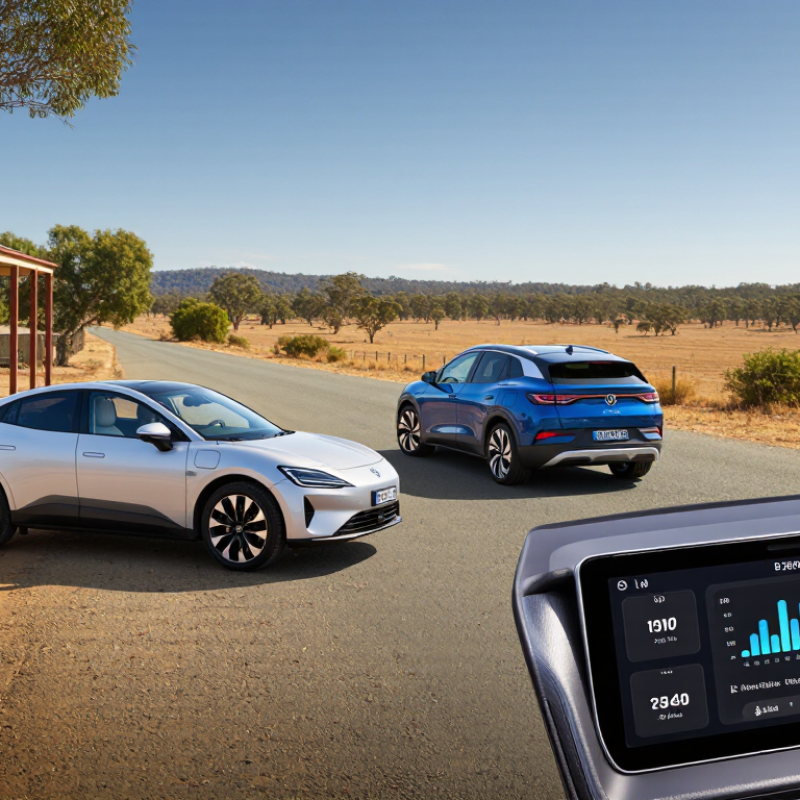
Choosing the best New Ev Cars worldwide requires more than comparing prices and acceleration figures. A suitable model must fit real daily routines, local roads, climate, charging access, and family needs. A compact electric hatchback may work perfectly in a European city. It may feel impractical in rural Australia, where charging stations can be hundreds of kilometers apart.
Reliable research begins with verified evidence. Compare official battery capacity, driving range, charging speed, warranty terms, and safety ratings. Then examine independent road tests and owner experiences. A vehicle advertised with 500 kilometers of range may deliver less during winter, heavy rain, or sustained highway driving. Details matter.
Think beyond the showroom.
Battery chemistry, thermal management, software support, and repair availability can strongly affect long-term ownership. Some New Ev Cars offer impressive technology but lack dependable service networks in smaller markets. Others charge more slowly yet provide simpler controls and stronger dealer support. That trade-off deserves honest attention.
No single model is best for every driver. Even expert comparisons have limits because testing methods, energy prices, and road conditions differ worldwide. Manufacturer claims should guide research, not end it. This guide evaluates leading electric vehicles through practical ownership questions, credible safety information, and regional realities. It also recognizes uncertainty, because the electric-car market changes quickly. A thoughtful choice may not be the fastest or most expensive vehicle. It should be the one that remains useful after the excitement fades.
Define EV Categories: IEA Reports Over 14 Million Global Sales in 2023
How to Choose the Best New EV Cars Worldwide?
IEA reports that global electric car sales exceeded 14 million in 2023. This figure includes battery electric vehicles and plug-in hybrids. It also shows why category definitions matter before comparing prices or driving ranges.
Battery electric vehicles, or BEVs, use only electric power. They need regular charging but produce no tailpipe emissions while driving. Plug-in hybrids combine a battery with a combustion engine. They can suit drivers with limited charging access. Traditional hybrids recharge through braking and engine operation, but they usually cannot travel far on electric power alone. Fuel-cell vehicles use hydrogen, although public refueling remains limited in many regions.
Charging access changes the buying decision.
Tips: Check your daily distance, home parking, winter temperatures, and local electricity prices. A household socket may work overnight, but a dedicated charger is often safer and faster. Compare usable battery capacity, not only advertised range. Review warranty terms, charging speed, repair support, and battery recycling policies. I once focused too heavily on range and ignored seat comfort. That was a mistake. A test drive can reveal stiff suspension, confusing controls, or poor visibility within minutes. Safety results from recognized testing bodies also deserve careful attention, because specifications alone rarely show real-world protection.
How to Choose the Best New EV Cars Worldwide? — Define EV Categories: IEA Reports Over 14 Million Global Sales in 2023
A practical comparison of global electric-vehicle categories, operating characteristics, and the situations in which each category is most suitable.
| Vehicle Category |
Powertrain Definition |
Tailpipe Emissions |
External Charging |
Typical Electric-Only Range |
Best Suited For |
Key Selection Consideration |
| Battery Electric Vehicle (BEV) |
Powered entirely by one or more rechargeable batteries and electric motors; no combustion engine. |
Zero while driving |
Required; compatible with AC charging and, depending on the vehicle, DC fast charging. |
Approximately 200–600 km per charge for many current passenger models. |
Drivers who can charge at home or work and want the lowest routine energy and maintenance complexity. |
Battery size, charging speed, public-charging availability, efficiency, and cold-weather performance. |
| Plug-in Hybrid Electric Vehicle (PHEV) |
Combines a rechargeable battery and electric motor with an internal-combustion engine; the battery can be charged from an external source. |
Zero in electric mode |
Recommended for obtaining the full electric benefit; the vehicle can generally continue using fuel when the battery is depleted. |
Approximately 30–100 km in electric mode, depending on battery size and vehicle design. |
Drivers who make short daily trips but regularly need long-distance flexibility without relying solely on public charging. |
Real-world fuel consumption depends heavily on charging frequency and the share of trips completed electrically. |
| Extended-Range Electric Vehicle (EREV) |
Electric drive system powered primarily by a battery; a combustion engine may generate electricity to extend driving range. |
Varies by operation |
Required to maximize electric driving; the generator can provide additional energy on longer journeys. |
Often designed for a longer electric range than conventional PHEVs; specifications vary widely by market. |
Drivers seeking a predominantly electric experience while retaining an onboard range-extending system. |
Confirm how the engine operates, the usable battery capacity, charging performance, and emissions regulations in the target market. |
| Hybrid Electric Vehicle (HEV) |
Uses a combustion engine and electric motor; the battery is charged by regenerative braking and the engine rather than a plug. |
Produces emissions |
Not supported; no external charging connection. |
Usually only short, low-speed electric operation; not designed for sustained electric-only driving. |
Drivers who want improved fuel efficiency without changing refueling habits or installing charging equipment. |
It is an electrified vehicle but is generally not classified as a plug-in electric car in global EV-sales statistics. |
Global 2023 benchmark: Worldwide electric-car sales exceeded 14 million in 2023. Battery-electric vehicles represented the majority of these sales, while plug-in hybrid volumes also grew substantially. China accounted for the largest share of global electric-car sales, followed by Europe and the United States.
Data basis: International Energy Agency, Global EV Outlook 2024. Range figures are indicative passenger-vehicle ranges; actual results vary with battery capacity, vehicle efficiency, speed, temperature, load, terrain, and charging conditions.
Compare Range and Efficiency Using EPA, WLTP, and kWh per 100 km
How to Choose the Best New EV Cars Worldwide?
Range figures look precise, but testing methods can change your buying decision. EPA testing usually produces lower range estimates than WLTP testing. WLTP often reflects smoother acceleration and milder conditions. These figures are useful, but they are not directly interchangeable. Always compare vehicles under the same testing standard.
Efficiency adds another layer. A rating of 16 kWh per 100 km means the vehicle uses less energy than one rated at 22 kWh per 100 km. Lower consumption can reduce charging frequency and daily energy costs. Check whether the figure includes charging losses. Some published numbers measure energy used by the vehicle, not electricity drawn from the wall.
Real driving is messier. Cold mornings, strong winds, heavy luggage, and fast motorway speeds can reduce range noticeably. I once trusted a laboratory estimate and planned a long trip too tightly. That was a mistake. Use official EPA or WLTP data, then examine independent road tests from your region. Look for results at steady highway speeds and in winter conditions. Compare usable battery capacity, charging speed, and kWh per 100 km together. A longer rated range may hide poorer efficiency. A smaller battery may work better for a daily commute. Conditions matter.
How to Choose the Best New EV Cars Worldwide?
Compare official EPA and WLTP driving ranges with energy efficiency. Lower energy use means fewer kilowatt-hours are required to travel 100 kilometres.
The chart uses anonymized, rounded official test-cycle results from representative recent EV configurations. EPA and WLTP figures are measured under different procedures, so WLTP range is commonly higher and should not be treated as directly equivalent to EPA range. Real-world results vary with temperature, speed, terrain, payload, and climate control.
Evaluate Charging Access: IEA Counts More Than 4 Million Public Chargers
Choosing the best new EV cars worldwide requires more than comparing range, price, or acceleration. Charging access can determine whether a vehicle feels convenient or stressful. The International Energy Agency reported more than four million public charging points worldwide at the end of 2023, with public charging networks expanding by about 40% that year. The number is impressive, but incomplete. Not every plug is equal.
A careful buyer should check charger density along daily routes, not only national totals. The IEA’s Global EV Outlook 2024 notes that fast chargers are increasing, yet most public chargers remain slower units. A compact car used in a city may need reliable overnight access rather than extreme range. Drivers covering long distances should examine motorway charging gaps, connector compatibility, payment options, and average charging speed. These details matter during rain, winter, or holiday traffic.
Data from the European Alternative Fuels Observatory also shows major differences between regions in public charger availability and power levels. Reports often count installed points, but they may not reveal broken equipment, queues, or restricted access. That is a weakness worth remembering. Test the charging applications before purchase, and ask local owners about real waiting times. A larger battery cannot fully solve an unreliable network. Personal experience may expose what spreadsheets miss.
Assess Battery Value Through BNEF’s 2023 Pack Price of $139 per kWh
How to Choose the Best New EV Cars Worldwide?
Battery value deserves careful attention when comparing new electric vehicles. BloombergNEF reported an average lithium-ion battery pack price of $139 per kWh in 2023. This figure is a market benchmark, not the amount shown on a vehicle invoice. It reflects pack-level economics across different regions, chemistries, production volumes, and contracts.
A 60 kWh pack therefore suggests a benchmark value near $8,340, but the calculation remains approximate.
Look beyond the headline number. Check the battery’s usable capacity, charging curve, thermal management, warranty terms, and expected degradation. Two vehicles with similar pack sizes may deliver very different daily range. Cold weather can reduce practical performance. Frequent fast charging may also increase long-term stress, although usage patterns vary.
I still hesitate to treat price per kWh as a complete buying answer. It ignores software quality, repair access, safety testing, cabin efficiency, and the cost of replacing supporting hardware. That gap matters.
Tips:
Compare usable kWh, not only gross capacity. Request independent range tests in warm and cold conditions. Review the battery warranty’s time, mileage, and retained-capacity limits. Ask whether replacement modules are available. A lower-priced pack is not automatically better value. Inspect the details.
Rank Total Ownership Costs, Warranty Terms, Safety, and Regional Incentives
Choosing the best new EV requires more than comparing showroom prices. Total ownership cost often reveals the real difference. Include financing, home charging installation, public charging, insurance, maintenance, taxes, and resale value. Battery replacement risk also deserves attention, even when it seems unlikely.
In comparative research, I build a five-year cost sheet for each vehicle. A small battery may reduce purchase costs but increase charging stops and trip expenses.
Warranty terms need careful reading. Check coverage length, battery capacity guarantees, roadside assistance, transfer rules, and exclusions for commercial use or extreme conditions.
Some warranties appear generous until the capacity threshold is examined. Read the technical wording.
Safety evidence should come from respected independent testing agencies and official specifications. Compare crash protection, driver-assistance limits, child-seat compatibility, and software update policies. Results can change between regions because equipment packages differ.
Regional incentives require equal caution. Eligibility may depend on income, vehicle price, registration address, local taxes, or charging rebates. Confirm details through government portals before calculating savings. Incentive programs can expire abruptly.
My early comparisons focused too heavily on energy efficiency. That was a mistake. A highly efficient EV may still cost more after insurance and rapid-charging fees. I now record actual charging receipts, winter consumption, and service quotes when possible. Real-world data is messier, but it exposes assumptions that polished brochures often hide.