What is an Interlocking Nail Implant and How Does it Work?
The Interlocking nail implant represents a significant advance in orthopedic surgery. This device is used primarily for the treatment of long bone fractures. According to a recent report by the Global Orthopedic Implants Market, the use of interlocking nails is growing rapidly, with a projected annual growth rate of 8.5%. It addresses complex fractures effectively, offering stability and promoting healing.
Dr. Emily Carter, an orthopedic surgeon at the National Institute of Health, emphasizes the importance of this technology. She states, “Interlocking nail implants provide unmatched support in the healing process of challenging fractures.” Surgeons can use this method for both stable and unstable fractures, adapting to various cases. Despite its advantages, challenges remain in selecting appropriate cases and managing complications.
The interlocking nail implant showcases a promising future for fracture treatment. However, proper training and experience are crucial for successful outcomes. While this technology shows tremendous potential, continuous learning and adaptation are necessary in this evolving field.
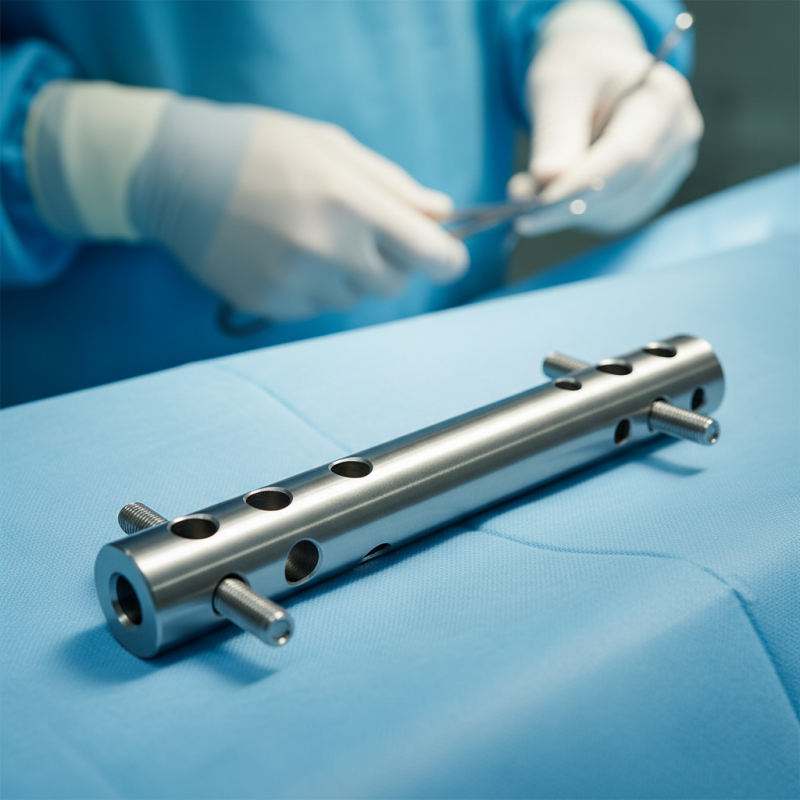
What is an Interlocking Nail Implant?
Interlocking nail implants are orthopedic devices used in the treatment of long bone fractures. They consist of a metal rod inserted into the medullary canal of a bone. This design stabilizes fractures and supports bone healing. Studies show that interlocking nails can significantly improve recovery times compared to traditional methods. For example, a report from the Journal of Orthopaedic Trauma indicates that patients treated with interlocking nails had a 30% faster healing rate.
These implants serve multiple purposes. They can treat complex fractures, including those with extensive damage. Medical professionals often favor them because they can bear more load, thus allowing earlier weight-bearing activities. A clinical trial highlighted an 85% success rate in achieving fracture union within six months. However, the technique requires precise placement, which can sometimes lead to complications. For instance, missed anatomical landmarks can cause misalignment.
While interlocking nails promote healing, they are not without risks. Some patients experience discomfort or infection. In rare cases, mechanical failure of the implant may occur. Ongoing research aims to address these issues and improve outcomes. Understanding the benefits and potential drawbacks of interlocking nail implants is essential for both patients and healthcare providers.
The Anatomy and Design of Interlocking Nail Implants
Interlocking nail implants are designed specifically for intramedullary fixation of long bone fractures. Their anatomy is fascinating and complex. They consist of a metal rod, featuring an intricate locking mechanism. This small but pivotal design connects the rod directly to the bone, providing stability and support. The implant allows for axial and rotational stability, which is critical during the healing process.
The design includes multiple holes along the length of the nail. These holes facilitate the insertion of locking screws. Each screw further secures the implant in place. However, this design can sometimes lead to complications. For instance, malalignment occurs when the screws are not placed correctly. Additionally, the size of the nails can be a challenge. An inadequate fit may result in increased pain or longer recovery times. Adjustments are often needed post-operation, adding complexity to the healing journey.
While the interlocking design promotes stability, surgeons must exercise great care. Precise technique is essential when inserting the implant. Even a slight miscalculation can lead to serious issues. The balance between securing the bone and avoiding damage is delicate. Understanding these nuances can lead to better outcomes for patients.
The Surgical Procedure for Inserting Interlocking Nail Implants
The surgical procedure for inserting interlocking nail implants is a critical step in orthopedic treatment. The patient is placed under anesthesia to ensure comfort. The surgeon makes a precise incision at the site of the fracture. This allows access to the bone. A guide wire is inserted to achieve proper alignment. Then, the interlocking nail is carefully positioned within the medullary canal of the bone.
Attention to detail is vital during this process. The surgeon must ensure that the nail fits well. An improper fit can lead to complications. Once the nail is in place, locking screws are inserted. This secures the nail in position. The incision is then closed with sutures. Post-operative care follows, focusing on pain management and mobility.
Tips: Follow your surgeon's instructions closely after the procedure. The recovery period varies for each patient. Don’t rush back to activities. Take the time to heal properly. Listen to your body and speak up if something feels wrong. Regular follow-ups with your doctor are crucial for monitoring the healing process.
How Interlocking Nail Implants Promote Bone Healing
Interlocking nail implants are vital for promoting bone healing. They stabilize fractured bones and allow them to mend naturally. When a bone is broken, the body needs support to rebuild. An interlocking nail fits inside the bone, providing that necessary support during recovery.
The implant encourages the growth of new bone tissue. It does this by allowing the fractured ends to align correctly. Once aligned, blood vessels can form and deliver nutrients. This process is crucial as nutrients help in the regeneration of bone cells. Doctors often find that patients recover faster with this method. However, complications can arise, such as improper alignment or infection.
Patients may feel anxious about the recovery process. It’s essential to be patient and follow medical advice. Simple activities can become challenging, but they are part of the healing journey. Some may struggle with pain management or mobility. Acknowledging these struggles can lead to better recovery outcomes.
Bone Healing Progress with Interlocking Nail Implants
Advantages and Limitations of Interlocking Nail Implants
Interlocking nail implants are a valuable tool in orthopedic surgery, especially for treating fractures. They offer significant advantages such as stability and support. These implants work by fitting into both parts of a broken bone, promoting healing. Surgeons prefer them for treating complex fractures.
However, there are limitations to consider. Interlocking nail implants may not be suitable for every type of fracture. In some cases, they can cause complications like infection or improper healing. Pain after surgery is common for some patients. The implanted nails may lead to discomfort during mobility.
Surgeons need to evaluate each case thoroughly. Patients should discuss potential risks with their medical team. Awareness of these limitations helps in making informed decisions. The healing process can vary greatly among individuals.
