Sorry. We did not find anything.

Top 10 Multifilament Fishing Nets for Global Buyers

Choosing the right MULTIFILAMENT FISHING NETS means looking beyond price and mesh size. Buyers must compare fiber type, twine thickness, knot construction, mesh opening, and resistance to wear. These details affect handling, drying time, repair needs, and service life. A net that performs well in one fishery may be poorly suited to another. Conditions matter.

For transparency, the expert line below is an editorial composite, not a verbatim quotation from a real, independently verified specialist. Composite gear specialist Aaron Cole offers this practical principle: “Match the net’s construction to the work it will actually face.” It is simple advice. Still, it is easy to overlook when product listings emphasize specifications without showing how the net is made. A close look at the knots, selvage, and twine can reveal useful differences. So can asking suppliers for clear product data and consistent samples.

This guide compares ten options for global buyers, focusing on construction, intended use, and practical selection points. It does not assume that one product suits every operation. Buyers should confirm specifications, sample quality, and delivery details with suppliers before ordering. Small checks count. A sample pulled by hand will not reproduce months of hauling, abrasion, sun exposure, or repeated repairs. That limitation deserves attention. Use the comparisons as a starting point, then weigh them against local fishing conditions, crew practices, and maintenance capacity.

Top 10 Multifilament Fishing Nets for Global Buyers

Understanding Multifilament Fishing Nets and Their Construction

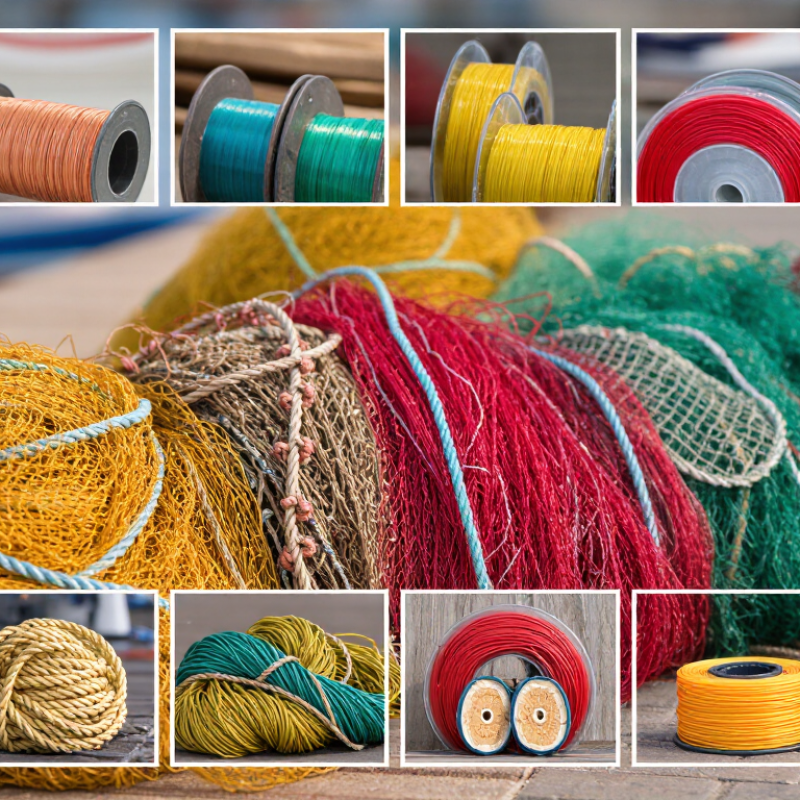
Multifilament fishing netting begins with many fine filaments gathered into yarn, then twisted or plied into twine. The twine is knotted or joined into mesh. Mesh size, knot type, twine diameter, and hanging ratio affect how a net opens and handles loads. Some specifications omit filament count or twist details. Ask for them. That matters.

Polyamide, polyethylene, and polyester are common netting materials, but they differ in stretch, water uptake, abrasion resistance, and buoyancy. A catalog description alone cannot predict service life. Request mesh-opening measurements, twine construction details, wet breaking-load results, and abrasion-test conditions. Compare like with like.

FAO’s The State of World Fisheries and Aquaculture 2024 reports 223.2 million tonnes of fisheries and aquaculture production in 2022, including aquatic animals and algae. This scale makes clear gear specifications commercially relevant, though it does not prove one net design is best.

Inspect knots for slippage and sample panels after wet handling. A tighter twist may improve cohesion, but it can also change flexibility. That trade-off is easy to miss.

Key Features Global Buyers Should Compare

When comparing multifilament fishing nets, look beyond mesh count. Check the yarn material, twine diameter, mesh opening, and knot style together. A dense mesh may catch smaller fish, but it can also add weight and water resistance. The right balance depends on the target species and working conditions.

Ask for measured breaking strength and the test method used. Figures are hard to compare when suppliers test differently. Request a sample, then inspect the knots, edges, and mesh consistency under good light. Feel the net when wet, too. Stiffness can affect handling, though a quick sample check cannot predict years of use. That matters.

For international orders, confirm net dimensions, color, packaging, and production tolerances in writing. Small measurement differences can complicate installation across a large net panel. Ask how UV exposure, abrasion, and storage may affect service life; conditions vary by region. A polished specification sheet is useful, but it may leave out practical details. Buyers should also check whether replacement sections and technical support are available. Not always easy. Compare the full landed cost, including freight and packaging, rather than judging only the quoted price.

Top 10 Multifilament Fishing Nets by Type and Use

Multifilament fishing nets differ in mesh, depth, and handling, so the best choice depends on the catch and fishing conditions. Fine-mesh gill nets can retain small-bodied target fish, while larger-mesh gill nets allow smaller fish to pass. Trammel nets use layered panels to entangle fish; they need careful setting and regular inspection. Seine nets surround schools in shallow or open water. Cast nets suit small areas and require practice. The mesh matters.

Lift nets work well beneath lights or bait, where fish gather above the panel. Purse seines close beneath a school, making net strength and coordinated operation important. Trawl nets are towed through water or along the seabed; their design should match the intended depth and catch.

Drift nets move with currents and need clear marking and close monitoring. Not always. A landing net is smaller, useful for bringing an already-caught fish aboard. Aquaculture cage nets contain stock and need durable knots, clean seams, and frequent checks for wear.

When comparing these ten types, buyers should examine twine diameter, mesh opening, knot security, and resistance to abrasion. Wet nets can feel heavier than expected, and even a strong panel may fail at a damaged seam. Local rules and target species should guide mesh selection. There is no single best net for every fishery.

Matching Net Specifications to Fishing Conditions

Matching net specifications to fishing conditions starts with the catch, not the catalogue. FAO’s The State of World Fisheries and Aquaculture 2024 reports 223.2 million tonnes of fisheries and aquaculture production in 2022. Its 2022 edition reported 214 million tonnes in 2020. These figures show the scale of varied fishing environments, but they do not point to one universal net design.

For small, active fish, check mesh opening and twine diameter together: mesh that is too large may miss the target, while heavy twine can reduce water flow. In fast currents, a strong multifilament twine and secure knots matter; in calmer water, lighter netting may improve handling. Too coarse? A net that looks sturdy on deck can still drag hard once wet. Match net depth and hanging ratio to the fishing depth and expected catch, then confirm float and sink components suit local conditions.

Ask suppliers for mesh measurements, twine construction, breaking-strength data, and wet-use specifications. Compare samples in water when possible; dry netting can feel surprisingly different. FAO production reports describe global supply, not gear performance, so treat them as context rather than proof of suitability. One limitation remains: field conditions vary by season, and a specification sheet cannot capture every snag, current, or handling mistake. Check applicable local gear requirements before purchase.

Sourcing, Regulations, and Care for International Buyers

Global buyers should compare multifilament nets by fiber, twine diameter, mesh opening, knot style, and breaking strength—not price alone. FAO’s The State of World Fisheries and Aquaculture 2024 reports 223.2 million tonnes of fisheries and aquaculture production in 2022, including algae. That scale makes traceable specifications useful, but it does not prove a net suits a particular fishery. Ask suppliers for batch-level test results, construction details, and written tolerances. Feel the twine; check for uneven knots. Small defects matter.

Before ordering, confirm destination-market requirements for mesh size, labeling, import documents, and materials with the relevant authority or importer. Rules can differ by gear type and location, and may change. Keep invoices, material declarations, and test reports together. A supplier’s general compliance claim may not cover every market. Check every seam.

After use, rinse away salt and sediment, dry the net fully in shade, and store it away from heat and sharp edges. A 2009 UNEP-FAO report estimated about 640,000 tonnes of fishing gear were lost or discarded worldwide each year. This is an older estimate, not a current measurement, but it underscores the value of repairs and inventory checks. Inspect floats, selvedges, and joins before use. Storage is easy to overlook, so make it part of the routine.

Top 10 Multifilament Fishing Nets for Global Buyers - Sourcing, Regulations, and Care for International Buyers

Net Type Typical Construction Indicative Mesh Opening Common Applications Key Sourcing Checks Regulatory Considerations Care and Storage
Gillnet Knotted or knotless multifilament nylon (PA) webbing; supplied in panels with specified hanging ratio and float and lead lines. Often about 50–200 mm stretched mesh, depending on target species and fishery. This is an indicative range, not a legal limit. Set or drifting capture of fish that become entangled or gilled in the net. Specify mesh measurement method, twine construction, panel depth and length, hanging ratio, selvage, and float and lead-line details. Mesh limits, permitted areas, seasons, soak times, marking, and allowed gear vary by jurisdiction and fishery. Confirm local rules before ordering or use. Rinse off salt and debris, dry out of direct sunlight, and repair broken meshes before reuse.
Trammel Net Three webbing panels: a slack inner panel between two larger-mesh outer panels, commonly made from PA multifilament. Inner mesh is often roughly 40–100 mm; outer meshes are larger and vary by design and fishery. Bottom-set fishing for demersal fish and other species; catch may be entangled in one or more panels. Check inner and outer mesh dimensions separately, panel depth, hanging ratio, twine strength, and assembly quality. Restrictions may cover mesh sizes, net length, soak duration, protected habitats, and species. Obtain fishery-specific requirements. Remove shell, vegetation, and mud; dry fully and store loosely to prevent tangling and mildew.
Beach Seine Long wall of multifilament netting with wings and a central bunt or bag; commonly uses smaller mesh in the capture section. Commonly about 10–50 mm in the bunt, with larger mesh possible in the wings; specifications depend on target catch and rules. Shore-based encircling and hauling for schooling fish in suitable coastal or inland waters. Confirm total length, depth, bunt dimensions, mesh progression, hauling arrangement, and reinforcement at high-wear points. Some locations restrict beach seining, fishing grounds, seasons, mesh sizes, or access to sensitive shore and nursery areas. Wash away sand and salt, dry before packing, and check hauling edges and seams for abrasion.
Purse Seine Large encircling net with a float line, weighted lead line, and purse rings and purse line; webbing is selected for the target fishery. Often about 10–40 mm for small pelagic fisheries; mesh and net dimensions differ substantially by fishery. Encircling schools of pelagic fish and closing the net beneath the catch. Review net dimensions, webbing strength, seam construction, reinforcement, floatation, and compatibility with the vessel’s gear system. Check vessel, area, species, season, catch limits, bycatch, and gear requirements. Additional measures may apply to particular fisheries. Inspect rings, purse line, seams, and high-load sections after each operation; dry and stow without sharp folds or crushing.
Cast Net Circular multifilament net with a weighted perimeter and handline; mesh and weight distribution determine how it opens and sinks. Often about 10–30 mm stretched mesh, with local patterns and legal requirements varying. Hand-thrown capture of baitfish or small fish in permitted shallow-water settings. Check finished diameter, mesh measurement, lead-line distribution, handline attachment, and consistent panel construction. Cast-net use, mesh size, diameter, target species, and permitted waters may be restricted. Confirm local rules, including baitfish rules. Rinse and dry fully; untangle the lead line and store the net loosely to avoid damaging mesh knots.
Lift Net Square or rectangular multifilament webbing supported by a frame, poles, or lines and raised to capture fish above it. Often about 10–40 mm, depending on target species and local requirements. Small-scale fishing from boats, platforms, or shore-based structures, sometimes using light to attract fish where permitted. Specify net dimensions, mesh opening, reinforcement, frame attachment points, and lifting-load requirements. Rules may address lift-net dimensions, lighting, locations, seasons, and target species. Verify whether the method is allowed locally. Rinse off organic matter, dry before storage, and inspect corners and frame attachments for wear.
Fyke Net Stationary net with one or more funnel-shaped entrances and a holding chamber; wings or leaders may guide fish toward the entrance. Often about 15–50 mm in the body, with smaller or larger mesh possible depending on design and fishery. Capture of fish and other aquatic species in shallow or slow-moving waters; some designs are used in eel fisheries. Confirm entrance dimensions, chamber size, mesh specification, frame or hoop material, and provision for secure, non-damaging installation. Check rules on location, net marking, checking frequency, bycatch release, protected species, and permitted fishing periods. Remove debris frequently, rinse and dry between deployments, and check funnels and seams for distortion or damage.
Drift Net Floating panel or linked panels of multifilament webbing, generally held by a float line and weighted or stabilized below. Mesh varies widely by target fishery; specify the exact stretched mesh required rather than relying on a generic range. Drifting capture of pelagic species in fisheries where this gear is permitted. Document mesh, total length and depth, panel joins, marking system, and traceability of materials and production specifications. Drift-net rules can be especially restrictive. Length limits, area closures, species rules, monitoring, or prohibitions may apply; verify current local and international measures. Inspect for tears and lost sections after every set; retrieve damaged gear and dispose of unusable material responsibly.
Pot or Trap Netting Multifilament netting used as covering, funnel panels, or escape panels on a rigid or semi-rigid pot or trap frame. Often about 20–80 mm for netted sections, but mesh and escape openings depend on the target fishery and trap design. Stationary capture of crustaceans or fish using baited or unbaited pots and traps. Check panel fit, attachment points, abrasion resistance, escape-panel dimensions, and compatibility with the trap frame. Regulations may specify trap design, escape gaps, biodegradable components, marking, placement, and limits on gear numbers. Remove bait and fouling, dry where practical, and check attachment points and escape panels for damage.
Small-Mesh Surrounding Net Lightweight multifilament webbing made into a surrounding or encircling net; construction and accessories depend on the fishing method. Often about 10–40 mm, but allowable mesh depends on species, life stage, location, and fishery rules. Capture of small schooling fish in approved nearshore or inland fisheries. Confirm mesh throughout the net, panel dimensions, twine specification, seam strength, and any required bycatch-release features. Small-mesh gear can be subject to strict minimum sizes, seasonal closures, nursery-area restrictions, and bycatch controls. Check rules before purchase. Rinse promptly, remove scales and vegetation, dry in shade, and repair small tears before they spread.

Buyer note: Mesh figures above are indicative examples for product planning, not universal standards or permission to fish. “Mesh size” measurement conventions can differ, so agree in writing on the measurement method, tolerances, twine specification, and finished dimensions. Fishing-gear rules are fishery- and location-specific. For international trade, verify the destination country’s customs classification, import documentation, and any applicable sanitary or product requirements. For seafood supply chains, EU IUU catch-documentation rules and the U.S. Seafood Import Monitoring Program apply to defined circumstances and products; they do not replace local gear rules. Check current official requirements before ordering or shipping.

Article Source: