Sorry. We did not find anything.

Top Electric Trucks to Buy in 2026?

Choosing among the Top Electric Trucks to Buy in 2026 means looking beyond glossy launch photos and headline range figures. Electric Trucks can suit different jobs, from weekday commuting to hauling tools across rural roads. The right choice depends on how you actually drive, load, charge, and work.

Ford CEO Jim Farley, a veteran automotive executive, called the F-150 Lightning “a Model T moment for us.” That remark captures the excitement, but excitement is not a buying test. A useful comparison should examine real-world range under load, towing limits, payload, charging speed, cabin comfort, warranty coverage, and local service access. A truck that works well on a short commute may feel less convincing with a heavy trailer and a cold battery. Details matter.

This guide will compare leading 2026 contenders by practical use, not just brand promises. It will consider expected pricing and availability, while noting that trim levels and specifications can vary by market. Buyers should verify final figures with manufacturers and dealers before making a decision. Small print counts. So does the nearest reliable charger.

There is no perfect truck for every owner. Even range tests cannot fully predict your route, weather, or workload. That uncertainty deserves a place in the comparison, not a footnote. The goal is a clear, evidence-minded shortlist that helps readers match a truck to the work waiting outside their door.
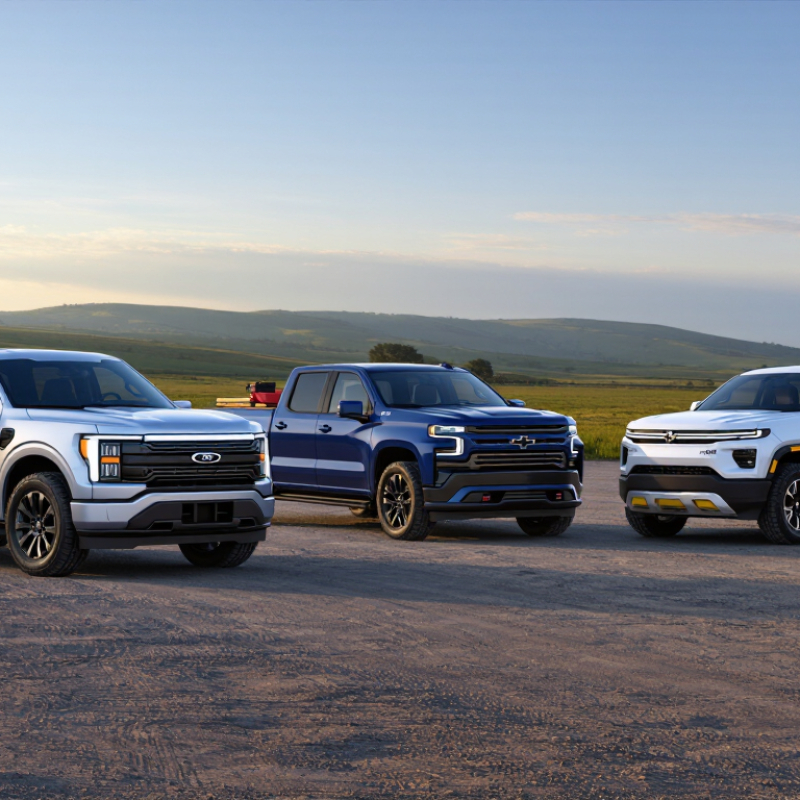
Top Electric Trucks to Buy in 2026?

How Electric Trucks Differ From Conventional Pickup Trucks

An electric pickup replaces the engine, transmission, and fuel tank with a motor, battery pack, and power electronics. The change is more than swapping gasoline for electricity. Electric motors deliver strong torque quickly, which can make a loaded launch feel smooth and controlled. Regenerative braking also recaptures some energy when slowing, rather than relying only on friction brakes. The U.S. Department of Energy’s Alternative Fuels Data Center says electric vehicles convert over 77% of grid electricity into power at the wheels; gasoline vehicles convert about 12%–30% of fuel energy. Fewer moving parts can mean less routine maintenance, though tires and suspension still work hard.

The battery’s weight and location affect payload, ride, and available cargo capacity. Towing adds another complication: a trailer’s weight and wind resistance can cut driving range, sometimes sharply. That trade-off is easy to underestimate. Cold weather matters, too. In 2019 testing of six electric vehicles, AAA found that driving range fell by an average of 41% at 20°F when cabin heat was used. Those results are not specific to pickups, but they show why a single advertised range figure can mislead. For a realistic comparison, check payload ratings, towing needs, charging access, and winter routes. A long driveway with an overnight charger feels different from a workday spent searching for public charging. That detail is mundane, but it can decide whether the truck fits daily life.

Key Specifications That Shape Electric Truck Performance

Electric truck performance begins with battery capacity, but usable energy matters more than the headline figure. A larger pack can support longer trips, yet it also adds weight and may reduce payload. Compare estimated range with the work you actually do: highway driving, stop-and-go routes, and frequent trailer use can produce very different results. Cold weather can reduce range, too. That matters.

Motor output and torque influence how confidently a loaded truck accelerates or climbs a steep road. Towing capacity deserves equal attention, but check the fine print: pulling a heavy trailer can sharply shorten driving range. Payload is separate from towing capacity. Passengers, tools, and cargo all count toward the truck’s weight limit, so a high towing number alone tells only part of the story.

Charging speed is useful only when the battery can sustain it and compatible chargers fit your route. Look for charging time across a practical range, not just a brief peak rate. Thermal management helps maintain performance during repeated towing or rapid charging. Numbers can mislead. I would also check tire options, ground clearance, and turning space before buying; these details affect everyday work, though they get less attention than horsepower. A truck that suits a quiet commute may feel different on a long, loaded job.

Major Electric Truck Types Available in 2026

Major Electric Truck Types Available in 2026

Electric trucks in 2026 fall into several practical groups, from light-duty pickups to heavy commercial haulers. The right type depends less on headline range and more on daily loads, routes, and charging access. Availability also varies by region, so check local inventory and service support before comparing options.

Light-duty electric pickups suit household tasks, job sites, and moderate towing. Their enclosed storage and familiar layout can make the switch easier. But a loaded trailer can cut driving range, especially in cold weather or at highway speeds. Range still matters. Check payload limits, bed dimensions, and the truck’s rated towing capacity; these figures describe different constraints.

Medium-duty trucks often serve delivery, utility, and municipal fleets. Box bodies, service equipment, and frequent stop-and-go routes can pair well with predictable depot charging. Heavy-duty electric trucks target regional freight and demanding commercial work. They may need high-capacity charging and careful route planning, while payload and charging time remain real trade-offs. Numbers can flatter. A brochure rarely shows a wet worksite, a detour, or a cold morning, so real route data is worth asking for.

Major Electric Truck Types to Consider in 2026

Representative published driving-range claims by truck type (miles)

Range varies by model, battery, payload, route, weather, and driving conditions. These published-model ranges are illustrative, not guarantees for every truck in a category.

Leading Electric Trucks to Consider in 2026

Leading electric trucks to consider in 2026 should be judged by the work they actually do, not headline range. A full-size model may suit towing and heavier loads, while a midsize truck can be easier to park and more efficient for daily errands. Look for useful bed length, secure storage, clear camera views, and a cabin that stays comfortable after a long shift. Quiet acceleration is pleasant. It does not replace practical capability.

Compare towing range with a trailer attached, not just the advertised estimate. Ask how payload changes with passengers and equipment, and check charging speed across the battery’s usable range. Winter temperatures, hills, and highway speeds can reduce driving distance. Charging access at home or near a worksite matters as much as battery size. Some details may remain unclear before independent testing, so treat early specifications cautiously. That is worth admitting.

Tips: Bring your usual gear to a test drive. Check hitch height, bed access, turning space, and charging plans. Leave a range buffer; real routes rarely match ideal conditions.

How to Choose an Electric Truck for Your Needs

Choosing an electric truck starts with an ordinary workday, not a headline range. Write down your usual route, payload, towing frequency, and overnight parking situation. A loaded truck climbing a cold, steep road will not match its advertised range. IEA’s Global EV Outlook 2024 reports nearly 54,000 electric truck sales worldwide in 2023, about 1.2% of total truck sales. The market is growing, but models and charging options still vary widely. That matters.

Check the usable range against your longest regular route, then leave a buffer for weather, detours, and aging batteries. If you tow, look for range tests under comparable loads; empty-truck figures can mislead. Next, confirm that charging fits your routine. The U.S. Department of Energy’s Alternative Fuels Data Center explains that charging speed depends on vehicle capability and charger type, so compare the truck’s specifications with the equipment you can actually access. A charger near your depot is useful only if it is available when your truck returns. Measure twice.

Finally, compare total operating costs, not just the purchase price. Include electricity, installation, maintenance, insurance, and any downtime while charging. I would not assume every job needs the largest battery; that can add cost and weight without helping a short, predictable route. Still, I might be underestimating how often plans change. Ask drivers to track real mileage and payload for a few weeks before deciding.

Top Electric Trucks to Buy in 2026? — How to Choose an Electric Truck for Your Needs
Buyer Priority Best-Fit Truck Type Published Range to Look For Maximum Towing to Look For Key Trade-Off Who It Suits
Longest driving range Long-range, full-size pickup configuration About 400–492 miles per charge for the highest-range configurations advertised in the U.S. market Up to about 10,000–12,500 lb, depending on configuration Top range may require a larger battery and a higher-priced trim; towing can substantially reduce range. Drivers who cover long distances, have reliable charging access, and want fewer charging stops when driving unloaded.
Frequent heavy towing Full-size pickup with a tow rating matched to the trailer Compare the range for the exact trim, not only the model’s maximum advertised figure. Some configurations are rated up to about 12,500 lb; ratings vary by equipment and configuration. Trailer weight, speed, weather, and terrain can sharply reduce range. Confirm the vehicle’s payload and hitch limits as well as its tow rating. Owners towing regularly who can plan charging stops and verify the loaded vehicle-and-trailer combination stays within all limits.
Daily driving and occasional hauling Standard-range or mid-range full-size pickup Roughly 230–350 miles for many configurations, depending on model year, battery, wheels, and trim. Common published maximums fall around 7,700–11,000 lb, but lower trims may be rated below this range. Often costs less than a longest-range version, but may need more frequent charging on road trips or while carrying heavy loads. Commuters and households that mostly drive locally and can charge at home or at work.
Work-site and payload use Pickup selected by payload, bed, and upfit requirements Use the exact configuration’s published range; added equipment and cargo can reduce it. Check the exact tow rating and payload label before purchase; maximum figures are not available on every trim. Passengers, accessories, and cargo all count toward payload. A high tow rating does not guarantee high payload capacity. Tradespeople and fleets that need to carry tools, materials, or equipment. Verify axle, payload, and upfit limits with the vehicle documentation.
Outdoor and rough-road use All-wheel-drive pickup with suitable tires and underbody protection Compare the range of the off-road trim specifically; larger or more aggressive tires may reduce efficiency. Use the trim-specific rating and allow for reduced range when carrying gear or driving on challenging terrain. Off-road hardware and tire choices can trade efficiency for traction and durability. Charging may be limited in remote areas. Drivers who regularly travel on unpaved roads or trails and can plan trips around available charging.
Best overall fit The configuration that meets daily range, payload, and towing needs without paying for unused capability Choose enough range for your usual route plus a practical reserve; compare EPA estimates for the exact trim. Match the rating to the trailer’s loaded weight, tongue weight, passengers, and cargo. There is no single best specification for every buyer. Charging access and real-world load matter as much as headline numbers. Most buyers should compare total cost, home-charging options, warranty, bed utility, and local service availability before deciding.

How to read the figures: Ranges and towing figures are approximate published U.S.-market figures for available electric pickup configurations around the 2025–2026 model years, not guarantees for every trim. EPA range is measured without a trailer; towing, payload, temperature, speed, terrain, and accessories can change real-world performance. Always confirm the exact vehicle’s window sticker, owner’s manual, and payload label.