
Sorry. We did not find anything.
In 2026, choosing a Tank Truck is less about finding one “best” design and more about matching the tank, material, and route. A stainless-steel food-grade tanker, for example, needs different interior finishes and cleaning controls from a petroleum tanker carrying fuel to a regional depot. Chemical, water, vacuum, and liquefied-gas tankers each bring their own equipment and operating requirements. The differences are visible: insulated shells, multiple compartments, pumps, hoses, and carefully placed valves all serve specific jobs.
The wider freight context helps explain why these vehicles matter. The American Trucking Associations’ American Trucking Trends 2024 reported that trucks carried 11.27 billion tons of freight in the United States in 2022, or 72.7% of domestic freight by weight. That figure covers trucking overall, not tankers alone, but it shows how much commerce depends on road transport. The International Energy Agency’s Oil 2024 report projected global oil demand would reach nearly 106 million barrels per day by 2030. This is broader energy context, not a direct forecast of tanker-truck sales.
This guide compares the leading tank truck types expected to remain relevant in 2026, focusing on cargo compatibility, construction, and practical use. A truck built for food-grade liquids cannot simply be treated as a chemical hauler. That distinction is easy to miss. The category labels also hide important variations in capacity and equipment, so model selection deserves more attention than a quick glance at the tank shape.
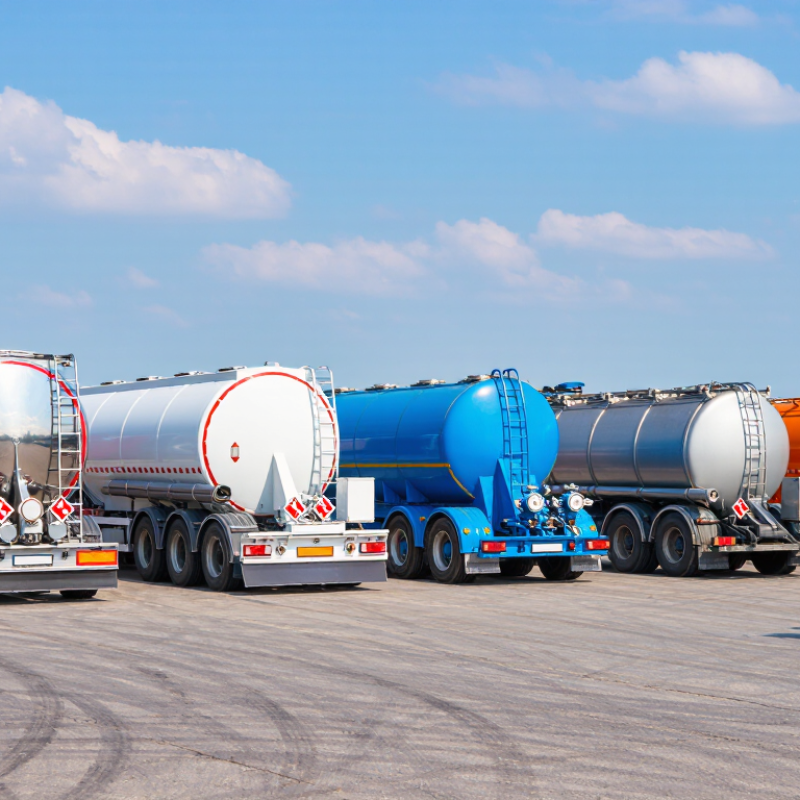
A tank truck is a road vehicle built around a tank that carries bulk material. The tank, fittings, and unloading equipment define its main function. A standard cargo body with a few added hoses does not make a vehicle a tank truck. Tank trucks are not one uniform machine.
Classification often starts with the cargo’s physical properties. Liquid tankers may carry water, food-grade liquids, or industrial fluids, with separate compartments for different loads. Pressurized tanks are designed for materials that must remain under pressure. Dry-bulk tankers use sealed vessels and air systems to discharge powders or granules. The details matter. A hose connection can reveal more about a truck’s purpose than its exterior shape.
Construction and delivery method provide further clues. Insulated tanks help control temperature, while vacuum tanks move liquids or slurries through suction systems. Some vehicles combine several features, so categories can overlap. Capacity alone is a weak guide; two trucks of similar size may handle very different materials. A careful classification checks the tank material, internal layout, valves, and unloading process. The labels can be imperfect. That is worth remembering.
Tank trucks are classified mainly by the cargo they carry and the tank design required for it. The chart compares indicative capacity ranges for common types.
Capacity ranges are approximate examples, not fixed standards. Actual capacity varies with vehicle configuration, cargo density, and local regulations.
In 2026, the most widely used tank truck types are still shaped by everyday freight: liquid tankers, fuel tankers, dry bulk trailers, and food-grade tankers. Their prevalence varies by region and industry, so a single ranking can be misleading. It depends.
General liquid tankers carry products such as water and industrial liquids. Their rounded tanks help manage shifting loads, while internal baffles can reduce liquid movement during braking and turns.
Fuel tankers are a familiar subtype, designed with compartments for separate deliveries. Food-grade tankers use smooth, cleanable interiors to protect milk, edible oils, and other sensitive cargo. Cleaning routines matter as much as tank design.
Dry bulk tankers move powders and granules, including cement, flour, or plastic pellets. Pneumatic systems can unload material through hoses, often into storage silos.
Chemical tankers require compatible materials, careful inspection, and cargo-specific handling procedures. Not every load fits.
Buyers and fleet operators should compare route length, loading equipment, payload, cleaning needs, and maintenance access before choosing a configuration. Even a popular type may be a poor fit for a short route with limited unloading space.
The categories overlap, too, and real-world use is less tidy than a chart suggests.
Fuel, chemical, water, and food-grade tankers may look similar on the road, but their interiors serve different needs. Fuel tankers commonly use compartments for separate loads and internal features to reduce liquid surge. Their valves, vents, and hoses suit petroleum products and controlled transfer. Chemical tankers vary more: tank materials, linings, seals, and pressure ratings must match the specific cargo. Compatibility is not guesswork; even a gasket can matter.
Water trucks are simpler only when the water is non-potable. Potable-water tankers need cleanable surfaces, protected openings, and dedicated hoses to help prevent contamination. Food-grade tankers emphasize smooth interiors, sanitary fittings, and careful cleaning between compatible products. Some also need insulation or temperature control. Small details matter. A drain that leaves residue can undermine an otherwise careful cleaning routine.
Selection starts with cargo properties, including temperature, viscosity, corrosion potential, and hygiene requirements. Then assess loading access, unloading speed, compartment needs, and cleaning records. Confirm specifications with the shipper and qualified equipment professionals. The category name alone is not enough. Cargo details can change, and that makes real-world planning less tidy than a specification sheet suggests.
What Are the Top Tank Truck Types in 2026?
Where Each Tank Truck Type Is Commonly Used
Tank trucks are designed around the cargo they carry, not just the shape of the tank. Fuel tankers commonly deliver gasoline or diesel to service stations and commercial depots. Their divided compartments can carry separate loads on one route. Food-grade tankers move milk, edible oils, and other liquid ingredients between farms, processing plants, and food manufacturers. Smooth interiors and controlled cleaning help protect product quality.
Chemical tankers serve manufacturers that need liquid ingredients moved between production sites and storage facilities. Tank materials and linings must match the cargo; the wrong choice can cause corrosion or contamination. Insulated or heated tank trucks carry products that need stable temperatures, such as some food ingredients or industrial liquids. Water tankers supply construction sites, farms, and communities where local storage or distribution is limited. LPG tank trucks deliver fuel to homes and businesses without direct pipeline access.
Tips: Match the truck to the cargo’s temperature, material compatibility, and unloading needs. Ask how the tank is cleaned and inspected. Small details matter. A tanker type alone does not confirm suitability, and operating requirements can vary by cargo and route.
| Tank truck type | Typical cargo | Where it is commonly used | Common design features | Key handling consideration |
|---|---|---|---|---|
| Fuel tanker | Gasoline, diesel, and other liquid fuels | Fuel terminals, service stations, airports, and commercial or industrial sites | Compartmented tank, bottom-loading or top-loading fittings, vapor-control equipment, and grounding provisions | Flammable-vapor control, ignition prevention, and cargo segregation |
| Chemical tanker | Industrial chemicals, acids, alkalis, and solvents, depending on tank specification | Chemical plants, manufacturing facilities, ports, and distribution terminals | Tank materials and linings selected for the cargo; dedicated valves, seals, and transfer connections | Material compatibility, correct identification, and preventing contamination or exposure |
| Food-grade tanker | Milk, edible oils, fruit juice, and other liquid food products | Dairy farms, food-processing plants, beverage facilities, and bulk ingredient depots | Sanitary product-contact surfaces, cleanable fittings, and, for some products, insulation or temperature control | Sanitation, cleaning records, and protection against cross-contamination |
| Water tanker | Potable water or non-potable water, depending on tank use and certification | Construction sites, municipal services, remote communities, and emergency supply operations | Tank with fill and discharge outlets; spray bars may be fitted for dust suppression or road watering | Potable and non-potable uses require appropriate separation, cleaning, and handling practices |
| Pneumatic dry-bulk tanker | Cement, lime, flour, plastic pellets, and other dry powders or granules | Concrete batching plants, mills, food facilities, and plastics manufacturers | Sealed compartments discharged using air pressure, typically through a compressor and delivery hoses | Pressure limits, dust control, and cargo-specific cleaning to avoid contamination |
| LPG tanker | Liquefied petroleum gas, such as propane or butane | Gas terminals, cylinder-filling facilities, bulk storage sites, and commercial or residential supply routes | Pressure vessel with specialist valves, piping, and safety devices for liquefied gas service | Pressure and temperature control, leak prevention, and compliance with applicable hazardous-material rules |
| Cryogenic tanker | Liquefied gases such as liquid nitrogen, oxygen, or argon | Hospitals, laboratories, metal fabrication sites, food-processing plants, and industrial gas facilities | Insulated, often vacuum-insulated, vessel with pressure-management and controlled-transfer equipment | Extreme cold, pressure buildup, and cargo-specific hazards such as oxygen enrichment or asphyxiation |
| Vacuum tanker | Liquid waste, sludge, wastewater, and certain industrial liquids | Septic services, wastewater treatment plants, industrial sites, and spill-response work | Vacuum pump, hose system, and a tank designed for the specified operating pressure and service | Tank pressure limits, safe waste identification, and preventing releases during collection and unloading |
| Bitumen (asphalt) tanker | Bitumen and asphalt binder | Refineries, road-construction projects, asphalt plants, and paving contractors | Insulated tank; heating equipment may be used to maintain the cargo at a pumpable temperature | Burn prevention, temperature monitoring, and safe operation of heating and unloading systems |
Tank specifications and permitted cargoes vary by jurisdiction and service. The truck, tank, fittings, and operating procedures must be suitable for the specific cargo and applicable regulations.
Choosing a tank truck in 2026 starts with the cargo, not the brochure. Check its density, temperature range, and compatibility with the tank’s lining or metal. A liquid that needs gentle handling may call for different pumping equipment than one that unloads quickly by gravity. Fit matters. Ask how the truck will load, discharge, and be cleaned between jobs.
Capacity is only part of the decision. Compare loaded weight with axle limits, route restrictions, turning space, and the height of loading bays. Baffles can reduce liquid surge, but they do not remove it. The number and size of compartments also affect flexibility and cleaning time. Small details count: hose storage, valve access, lighting, and clear gauges can make a late shift safer and less frustrating.
Think about operating conditions across the year. Insulation or heating may help maintain temperature-sensitive cargo, while corrosion-resistant materials can extend service life when properly maintained. Ask for component specifications, maintenance intervals, and realistic fuel and payload figures. Have a qualified engineer review the proposed setup against your actual routes and cargo data. I would not pretend there is one best configuration; that is an easy mistake to make. A truck that looks efficient on paper may prove awkward at a tight yard or slow to clean. Test those assumptions before ordering.
| Cookie | Duration | Description |
|---|---|---|
| cookielawinfo-checbox-analytics | 11 months | This cookie is set by GDPR Cookie Consent plugin. The cookie is used to store the user consent for the cookies in the category "Analytics". |
| cookielawinfo-checbox-analytics | 11 months | This cookie is set by GDPR Cookie Consent plugin. The cookie is used to store the user consent for the cookies in the category "Analytics". |
| cookielawinfo-checbox-analytics | 11 months | This cookie is set by GDPR Cookie Consent plugin. The cookie is used to store the user consent for the cookies in the category "Analytics". |
| cookielawinfo-checbox-functional | 11 months | The cookie is set by GDPR cookie consent to record the user consent for the cookies in the category "Functional". |
| cookielawinfo-checbox-functional | 11 months | The cookie is set by GDPR cookie consent to record the user consent for the cookies in the category "Functional". |
| cookielawinfo-checbox-functional | 11 months | The cookie is set by GDPR cookie consent to record the user consent for the cookies in the category "Functional". |
| cookielawinfo-checbox-others | 11 months | This cookie is set by GDPR Cookie Consent plugin. The cookie is used to store the user consent for the cookies in the category "Other. |
| cookielawinfo-checbox-others | 11 months | This cookie is set by GDPR Cookie Consent plugin. The cookie is used to store the user consent for the cookies in the category "Other. |
| cookielawinfo-checbox-others | 11 months | This cookie is set by GDPR Cookie Consent plugin. The cookie is used to store the user consent for the cookies in the category "Other. |
| cookielawinfo-checkbox-necessary | 11 months | This cookie is set by GDPR Cookie Consent plugin. The cookies is used to store the user consent for the cookies in the category "Necessary". |
| cookielawinfo-checkbox-necessary | 11 months | This cookie is set by GDPR Cookie Consent plugin. The cookies is used to store the user consent for the cookies in the category "Necessary". |
| cookielawinfo-checkbox-necessary | 11 months | This cookie is set by GDPR Cookie Consent plugin. The cookies is used to store the user consent for the cookies in the category "Necessary". |
| cookielawinfo-checkbox-performance | 11 months | This cookie is set by GDPR Cookie Consent plugin. The cookie is used to store the user consent for the cookies in the category "Performance". |
| cookielawinfo-checkbox-performance | 11 months | This cookie is set by GDPR Cookie Consent plugin. The cookie is used to store the user consent for the cookies in the category "Performance". |
| cookielawinfo-checkbox-performance | 11 months | This cookie is set by GDPR Cookie Consent plugin. The cookie is used to store the user consent for the cookies in the category "Performance". |
| viewed_cookie_policy | 11 months | The cookie is set by the GDPR Cookie Consent plugin and is used to store whether or not user has consented to the use of cookies. It does not store any personal data. |
| viewed_cookie_policy | 11 months | The cookie is set by the GDPR Cookie Consent plugin and is used to store whether or not user has consented to the use of cookies. It does not store any personal data. |