What Is a Titanium Hemispheric Bolt?
A Titanium Hemispheric Bolt is a specialized fastener with a rounded, dome-shaped head and a titanium alloy body. Its geometry can reduce exposed edges and distribute contact around a curved surface. In aerospace, marine, medical, and high-performance engineering, that combination matters. Titanium offers low density, strong corrosion resistance, and a high strength-to-weight ratio. It is not automatically the best choice.
The Airbus Global Market Forecast 2023–2042 projects demand for 40,850 new commercial aircraft over the next two decades. That outlook supports continued attention to lighter, durable fastening systems. The U.S. Geological Survey’s Mineral Commodity Summaries also identifies aerospace as a major titanium-consuming sector. These reports do not measure the Titanium Hemispheric Bolt market directly. That limitation matters. Market claims should not be stretched beyond the available evidence.
Materials engineer Matthew J. Donachie Jr., author of Titanium: A Technical Guide, describes titanium through its “high strength-to-weight ratio and excellent corrosion resistance.” This principle explains the bolt’s appeal, especially where weight, moisture, and surface durability compete. Still, titanium can gall during installation. Thread lubrication, preload control, alloy selection, and joint design remain essential. Small errors can become expensive failures.
The rounded head is the visible detail. The engineering is underneath. A proper evaluation should examine tensile loading, shear forces, fatigue exposure, galvanic compatibility, and manufacturing tolerances. Standards and test records should guide procurement. Product photographs alone are not enough. This introduction explores how the Titanium Hemispheric Bolt works, where it performs well, and where its advantages may be overstated.
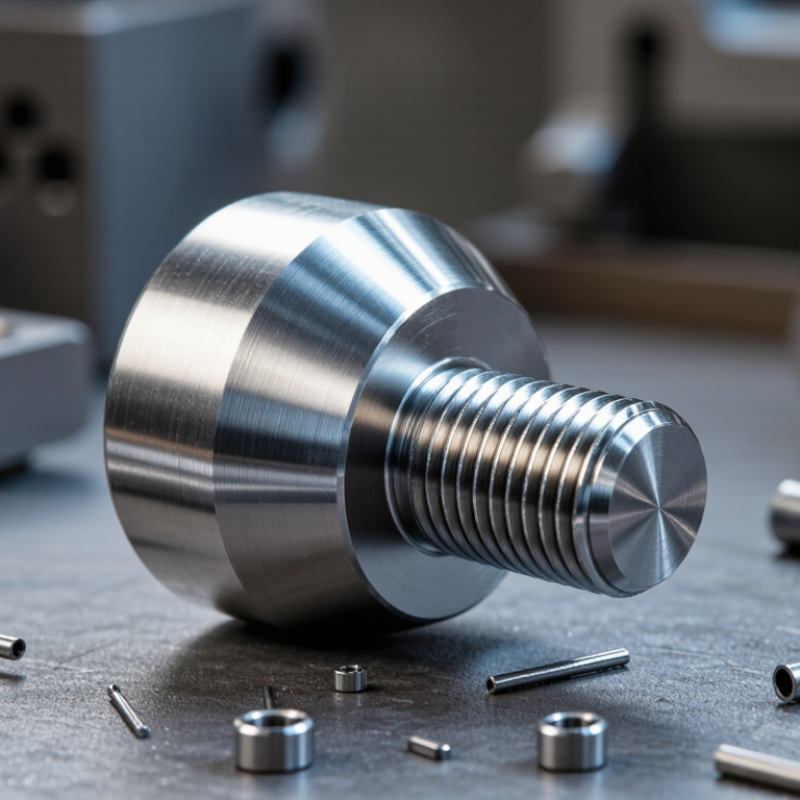
Definition and Basic Structure of a Titanium Hemispheric Bolt
What Is a Titanium Hemispheric Bolt?
A titanium hemispheric bolt is a precision fastener with a rounded, dome-shaped head and a threaded shaft. Its basic structure has three functional areas: the hemispheric head, the neck, and the threaded body. The curved head distributes contact pressure more evenly than a sharp-edged profile. It can also reduce surface irritation when positioned beneath soft tissue. The shaft provides mechanical engagement with a compatible threaded hole or fixation component. Titanium is commonly selected for its strength, low density, and corrosion resistance. It is also generally well tolerated in medical applications.
The head usually includes a drive feature, such as an internal recess, for controlled insertion. The neck connects this drive area to the shaft and helps maintain alignment during tightening. Small differences matter. Thread pitch, diameter, head height, and surface finish must match the intended system. In clinical or laboratory work, trained professionals inspect the bolt for damaged threads, contamination, or deformation before use. They also verify torque requirements and compatibility with surrounding components. The word “hemispheric” describes the head shape, not the entire bolt. That distinction is easy to miss. In practice, dimensions are not always interchangeable, even when two bolts look similar. Standardized documentation and careful measurement remain essential.
Key Materials and Properties of Titanium Hemispheric Bolts
What Is a Titanium Hemispheric Bolt?
Key Materials and Properties of Titanium Hemispheric Bolts
A titanium hemispheric bolt has a rounded, dome-shaped head and a threaded shaft. Its curved head reduces sharp edges and can improve clearance around moving parts. The usual material is Ti-6Al-4V, selected for its strength-to-weight ratio and corrosion resistance.
ASTM F136 specifies a minimum tensile strength of 860 MPa for this titanium alloy. It also lists a minimum yield strength of 795 MPa and 10% elongation. The material’s density is about 4.43 g/cm³, nearly 45% lower than common steel. That difference matters in aircraft interiors, robotics, and compact equipment.
Weight savings are practical.
The hemispheric head spreads contact more gently than a flat, sharp profile. However, head shape does not determine load capacity alone. Thread engagement, preload, surface finish, and installation torque remain critical. ISO 5832-3 reports similar mechanical requirements for wrought Ti-6Al-4V used in demanding applications.
Titanium also resists chloride-rich environments better than many steels. Still, it can suffer from galling during assembly. A controlled torque procedure and suitable surface treatment may reduce this risk. This detail is often underestimated. Engineers should verify the exact grade, thread tolerance, and test temperature before replacing a steel fastener. Published strength values are useful, but real assemblies can behave differently.
Common Applications in Engineering and Medical Devices
What Is a Titanium Hemispheric Bolt?
Common Applications in Engineering and Medical Devices
A titanium hemispheric bolt has a rounded, dome-shaped head and a threaded shaft. Titanium offers low weight, strong corrosion resistance, and useful biocompatibility. The curved head can reduce sharp edges, surface snagging, and local stress around a joint. In engineering, designers may use these bolts in robotics, marine equipment, lightweight frames, and compact mechanisms. They can suit assemblies exposed to moisture or frequent cleaning. However, the rounded profile is not automatically ideal. Tool access may be harder, and incorrect torque can damage threads or connected parts.
Medical devices use similar fasteners in selected orthopedic systems, prosthetic assemblies, surgical instruments, and diagnostic equipment. Their value depends on more than material choice. Engineers must assess fatigue strength, sterilization exposure, tissue contact, debris generation, and compatibility with nearby metals. A medical-grade component also requires documented testing, traceability, and verification under applicable regulations. A bolt that performs well in a laboratory fixture may fail after repeated body motion. That detail is easy to underestimate.
Tips: Check the titanium grade, thread specification, and head geometry before installation. Use calibrated tools and follow the approved torque range. Inspect for galling, damaged threads, or surface contamination. In medical applications, rely on validated device instructions, not general hardware practice. Even experienced technicians should review the full assembly design.
What Is a Titanium Hemispheric Bolt?
A titanium hemispheric bolt is a fastener with a rounded head and a titanium alloy body, commonly manufactured from Ti-6Al-4V or Ti-6Al-4V ELI. Its low density, high strength-to-weight ratio, and corrosion resistance make it suitable for lightweight engineering assemblies and selected medical devices.
The chart compares typical material density values. Lower density helps reduce component weight, while titanium’s biocompatibility and corrosion resistance support applications such as aerospace structures, marine hardware, orthopedic fixation systems, cranial and maxillofacial plates, and dental components. Actual suitability depends on design loads, surface treatment, sterilization, and regulatory requirements.
