10 Worm Gears Buying Tips for Global Buyers
Worm Gears remain a practical choice when machinery needs high reduction in a compact space. They appear in conveyors, lifting equipment, packaging lines, and rotary tables, where a right-angle drive can simplify the layout. But selecting a unit from a catalog is not enough. A gearbox that looks suitable on paper may run hot, wear quickly, or miss its required output speed under real operating conditions.
The International Energy Agency’s report, Energy-Efficiency Policy Opportunities for Electric Motor-Driven Systems, estimates that motor-driven systems use 43–46% of global electricity. That figure covers many applications, not worm gearboxes alone, but it shows why transmission losses matter. Grand View Research’s Industrial Gearbox Market analysis also tracks a broad market spanning multiple gearbox types; its market totals should not be mistaken for worm-gear-specific demand. Buyers still need application-level evidence: input power, duty cycle, ambient temperature, shock loads, and expected service hours. Small details count. A dusty conveyor and a lightly loaded positioning table need different designs.
These 10 buying tips focus on the checks that reduce avoidable purchasing risk: ratio, torque, efficiency, materials, lubrication, mounting, noise, supplier documentation, testing, and lifecycle support. Ask for operating data and clear test conditions, not just a maximum torque claim. Confirm how the supplier defines efficiency and thermal capacity. Even then, no checklist replaces a careful review of the actual machine. That is worth remembering. A specification can be complete and still reflect the wrong assumptions.
Understand Worm Gear Types, Ratios, and Operating Principles
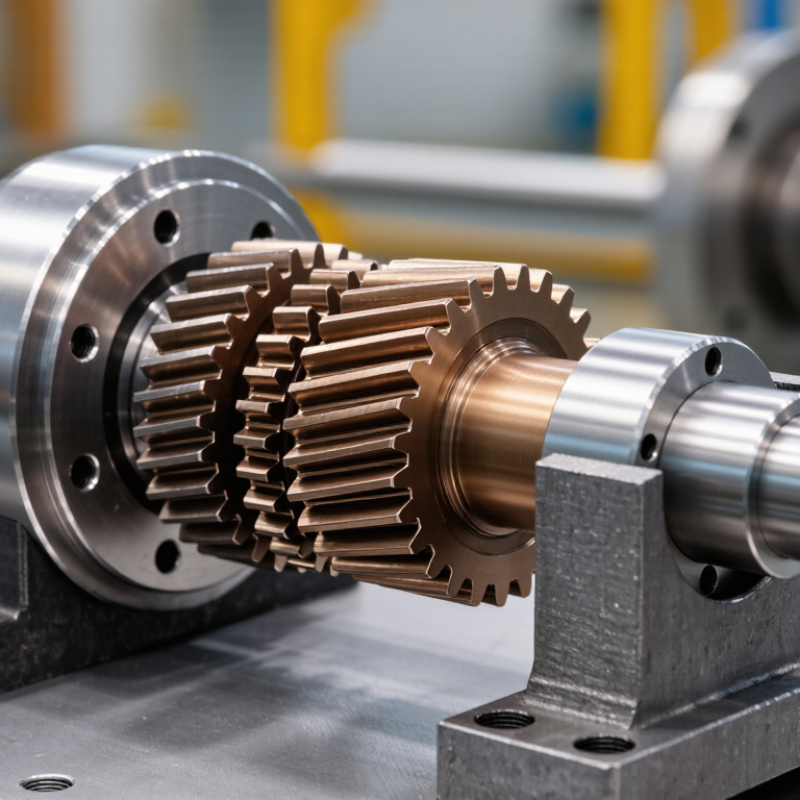
Worm gears pair a screw-like worm with a toothed wheel. As the worm turns, its threads drive the wheel, often changing the direction of motion by 90 degrees. Single-start worms commonly provide higher reduction per revolution than multi-start designs. The ratio depends on wheel tooth count divided by worm starts: a 40-tooth wheel with a two-start worm gives 20:1. Simple math. Yet the ratio alone does not reveal heat, efficiency, or service life. Sliding contact creates friction, so lubricant, alignment, load, and operating time matter.
Tips: Confirm the required output speed and torque, then check the gear’s ratio and rated duty cycle. Ask whether the housing, shaft positions, and lubrication method suit your installation. Do not assume a worm gear will hold a load safely when stopped; self-locking depends on design and conditions. Verify it with the supplier for your application.
Worm gear sets may use different wheel materials and tooth forms, while single- and double-enveloping designs differ in contact area and alignment sensitivity. A compact unit can be useful where space is tight, but it may run warm under continuous load. I would compare efficiency and thermal ratings, not just size or price. Catalog figures help, but real operating conditions can change the result. Check the data carefully.
Define Your Load, Speed, Precision, and Duty Requirements
Before comparing worm gear units, define the actual load at the output shaft. Record normal torque, peak torque, and any shock loads from starts, stops, or jams. A conveyor carrying uneven boxes may need more starting torque than its steady running figure suggests. Include the required reduction ratio and output speed, not just motor speed. Small details matter.
Precision means more than a catalog label. Specify allowable backlash and how consistently the output must return to position. For indexing equipment, even modest lost motion can affect alignment. Ask how backlash is measured and under what conditions. A neat spreadsheet can still miss wear, shaft deflection, or changing loads, so review the assumptions with the supplier.
Duty requirements shape heat and service life. State operating hours, starts per hour, ambient temperature, and available cooling. Worm gears can generate substantial heat, especially under continuous, high-load operation; efficiency varies with design, ratio, lubrication, and speed. Check the manufacturer’s thermal rating and recommended lubricant for the real mounting position. If the machine runs intermittently, say so—but verify the cycle. That assumption can fail. Share the full operating profile before approving a selection.
Compare Materials, Efficiency, Manufacturing Quality, and Standards
When comparing worm gears, match the wheel and worm materials to load, duty cycle, and lubrication. Bronze wheels paired with hardened steel worms are common, but bronze grades differ in strength and wear behavior. Ask for material certificates and confirm the specified lubricant suits the operating temperature. The U.S. Department of Energy’s 2008 Improving Motor and Drive System Performance sourcebook estimates motor-driven systems use about 70% of industrial electricity. That figure covers entire systems, not individual gearboxes, but it explains why efficiency deserves careful measurement.
Tip: Compare efficiency at your actual speed, torque, and oil temperature—not just a catalog’s best-case figure. Request test conditions and losses at startup. Small losses add up. Also ask how backlash, noise, and temperature rise are checked during production; a neat finish alone cannot prove consistent quality.
For standards, check whether the supplier can document calculations against ISO 14521 for cylindrical worm gear load capacity. Request inspection records for tooth geometry, hardness, and runout, plus a clear acceptance tolerance. Confirm that the test method matches the gear size and intended duty. A sample report is useful, though it may not reflect every production batch. I would still question any efficiency claim without stated conditions.
Evaluate Suppliers, Certifications, and International Shipping Capability
A worm gear supplier should be able to explain how its design matches your load, speed, and operating conditions. Ask for material specifications, dimensional tolerances, and inspection records, not just a polished catalog image. A sample measurement report can show whether tooth geometry and bore dimensions are checked consistently. Small details matter. Ask how the supplier handles wear testing and what lubricant recommendations apply to your setup. If an answer stays vague, request a drawing or test method before approving production.
Check each certificate’s issuing body, validity, and scope. A quality-management certificate does not automatically verify a gear’s performance or material grade. Confirm that the documents cover the facility making your order, and ask for batch traceability when consistency matters. This can take extra time. It is still better than discovering that a certificate applies to another site or product line. For shipping, confirm the delivery term, estimated transit time, insurance, and who prepares export documents. Ask how gears are protected against moisture, impact, and corrosion; a damaged crate can erase the savings from a low quote. Request package dimensions and gross weight early, since they affect freight costs and handling. International delivery estimates can shift, and I would treat a single promised date with some caution. Get updates and document responsibilities in writing.
Calculate Total Cost, Delivery Time, and After-Sales Support
A worm gear’s unit price is only the starting point. Add tooling, inspection, packaging, freight, insurance, duties, and the cost of keeping production waiting. The CSCMP 2024 State of Logistics Report estimated U.S. business logistics costs at $2.3 trillion, or 8.7% of GDP, for 2023. That figure covers the wider logistics system, not one gear order, but it shows why freight and handling deserve careful attention. Ask suppliers for a landed-cost breakdown. Compare quotes on the same material, ratio, tolerance, and test basis.
Delivery dates need the same scrutiny. The World Bank’s 2023 Logistics Performance Index assesses timeliness alongside customs, infrastructure, and shipment tracking. Request separate estimates for production, inspection, and transit, plus a realistic dispatch window. A quoted “30 days” may exclude weekends, port delays, or approval time for drawings. Build a buffer. I would still treat any date as an estimate; handoffs can slip.
Tips: Before ordering, confirm who pays for rework, replacement parts, and return freight if a gear fails inspection. Check the warranty period, response time, and availability of technical support. Request inspection records, material certificates, and a named contact for after-sales questions. A slightly higher quote may cost less overall when support is clear. One detail is easy to miss: confirm that replacement components will remain available for your expected maintenance cycle.
Worm Gear Buying Tips: Compare Total Cost and Delivery Time
Illustrative RFQ comparison for 100 units, in USD. Values are example figures—not market benchmarks. Replace them with supplier quotations and destination-specific charges.
Compare the full landed-cost estimate—not unit price alone—and confirm the quoted lead time, shipping terms, inspection scope, and after-sales support in writing.
