Sorry. We did not find anything.
Choosing the right Electric Pickup requires more than comparing advertised range. Buyers must match the truck to real work, daily travel, charging access, and budget. A contractor carrying tools needs payload capacity and durable bed space. A family driver may value quiet travel, rear-seat comfort, and dependable winter range.
The market is expanding quickly. The International Energy Agency reported nearly 14 million electric car sales worldwide in 2023, with electric vehicles reaching about 18% of new car sales. Its Global EV Outlook 2024 projected more than 17 million sales in 2024. However, passenger-car growth does not guarantee that every electric truck fits practical needs. Pickup buyers should examine battery size, usable range, towing impact, payload ratings, and charging speed. Towing can reduce range sharply, especially with a heavy trailer, strong wind, or cold weather.
Real conditions matter.
Industry research supports careful comparison. The U.S. Department of Energy notes that charging time depends on vehicle capability, charger power, temperature, and battery condition. Cox Automotive has also identified charging access, price, and consumer confidence as major barriers to wider EV adoption. These findings suggest that the best truck is not always the one with the longest laboratory range. It may be the model that reaches your workplace charger, fits your garage, and completes a familiar route without stressful detours. This guide compares key specifications, ownership costs, charging realities, and work requirements. Some estimates remain imperfect, because weather, driving style, and load change quickly. That uncertainty deserves honest attention before purchase.
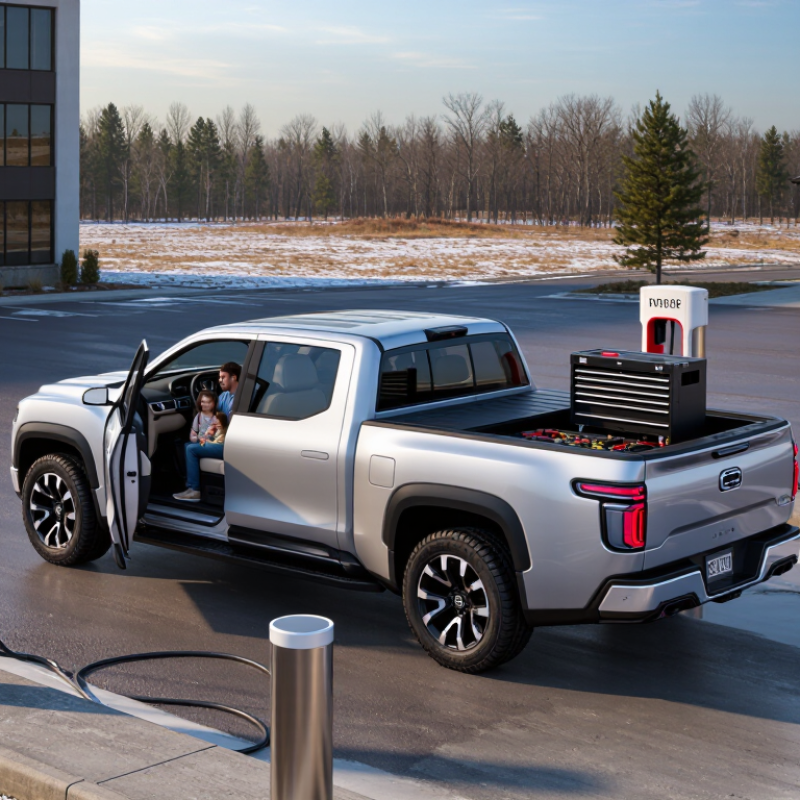
Choosing the best electric pickup starts with the work it must perform. List your regular cargo, trailer weight, passengers, tools, and charging equipment. Payload is the weight carried inside the vehicle and in the bed. A five-person crew can reduce available payload quickly.
For towing, use the SAE J2807 rating as a consistent reference point. This standard considers trailer weight, vehicle configuration, cooling performance, braking, acceleration, and control. Do not treat the maximum tow rating as your daily target. Trailer tongue weight also counts against payload, often adding 10 to 15 percent of the trailer’s loaded weight. Heavy cargo, steep roads, cold weather, and headwinds can reduce practical range and confidence. I have seen buyers focus on a large towing number, then overlook hitch weight. That mistake is easy to make.
Tips: Weigh your loaded trailer, not its brochure weight. Check the door-label payload rating, the owner’s manual, and the SAE J2807 specification. Keep the combined vehicle and trailer weight within the stated limit. Leave a useful margin for passengers and changing conditions. Short trips may tolerate less planning; remote workdays should not. Also compare charging access at your work sites. A pickup that meets the rating may still feel unsuitable if recharging interrupts the schedule. My own checklist would include one real test load before purchase, though that is not always convenient.
Define Your Workload: Match payload and towing requirements to the vehicle’s certified ratings and SAE J2807 towing-test performance. The figures below represent realistic planning targets for common pickup workloads, not manufacturer-specific ratings.
Always keep the combined weight of passengers, cargo, hitch equipment, and trailer tongue weight within the pickup’s payload rating. SAE J2807 is a standardized procedure used to evaluate towing performance; the final rating remains specific to each vehicle configuration.
Choosing the best electric pickup starts with two numbers: EPA-estimated range and DOE charging-efficiency data. EPA range comes from standardized testing, making it useful for comparing similar vehicles. However, real driving can differ. Cold mornings, heavy cargo, strong winds, and frequent towing may reduce range quickly. A truck rated for 300 miles may feel closer to 220 miles on a winter workday.
DOE charging-efficiency data adds another layer. It shows how much electricity reaches the battery compared with energy drawn from the wall. This difference matters because charging losses affect operating costs and home energy use. Compare vehicles using the same charging method and battery size. Also check charging time at your usual outlet. A larger battery is not automatically better if it charges slowly. That assumption deserves a second look.
Tips: Review EPA range for the exact cab, battery, and wheel configuration. Use DOE efficiency figures as a guide, not a promise. If possible, test-drive with passengers and equipment. Watch the energy-use display during highway driving. Leave a practical reserve for detours and weather. Small details matter. A home energy meter can reveal charging losses more clearly than a brochure.
Choosing an electric pickup starts with charging access, not just battery size. Check whether your home supports overnight AC charging through an SAE J1772 connection. A licensed electrician should inspect the panel, outlet, and cable route. A typical driveway session may take several hours, but that can fit a regular workday.
Public charging requires closer attention. DC fast chargers often use CCS1 or the NACS format, now covered by the SAE J3400 standard. Confirm the pickup’s built-in port before buying. An adapter may expand access, but compatibility can vary by vehicle software, charger output, and connector design. Check the vehicle manual and charging network information. Do not rely only on a sales description. Real-world charging can be slower in freezing weather, extreme heat, or when several vehicles share power.
Tips: Map reliable chargers along your weekly routes. Visit one before purchase if possible. Test the connector’s reach and payment process. Ask how the pickup manages charging schedules. I once underestimated cable length; the station worked, but the parking position was awkward. That small detail changed the experience. Also, compare peak charging speed with the time you usually stop. A higher rating sounds useful, yet a slower charger near home may serve you better. Think carefully.
Choosing an electric pickup should begin with safety evidence, not screen size or towing claims. Check its current IIHS ratings for moderate-overlap, side-impact, roof-strength, headlights, and child-seat usability tests. A strong crash score matters, but it does not prove that driver assistance works well. IIHS research reports that forward collision warning with automatic emergency braking can reduce rear-end crashes by about 50%. That benefit depends on road conditions, system limits, and attentive driving.
Read the IIHS driver-assistance evaluations carefully. They examine lane-centering performance, attention warnings, emergency procedures, and whether safeguards prevent misuse. In its recent partial-automation reviews, IIHS found that many systems lacked sufficient protections against driver distraction. A pickup may keep itself centered on a straight highway, then drift near a faded line or sharp curve. Quiet electric powertrains can also hide speed from an inattentive driver. I sometimes trust these systems too much; that is exactly the risk worth questioning.
Tips: Compare the exact model year and battery configuration. Safety equipment can vary by trim. Watch independent test videos, not only laboratory scores. Check whether warnings are clear, repeated, and easy to understand. Test the truck at night and in rain if possible. Confirm that rear visibility, camera coverage, braking feel, and seat-belt comfort suit your daily routes. A five-star result is useful evidence, not a personal guarantee.
| Safety Dimension | What Is Tested or Measured | Verified Rating or Benchmark | Why It Matters for an Electric Pickup | Recommended Buying Standard |
|---|---|---|---|---|
| Small-Overlap Front Crashworthiness | Measures occupant protection when the front corner of the vehicle strikes another vehicle or a fixed object. | IIHS ratings: Good, Acceptable, Marginal, or Poor. | Pickup size and weight do not eliminate the risk of serious intrusion in an offset collision. | Prefer a Good rating. |
| Moderate-Overlap Front Crashworthiness | Evaluates the passenger compartment and restraint performance in a frontal crash involving a larger portion of the vehicle front. | IIHS uses four performance levels: Good, Acceptable, Marginal, and Poor. | A heavier electric pickup can transfer substantial crash energy, making structural performance important. | Prefer Good structural and restraint results. |
| Side-Impact Protection | Assesses protection against a moving barrier striking the side of the vehicle and evaluates head, torso, and pelvis injury measures. | IIHS side ratings are Good, Acceptable, Marginal, or Poor. | High seating positions and large door structures make side-airbag and occupant-cell performance especially relevant. | Choose Good side-impact protection when available. |
| Roof Strength and Rollover Protection | Measures how well the roof structure resists crushing under force. | IIHS performance levels are Good, Acceptable, Marginal, and Poor. | Electric pickups may be heavy because of their battery packs, so rollover restraint and roof strength remain important. | Look for a Good rating and standard electronic stability control. |
| Head Restraints and Seat Performance | Evaluates head restraints and seats for protection against neck injury in rear-end crashes. | IIHS rates the system Good, Acceptable, Marginal, or Poor. | Frequent towing, hauling, and long-distance driving can increase the value of supportive seating and effective head restraints. | Prefer Good seat and head-restraint geometry. |
| Front Crash Prevention: Vehicle-to-Vehicle | Tests warnings and automatic braking when the vehicle approaches another vehicle. | IIHS prevention ratings include Superior, Advanced, and Basic. | A longer hood, large body, and greater mass can make stopping distance and collision avoidance more demanding. | Prefer Superior or Advanced performance. |
| Front Crash Prevention: Pedestrian | Evaluates automatic emergency braking and warning performance in pedestrian conflict scenarios. | IIHS uses Superior, Advanced, and Basic ratings for pedestrian front crash prevention. | A tall front end can reduce the driver’s direct view of nearby pedestrians, cyclists, and children. | Prefer Superior or Advanced and verify night performance if published. |
| Lane-Departure Warning and Prevention | Checks whether the vehicle warns the driver or provides steering assistance when it drifts from its lane. | Availability and performance vary by vehicle and trim; the system is driver assistance, not autonomous driving. | Useful on highways, particularly when towing or driving long distances, but it may not function reliably in poor markings or severe weather. | Test it on a controlled route and keep both hands available. |
| Headlight Performance | Measures roadway illumination, glare for other drivers, and performance on curves and straight roads. | IIHS headlight ratings are Good, Acceptable, Marginal, or Poor. | Poor lighting can reduce reaction time on dark rural roads, work sites, and unlit towing routes. | Prefer Good or Acceptable headlights with automatic high beams. |
| Seat-Belt Reminder Quality | Checks whether visual and audible reminders encourage occupants to buckle up in the front and rear seats. | IIHS evaluates reminder effectiveness separately from crashworthiness. | Pickup cabins often carry multiple passengers, so rear-seat reminder coverage is useful. | Choose a system covering every seating position. |
| Battery and High-Voltage Safety | Review certified crash protection, high-voltage isolation procedures, charging protections, and post-crash emergency guidance. | There is no single IIHS score that replaces the vehicle’s official safety documentation and recall history. | A severe crash can damage high-voltage components even when the passenger compartment remains intact. | Check recall status, emergency-response information, and charging-system certification. |
| Driver Monitoring and System Limits | Determines whether hands-on-wheel checks, attention warnings, and clear operating limits are provided for advanced assistance features. | Driver-assistance features do not make the vehicle self-driving; the driver remains responsible at all times. | Towing, rain, snow, poor lane markings, and heavy loads can affect sensor performance and stopping distance. | Select systems with clear alerts, driver monitoring, and transparent limitations. |
Note: IIHS ratings are comparative safety assessments. Always check the exact model year, configuration, optional safety equipment, current recalls, and official operating instructions before purchase.
The listed MSRP is only the starting point. Compare the final purchase price after available incentives, delivery charges, taxes, and home-charging equipment. Incentives can change by location and income, so verify them through official government resources before calculating savings. I once underestimated installation costs by several hundred dollars. That mistake changed the real budget.
Battery data deserves equal attention. Check usable battery capacity, estimated range, charging speed, and performance in cold weather. A pickup carrying tools or towing a trailer may use much more energy than advertised. Review independent testing, not only laboratory figures.
Warranty terms also matter. Read coverage for the battery, electric drive system, corrosion, and roadside assistance. A longer warranty sounds valuable, but exclusions can be easy to miss.
Tips: Build a five-year ownership spreadsheet. Include financing, insurance, electricity, tires, maintenance, charging equipment, and expected resale value. Use your local electricity rate and daily driving distance. Test the vehicle with realistic cargo if possible. Ask the dealer to provide every fee in writing. Keep a reserve for unexpected repairs. Be careful with optimistic range estimates. Your actual result may differ.
| Cookie | Duration | Description |
|---|---|---|
| cookielawinfo-checbox-analytics | 11 months | This cookie is set by GDPR Cookie Consent plugin. The cookie is used to store the user consent for the cookies in the category "Analytics". |
| cookielawinfo-checbox-analytics | 11 months | This cookie is set by GDPR Cookie Consent plugin. The cookie is used to store the user consent for the cookies in the category "Analytics". |
| cookielawinfo-checbox-analytics | 11 months | This cookie is set by GDPR Cookie Consent plugin. The cookie is used to store the user consent for the cookies in the category "Analytics". |
| cookielawinfo-checbox-functional | 11 months | The cookie is set by GDPR cookie consent to record the user consent for the cookies in the category "Functional". |
| cookielawinfo-checbox-functional | 11 months | The cookie is set by GDPR cookie consent to record the user consent for the cookies in the category "Functional". |
| cookielawinfo-checbox-functional | 11 months | The cookie is set by GDPR cookie consent to record the user consent for the cookies in the category "Functional". |
| cookielawinfo-checbox-others | 11 months | This cookie is set by GDPR Cookie Consent plugin. The cookie is used to store the user consent for the cookies in the category "Other. |
| cookielawinfo-checbox-others | 11 months | This cookie is set by GDPR Cookie Consent plugin. The cookie is used to store the user consent for the cookies in the category "Other. |
| cookielawinfo-checbox-others | 11 months | This cookie is set by GDPR Cookie Consent plugin. The cookie is used to store the user consent for the cookies in the category "Other. |
| cookielawinfo-checkbox-necessary | 11 months | This cookie is set by GDPR Cookie Consent plugin. The cookies is used to store the user consent for the cookies in the category "Necessary". |
| cookielawinfo-checkbox-necessary | 11 months | This cookie is set by GDPR Cookie Consent plugin. The cookies is used to store the user consent for the cookies in the category "Necessary". |
| cookielawinfo-checkbox-necessary | 11 months | This cookie is set by GDPR Cookie Consent plugin. The cookies is used to store the user consent for the cookies in the category "Necessary". |
| cookielawinfo-checkbox-performance | 11 months | This cookie is set by GDPR Cookie Consent plugin. The cookie is used to store the user consent for the cookies in the category "Performance". |
| cookielawinfo-checkbox-performance | 11 months | This cookie is set by GDPR Cookie Consent plugin. The cookie is used to store the user consent for the cookies in the category "Performance". |
| cookielawinfo-checkbox-performance | 11 months | This cookie is set by GDPR Cookie Consent plugin. The cookie is used to store the user consent for the cookies in the category "Performance". |
| viewed_cookie_policy | 11 months | The cookie is set by the GDPR Cookie Consent plugin and is used to store whether or not user has consented to the use of cookies. It does not store any personal data. |
| viewed_cookie_policy | 11 months | The cookie is set by the GDPR Cookie Consent plugin and is used to store whether or not user has consented to the use of cookies. It does not store any personal data. |