Why Choose a Chinese Electric Truck?
A Chinese Electric Truck can be a practical choice for fleets seeking lower local emissions and quieter operation. The real case depends on the route, payload, charging access, and purchase cost. A truck that performs well on a short urban delivery loop may not suit a long, heavily loaded route. Small details matter: depot power, winter temperatures, service coverage, and time available between shifts.
Wan Gang, a prominent Chinese electric-vehicle advocate and former minister of science and technology, described new-energy vehicles as “the only way for China to move from a major automobile producer to a strong automotive power.” This translated statement reflects the wider direction of China’s vehicle industry, rather than a guarantee about any one truck. That distinction matters. Buyers should compare verified range under realistic loads, battery and warranty terms, parts availability, and charging requirements. Ask for operating data from routes like your own. Check the service plan in writing.
There is no universal winner. A lower quoted price can look appealing, yet downtime or a poorly matched charger may change the calculation. I would not treat a familiar badge as proof. Nor should one impressive test drive settle the decision. This guide examines where Chinese electric trucks may offer value, what to verify before purchase, and which trade-offs deserve closer scrutiny. Some questions will remain uncertain until the truck works on your roads, with your drivers, through a full season.
What Defines a Chinese Electric Truck?
Why Choose a Chinese Electric Truck?
What Defines a Chinese Electric Truck?
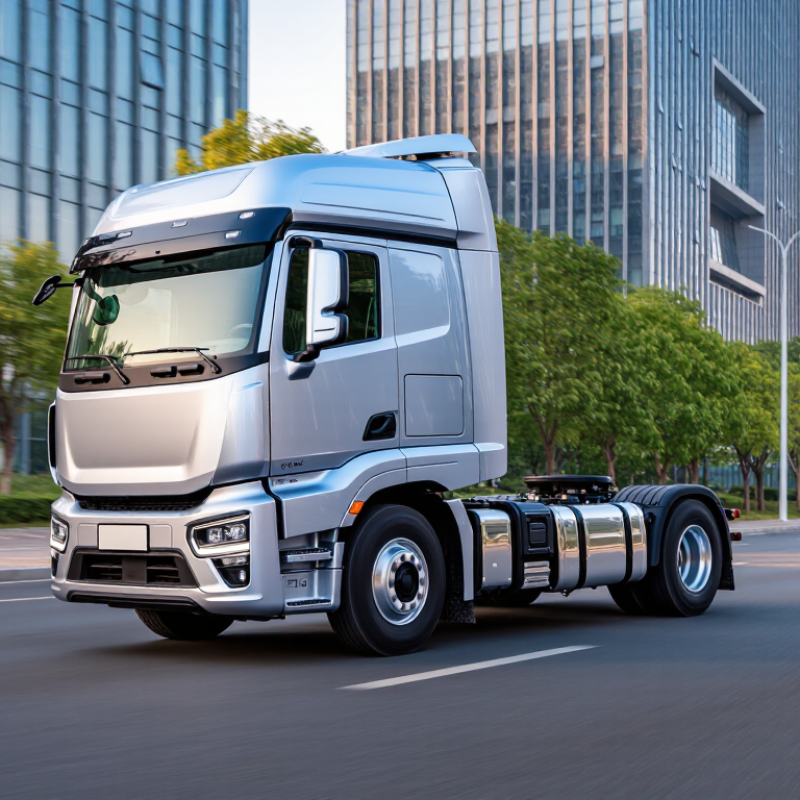
A Chinese electric truck is a battery-powered commercial vehicle developed or built in China. The label can cover an urban delivery van, a medium-duty box truck, or a heavy tractor unit. What matters is how its battery, motor, chassis, and controls work together on real routes. Some models use regenerative braking and battery temperature management to support daily operation.
Tips: Check usable battery capacity, not just the headline figure. Ask for range estimates based on payload, route, weather, and heating use. Confirm charging compatibility, service access, parts availability, and warranty terms in writing. Numbers need context.
A truck earns its place when its payload, turning radius, and charging schedule fit the job. A 300-kilometer range claim may shrink with a full load, cold mornings, hills, or frequent stops. Fleet data and a supervised route trial are more useful than a brochure alone. Manufacturing origin may mean access to a broad supply base, but it does not guarantee quality or local support. Details matter. Compare verified test results and inspect the build, brakes, and cab ergonomics. No single specification tells the whole story.
Why Choose a Chinese Electric Truck? What Defines the Market?
China represented approximately 70% of global electric truck sales in 2023, making it the largest market for electric trucks that year. This market scale helps explain why China is an important source of electric truck technology and manufacturing capacity.
Source: International Energy Agency, Global EV Outlook 2024. Share is approximate.
How Its Battery and Drivetrain Deliver Performance
A Chinese electric truck’s performance begins with how its battery and motor work together. The battery supplies direct current, while power electronics control energy flow to the motor. Unlike a diesel drivetrain, an electric motor can deliver strong torque from low speeds, helping a loaded truck pull away smoothly. That matters on steep depot ramps. A single-speed reduction gear also removes some shifting complexity, though it does not eliminate maintenance or operating costs.
Battery size alone does not tell the whole story. Usable energy, temperature control, payload, and charging access all affect real-world range. The International Energy Agency’s Global EV Outlook 2024 reports that electric-vehicle battery demand reached about 750 GWh in 2023, up 40% from 2022. It also reports a 14% drop in average battery prices that year. These trends support wider access to electric drivetrains, but they do not guarantee a better truck for every route. Not magic. During repeated hard acceleration or cold-weather work, energy use can climb; regenerative braking helps recover some energy, not all of it. A test drive with the intended load is still worth the effort.
How Operating Costs and Emissions Compare
Why Choose a Chinese Electric Truck? How Operating Costs and Emissions Compare
An electric truck can lower daily energy costs, especially on repeat routes with depot charging. Electricity prices vary by location and time, so compare actual tariffs with diesel costs per kilometre. Include charger installation, maintenance, insurance, financing, and battery-related depreciation. A lower energy bill does not automatically mean a lower total cost. Numbers vary. Track a week of real routes, including payload, idling, and return mileage, before estimating savings.
Emissions also depend on how the truck is charged. A grid with more renewable electricity generally gives driving a smaller emissions footprint than a coal-heavy grid. Manufacturing the vehicle and battery creates emissions too, so the full comparison depends on vehicle life and annual distance. For a fair assessment, compare trucks carrying the same load over the same route. The comparison is not always tidy; weather, hills, and heating or cooling can change energy use. That matters.
Tips: Record charging time, energy used, kilometres, and payload for several months. Ask for documented energy-consumption figures under similar conditions. Recheck the estimate after winter, when cold weather may reduce range and increase cabin-heating demand.
Why Choose a Chinese Electric Truck? — How Operating Costs and Emissions Compare
Illustrative comparison for an urban distribution truck over 100 km. Results depend on vehicle configuration, route, payload, energy prices, charging conditions, and the electricity mix.
| Comparison dimension |
Battery-electric truck |
Diesel truck |
What it means |
| Energy use assumed |
130 kWh per 100 km |
28 L per 100 km |
Illustrative urban-duty inputs; actual consumption varies with payload, terrain, speed, and temperature. |
| Energy price used in example |
¥0.80 per kWh |
¥7.50 per litre |
Example prices only—not a national tariff or current price quote. Local rates can materially change the comparison. |
| Estimated energy cost per 100 km |
¥104 |
¥210 |
Calculated from the assumed consumption and prices above; charging fees and taxes may differ by location. |
| Direct operating emissions |
No tailpipe emissions while driving |
About 75 kg CO2 per 100 km |
Diesel estimate uses 2.68 kg CO2 per litre burned. This excludes fuel production and delivery. |
| Electricity-related emissions |
About 72 kg CO2 per 100 km at 0.55 kg CO2/kWh |
Not applicable |
Grid emissions vary by region and time. This example is an estimate, not a lifecycle emissions figure. |
| Routine maintenance |
Typically fewer engine-related service items |
Engine, oil, exhaust, and fuel-system servicing required |
Maintenance savings are possible, but depend on duty cycle, repair costs, and vehicle design. |
| Route and charging needs |
Requires charging access and route planning around usable range |
Can refuel quickly where diesel is available |
Electric operation is often easier to plan for predictable routes with depot charging. |
| Purchase and ownership costs |
Depend on purchase price, financing, incentives, battery warranty, and residual value |
Depend on purchase price, fuel use, maintenance, and residual value |
The energy-cost example alone does not establish which vehicle has the lower total cost of ownership. |
How to interpret this table: The figures are a transparent, simplified scenario—not a claim about every Chinese electric truck or diesel truck. They exclude vehicle manufacturing, battery production, fuel production, charging losses, battery replacement, financing, and purchase-price differences. Use local measured consumption and energy prices for a decision-grade comparison.
How Chinese Manufacturers Support Fleet Adoption
Fleet adoption depends on more than a truck’s range or purchase price. Chinese manufacturers can support operators by discussing routes, payloads, daily mileage, and charging access before a fleet makes a commitment. Some provide vehicle data, operating guidance, and configuration options, but the details vary. Ask what is included, what costs extra, and who handles support locally. Small details matter.
Service readiness deserves equal attention. Manufacturers may offer technician training, diagnostic tools, parts planning, and warranty guidance. Fleet managers should request clear service procedures and realistic parts lead times, then check whether local technicians can access them. An idle truck is costly. Telematics can help track energy use, charging patterns, and vehicle faults, though data is only useful when someone reviews it and acts.
Charging plans need to match real work, not ideal schedules. A manufacturer can help assess charging power and vehicle compatibility, while the operator should map depot layouts and overnight parking routines. A small pilot can reveal problems with winter range, loading delays, or charger availability before more vehicles arrive. It may also uncover gaps in the original plan. That is useful, if inconvenient. Written commitments and regular reviews make support easier to measure, rather than relying on optimistic estimates.
What Buyers Should Evaluate Before Choosing One
Why Choose a Chinese Electric Truck?
What Buyers Should Evaluate Before Choosing One
Choosing a Chinese electric truck starts with the work it must do, not its advertised range. The IEA’s Global EV Outlook 2024 reports that electric truck sales rose 35% worldwide in 2023, yet remained around 1% of total truck sales. The market is growing, but operating data and service support still deserve close scrutiny.
Map a normal route, including winter conditions, stop frequency, hills, and time spent carrying a full load. Then compare usable battery capacity, charging speed, payload, and real-world range. Test it loaded. A range figure from a test sheet may not reflect a cold morning or repeated highway runs. Ask for duty-cycle results from vehicles working in conditions similar to yours. The ICCT’s total-cost-of-ownership analyses also underline why energy prices, annual mileage, maintenance, and financing matter alongside the purchase price.
Inspect the battery warranty and clarify what capacity loss it covers. Check parts availability, technician training, diagnostic access, and expected repair times in your region. Small details matter. A truck that charges quickly is less useful if a minor fault keeps it parked for days. I would also verify the charger’s compatibility with your depot and request written estimates for installation and grid upgrades. Some uncertainties may remain; ask suppliers to state assumptions clearly, then compare them against a short, monitored pilot.