What Are the Top Electric Car Brands Worldwide?
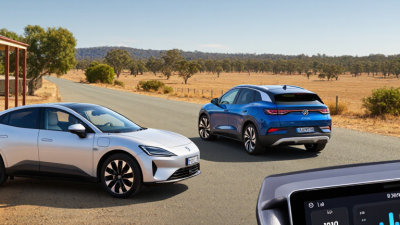
What makes a car brand a worldwide leader? The answer depends on more than sales. Electric Car Brands compete through range, charging access, price, reliability, and the models available in each region. A vehicle that fits city streets in Europe may feel less practical across long distances in Australia or North America. Local incentives and charging networks also shape buyer choices.
General Motors CEO Mary Barra has described the wider goal: “Our vision is a world with zero crashes, zero emissions and zero congestion.” That ambition helps frame a comparison of brands such as BYD, Tesla, Volkswagen, Hyundai, and BMW. Each brings a different mix of scale, technology, design, and market reach. Yet no single badge wins every measure. Not even close.
This guide looks at what “top” can mean in practice: global presence, vehicle choice, battery and charging development, and value for drivers. It also considers the limits of simple rankings. Sales figures can shift quickly, and availability varies from country to country. A familiar brand name does not guarantee the same ownership experience everywhere. A showroom may be nearby; a dependable fast charger may not be. That matters.
The comparisons ahead are useful, not final verdicts. Some claims deserve a closer look, especially when brands promote range or charging speed. Real-world conditions can change both. The strongest choice may be the car that fits a buyer’s daily route, budget, and local support—not the one with the loudest reputation.
How Electric Car Brands Are Compared Worldwide
Worldwide comparisons work best when they use the same measures. Sales figures show market reach, but they do not prove that a vehicle suits every driver. Analysts should separate fully electric cars from plug-in hybrids and compare registrations over the same period.
Practical performance matters. Look at real-world energy use, charging speed, usable range, battery warranty, and independent safety results. A car that travels far on a test cycle may lose range in freezing weather or at highway speeds. Charging access also changes the picture: a compact battery can be convenient in a city with reliable fast chargers, but less practical where stations are sparse. Numbers can mislead.
Ownership costs deserve equal attention. Compare purchase price, electricity rates, maintenance, insurance, and access to qualified repair services. These costs vary by country and even by region, so a global ranking can hide important differences. Check whether reports use consistent methods and recent data; delivery estimates and advertised range are not always equivalent to verified results. That distinction matters.
Brand strength can also be assessed through service coverage, parts availability, software support, and warranty terms. Yet these measures are difficult to compare fairly across markets. Some regions publish clearer data than others, and public charging reliability is often underreported. A useful comparison should state its limits rather than suggest one universal winner.
Leading Electric Car Brands by Global Market Presence
Global presence is more than a sales leaderboard. It also depends on where vehicles are sold, serviced, and supported with charging access. The IEA’s Global EV Outlook 2024 reports nearly 14 million electric car sales worldwide in 2023, equal to about 18% of new car sales. That growing market gives several types of manufacturers room to compete.
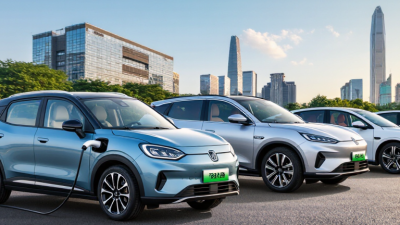
Regional reach remains uneven. China accounted for about 8.1 million electric car sales in 2023, while Europe recorded roughly 3.2 million and the United States about 1.4 million, according to the IEA. Chinese manufacturers benefit from deep domestic demand and production scale. Established multinational automakers often have broader dealer and service networks across regions. Still, gaps remain. A strong presence in one market does not guarantee convenient repairs or parts elsewhere.
The comparison is imperfect. A large home market can make worldwide scale look broader than it is. Buyers should consider local model choice, service coverage, and charging compatibility alongside sales volume. BloombergNEF’s Electric Vehicle Outlook 2024 also describes continued growth in global electric-vehicle adoption, but projections cannot show how evenly support networks will develop. Market leadership can shift quickly. A brand’s reach on paper may feel different on a rural road.
How Regional Markets Shape Brand Popularity
Electric car popularity is rarely decided by vehicle range alone. In dense cities, buyers may care more about easy parking, dependable public chargers, and affordable home charging. A compact model can feel practical on narrow streets, even when a larger vehicle offers more space. Small details matter.
Regional conditions change the buying calculation. Cold winters can reduce driving range, making battery performance and nearby fast chargers especially important. In hot regions, cabin cooling and battery temperature management may carry more weight. Long rural routes also reward a broad charging network, while short urban commutes can make a modest-range vehicle sufficient. These patterns vary within countries, too.
Price, service access, and local incentives influence which brands gain attention, but none works in isolation. A buyer may compare monthly payments, repair locations, and charger availability before looking at acceleration. In some markets, locally assembled vehicles can be easier to obtain or service; in others, import costs shape the final price. The picture is messier than a global ranking suggests. I would be cautious about treating sales figures as a direct measure of customer preference: supply shortages and changing incentives can distort them. A charger outside a neighborhood supermarket may matter more than a polished advertisement.
Key Differences in Technology, Models, and Pricing
Electric-car brands differ less by a single breakthrough than by how they combine battery design, software, and vehicle choice.
Some focus on long-range batteries and fast charging; others prioritize smaller, more affordable packs. A larger battery can ease range worries, but it also adds weight and cost. Charging speed depends on the car and the station. The headline figure is only part of the story.
Model lineups shape everyday usefulness. A low, compact car may suit crowded streets and short commutes, while a roomy crossover offers easier access and more cargo space. Cabin software matters too: clear route planning and battery preconditioning can make a cold-weather trip less stressful.
Details count.
Still, software updates do not fix every awkward control or confusing menu.
Pricing comparisons need care. The advertised price may exclude delivery fees, optional equipment, or local incentives, and those incentives can change. Compare similar battery sizes, warranties, charging capabilities, and standard safety features. Then estimate the cost of home charging versus public charging, if both are available. A cheaper car may become less appealing when an important feature costs extra. Conversely, paying more for range that rarely gets used may be hard to justify. There is no perfect comparison; real weekly driving habits are easy to underestimate.
What to Consider When Choosing an Electric Car Brand
Choosing an electric car brand starts with how you actually drive, not its headline range. A 300-mile estimate can shrink on freezing mornings, at highway speeds, or with heavy cabin heating. Check independent range tests and compare them with your commute, including a winter buffer. Small detail: Can it handle your week?
Charging matters just as much. Check the vehicle’s connector, access to public fast chargers, and charging speed during a typical stop. A peak charging figure is not the whole story; charging curves and battery preconditioning affect how long you wait. If you park outdoors or rent, confirm whether home charging is realistic. Convenience is personal.
Then inspect support beyond the showroom. Ask how battery coverage is measured, where repairs happen, and how long common parts may take to arrive. Read owner reports for recurring software or service problems, but treat isolated complaints cautiously. Test the seats, visibility, controls, and cargo space with your own bags or child seat. A polished screen can distract from awkward ergonomics. I might still choose less range if service is nearby and daily charging feels simple. That trade-off is imperfect, but real.